





From Clicks to Cravings
The playbook for launching a consumer brand has been flipped on its head. Historically, building a food or beverage company required massive capital for research, manufacturing, and, most importantly, marketing. But a new generation of entrepreneurs is skipping
the traditional route, leveraging their vast online audiences to create instant-read consumer bases. We're talking about creator-led brands. Unlike a simple celebrity endorsement, these creators are often founders or co-founders, deeply involved in the product's development and identity. The most prominent examples include YouTuber MrBeast's Feastables chocolate bars, Logan Paul and KSI's Prime Hydration drinks, and Emma Chamberlain's Chamberlain Coffee. These are not just merchandise; they are full-fledged consumer packaged goods (CPG) designed to compete for shelf space.
The New Marketing Playbook
The core advantage for these brands is a built-in, highly engaged community that trusts the creator implicitly. While a legacy brand spends billions on advertising to build trust, a creator's audience arrives on day one, ready to buy. Prime Hydration, launched by Logan Paul and KSI in 2022, is a prime example. The brand was projected to exceed $1.2 billion in annual sales in 2023, a staggering figure driven almost entirely by the creators' social media reach. Similarly, MrBeast's Feastables generated $250 million in sales and $20 million in profit in 2024, reportedly out-earning his sprawling media empire for the first time. The marketing is the content itself, with product launches and promotions woven directly into their viral videos, transforming fans into an army of consumers and evangelists.
Building a Business Beyond the Brand
While the creator provides the face and the audience, sophisticated operations are required behind the scenes. Many partner with specialized companies to handle the logistics. Prime Hydration, for instance, is distributed through a company called Congo Brands. Emma Chamberlain's coffee brand, which generated $22 million in revenue in 2024, has expanded its initial direct-to-consumer model to include major retailers like Walmart, Target, and Whole Foods. This often involves a pivot from a pure e-commerce model to navigating complex retail distribution networks. MrBeast Burger famously used a 'ghost kitchen' model, partnering with Virtual Dining Concepts to produce burgers in existing restaurant kitchens for delivery, which allowed it to scale to 1,700 locations rapidly.
Cracks in the Facade?
However, this new model is not without its significant challenges. The reliance on a creator's reputation is a double-edged sword; any personal scandal can directly impact the brand. Furthermore, quality control can be a major issue, especially when scaling rapidly. MrBeast himself sued his ghost kitchen partner, Virtual Dining Concepts, alleging that the company was serving "disgusting" and "inedible" food that damaged his reputation. VDC countersued for $100 million, illustrating the high-stakes complexity of these partnerships. There's also the risk of hype-cycles. After an explosive launch, Prime Hydration's sales have seen a significant decline in some markets, with UK revenue falling by around 70% in 2024 as the initial viral frenzy cooled and competition increased.
The Future on the Mainstream Aisle
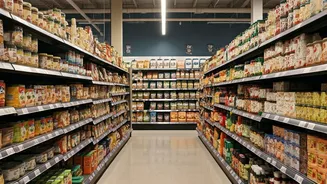
Despite the hurdles, the trend shows no sign of slowing down. The creator economy is projected to be worth over $200 billion by 2026, and commerce is a massive part of that. These brands have proven they can move products at a scale that makes them impossible to ignore. They are no longer a niche corner of the market but are forcing legacy brands to rethink their own strategies. The success of Feastables and Prime has demonstrated a new, powerful path to market that leverages authenticity and community over traditional advertising. For consumers, it means more choice on the shelves, with new products appearing with a speed and cultural relevance that established giants struggle to match.