

A Passage Through History
The story of the Nilgiri Mountain Railway (NMR), affectionately known as the 'toy train', is a journey back in time. First proposed in 1854 and completed in 1908 by the British, it was an ambitious project to connect the plains of Mettupalayam with the high-altitude
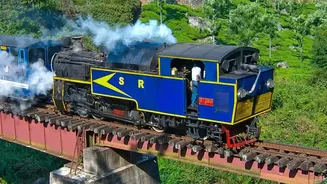
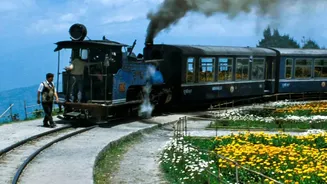
retreat of Udhagamandalam, or Ooty. This railway isn't merely old; it is a living piece of history. In 2005, UNESCO recognised its significance by adding it to the list of World Heritage Sites as part of the Mountain Railways of India. This designation celebrates not just its age, but the ingenuity and cultural heritage it represents. Riding its wooden coaches, pulled by beautifully maintained steam and diesel locomotives, feels less like a commute and more like participating in a 100-year-old tradition.
An Engineering Marvel on a Steep Climb
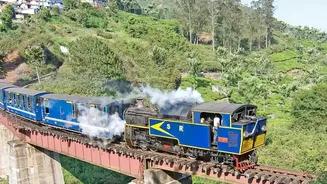
What makes the NMR truly exceptional is its masterful engineering. It is the only rack railway in India, a testament to the skill of its 19th-century builders. To conquer the Nilgiri hills, which feature the steepest railway gradient in Asia, the train uses a unique 'rack and pinion' system. This technology, involving a toothed rack rail fitted between the running rails, engages with a gear on the locomotive to physically pull the train up the daunting slopes where simple friction would fail. The section between Mettupalayam and Coonoor is powered by a classic X-Class steam locomotive, pushing the train uphill through the most challenging terrain. This blend of Swiss-designed steam power and Victorian-era mechanics navigating the rugged mountains is a spectacle of heritage engineering in action.
A Canvas of Breathtaking Scenery
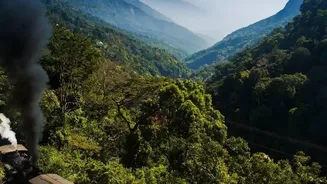
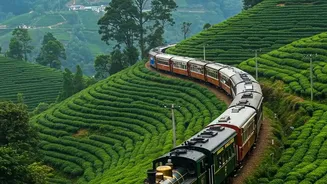
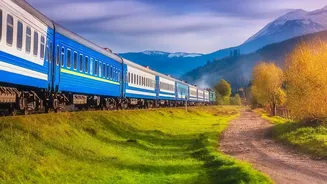
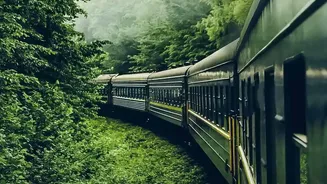
The five-hour, 46-kilometre journey is an unhurried feast for the senses. As the train ascends from 326 metres at Mettupalayam to over 2,200 metres near Ooty, the landscape transforms dramatically. The journey begins amidst paddy fields before plunging into dense 'shola' forests. The train winds its way across more than 250 bridges and through 16 dark, echoing tunnels, each revealing a new, stunning vista on the other side. Passengers are treated to panoramic views of deep ravines, cascading waterfalls, and rolling hills blanketed in the vibrant green of tea plantations. The slow pace, often just over 10 kilometres per hour, is a deliberate feature, allowing travelers to fully absorb the ever-changing canvas of the Nilgiris, often called the 'Blue Mountains'.
The Joy of Slow Travel
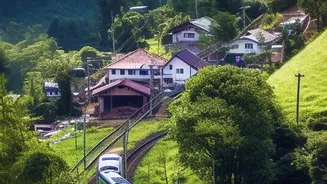
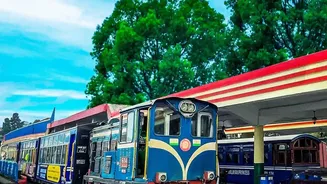
In a world obsessed with speed, the NMR champions the art of slow travel. The journey itself, not the destination, is the main attraction. Its unhurried pace allows for a deeper connection with the surroundings. You have time to notice the details: the scent of eucalyptus in the air, the monkeys playing in the trees, and the friendly waves from villagers along the tracks. The quaint, colonial-era stations like Coonoor, Wellington, and Lovedale are charming interludes, each with its own unique character. Passengers often get out to stretch, take photos, and chat with fellow travelers, fostering a sense of shared experience that is rare in modern transport. This slow, immersive journey is what turns a simple train ride into a cherished, lifelong memory.