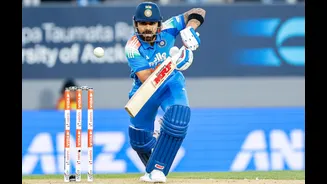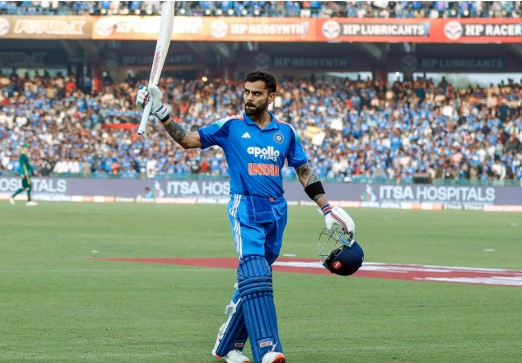







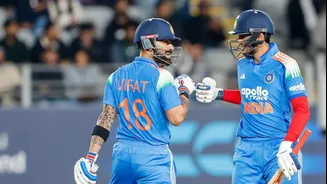
One man played on a different pitch. As India stumbled in their run chase against New Zealand in Auckland, Virat Kohli's blistering 74 off 51 balls felt like a masterpiece painted on a chaotic canvas. It raises the familiar, uncomfortable question: Is
Team India's batting just a one-man show?
The King's Solitary Stand
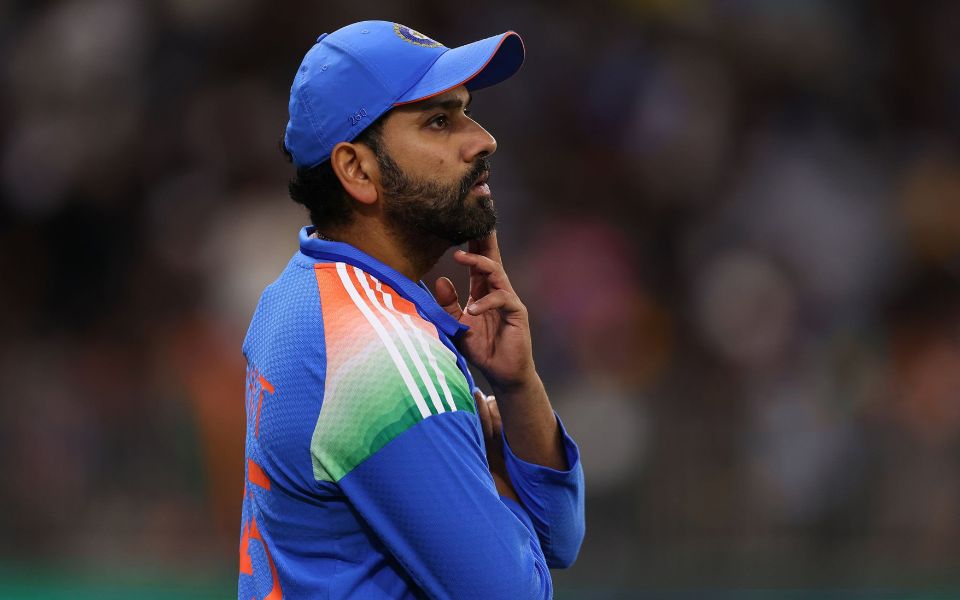
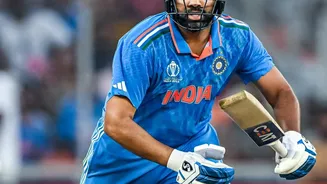
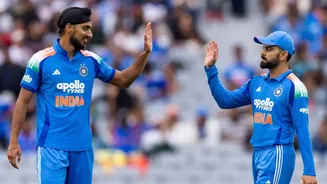
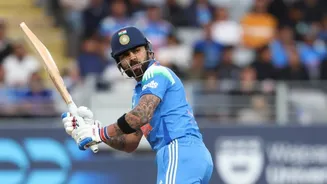
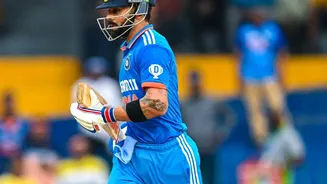
The scorecard from the first ODI at Eden Park tells a stark tale. New Zealand were bowled out for a modest 185. In response, India faced a rain-revised target of 143. Rohit Sharma departed for a duck, but then came Kohli. On a pitch where others struggled, he was a class apart, racing to his half-century in just 35 balls. His final score of 74, decorated with 13 fours and a six, came at a staggering strike rate of 145. He single-handedly broke the back of the chase, forging a 113-run partnership with a more sedate Shubman Gill. While India eventually won by five wickets, the innings was defined by Kohli's aggressive brilliance, which stood in sharp contrast to the rest of the lineup's fragility.
A Familiar Pattern of Collapse
The concerning part wasn't just Kohli's dominance, but the vacuum he left behind. Once he was dismissed for 74 with the score at 124, India experienced a mini-collapse, losing Axar Patel and Shreyas Iyer in quick succession. From a position of absolute command, the team suddenly looked vulnerable, slipping to 136 for 5. This pattern is not new. For years, the debate around India's batting has centred on its brittleness once the top order, and specifically Kohli, is dislodged. The middle order's struggle to absorb pressure and build on the platform laid by Kohli remains a persistent headache. Captain Shubman Gill even acknowledged the challenge of batting after the rain break, noting the pitch had become 'more nippy'. Yet, it was a challenge only one batter seemed to master.
It's More Complicated Than 'Over-Reliance'
However, to label the team as purely a one-man army would be an oversimplification. Shubman Gill provided a crucial supporting role with his 37 runs, anchoring one end while Kohli attacked. The team is filled with proven match-winners like Rohit Sharma, Shreyas Iyer, and KL Rahul, who have all played decisive innings in the past. The issue seems to be less about a lack of talent and more about a lack of consistency and role clarity. Ahead of the series, captain Gill spoke of a 'floating approach' for the middle order, with players like KL Rahul and Axar Patel being used flexibly based on the situation. While flexibility can be a strength, it can also lead to instability if players aren't secure in their primary roles. The absence of a key all-rounder like Hardik Pandya also disrupts the team's balance, a point Gill himself has raised.
The Lighthouse in a Storm
The debate over reliance on Kohli has shadowed Indian cricket for the better part of a decade, drawing comparisons to the era of dependence on Sachin Tendulkar. In high pressure chases, the team instinctively looks to Kohli as its 'lighthouse'. His unique ability to assess risk, manage the required run rate, and execute with clinical precision remains unparalleled. Commentators have long noted that as long as Kohli is at the crease, any chase feels possible. This psychological dependence is as significant as the statistical one. Players around him feel a sense of security, which can sometimes be a double edged sword, fostering an environment where others don don t feel the ultimate responsibility to see the team home. It is a role Kohli himself has consciously tried to evolve from, stating a desire to play with more 'freedom' and take risks, trusting the batters around him.