





Go Beyond a Basic Weather Check
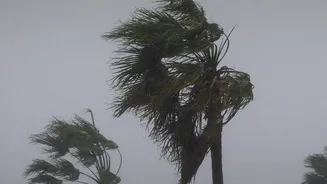
Relying on a simple 'rainy or not' forecast is not enough. During monsoon, conditions can change rapidly. Before you leave, check the district-level forecasts from the India Meteorological Department (IMD). The IMD uses a colour-coded alert system (Green,
Yellow, Orange, Red) to indicate the severity of expected weather. An Orange or Red alert for your route or destination should prompt you to seriously reconsider or delay your trip. Pay attention to warnings about 'heavy to very heavy rainfall,' which can lead to flash floods and landslides. Use the IMD's 'MAUSAM' or 'Damini Lightning' apps for real-time updates on precipitation and thunderstorm activity.
Assess Your Route for Hazards
A clear weather forecast doesn't guarantee clear roads. Landslides, waterlogging, and damaged roads are common monsoon hazards that can shut down highways for hours or days. Before and during your trip, use tools like Google Maps with the traffic layer enabled to check for real-time congestion and reported closures. However, don't rely on it completely, especially in hilly or remote areas where network coverage can be poor. Check the official social media accounts and websites of the National Highways Authority of India (NHAI) and local state traffic police for advisories on major road closures or diversions. Recent news reports show that even major national highways can be affected. For instance, landslides recently damaged the Mandi-Pathankot and Batote-Doda-Kishtwar highways, leading to traffic restrictions. If locals advise against taking a certain route, listen to them.
Your Monsoon Vehicle Checklist
Your car is your first line of defence. Ensuring it's monsoon-ready is non-negotiable. First, inspect your tyres. They are critical for preventing hydroplaning, where a layer of water causes your car to lose traction. Tyre tread depth should be at least 3mm for safe monsoon driving. Also, check your wiper blades; if they leave streaks, replace them. Test all your lights—headlights, taillights, and fog lamps—as heavy rain drastically reduces visibility. Have your brakes inspected, as wet roads significantly increase your stopping distance. Finally, ensure your battery is in good condition, as the increased use of wipers, lights, and defoggers puts extra strain on it.
On-the-Road Driving Strategy
Once you're on the move, your driving habits need to adapt. The most important rule is to reduce your speed. This gives you more time to react and reduces the risk of hydroplaning. Double your following distance from the vehicle in front of you; the standard two-second rule should become a four-second rule or more. Never drive through waterlogged roads. It's often impossible to judge the depth, and just a foot of water can stall most vehicles, while two feet can sweep one away. Submerged roads can hide deep potholes or open manholes, and driving through them can lead to catastrophic engine damage known as a hydrostatic lock. If you can't see the road surface, turn back and find an alternative route. It is always the safer choice.
Pack a Monsoon Emergency Kit
Being prepared for the unexpected can make a huge difference. Your monsoon emergency kit should go beyond the basics. Include a powerful torch with extra batteries, a high-visibility jacket, and a reflective warning triangle. A portable tyre inflator and a puncture repair kit are invaluable. Pack a tow rope and jumper cables. Given the possibility of being stranded, carry extra drinking water and non-perishable snacks like biscuits, nuts, and chikki. A fully charged 20,000 mAh power bank is essential for keeping your communication devices alive, especially since you should download offline maps for your route in case you lose network connectivity.