





The Power of Standing Still
The magic of the wall sit lies in a concept called isometric exercise. Unlike dynamic exercises like running or lifting weights (where muscles contract and lengthen), isometric exercises involve tensing your muscles without any joint movement. You hold
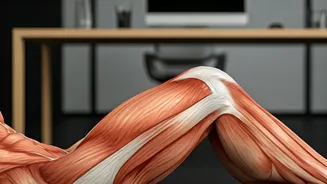
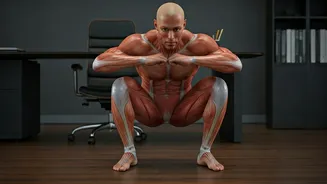
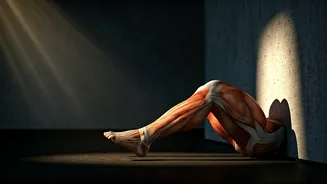
a static position, and your muscles work hard to maintain it. The wall sit is a classic example. By holding that seated position against a wall, you create significant tension in your quadriceps, glutes, and even your core. This type of training is incredibly efficient for building muscular endurance and strength in a very low-impact way, making it perfect for a quick break from your desk without needing equipment or getting sweaty.
More Than Just Strong Legs
While toned thighs are a great perk, the benefits of regular wall sits go much deeper. First, they are fantastic for improving your posture. Holding the correct form forces you to engage your core and keep your back straight, which can help counteract the slouching that often comes with hours of sitting in a chair. Second, they build serious endurance in your leg muscles and glutes, which are often underused in a sedentary job. Stronger legs provide better support for all your daily activities. Perhaps most surprisingly, recent research has highlighted the effectiveness of isometric exercises for managing blood pressure. Studies published in the British Journal of Sports Medicine suggest that exercises like wall sits can be more effective at lowering resting blood pressure than even aerobic exercise. It's a small time investment for a significant cardiovascular benefit.
How to Do the Perfect Wall Sit
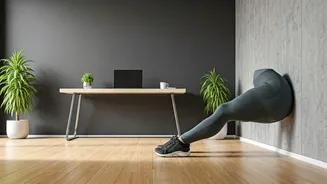
Form is everything when it comes to getting results and preventing injury. Follow these steps for a perfect wall sit: 1. **Find a sturdy wall:** Stand with your back flat against a smooth, solid wall. 2. **Position your feet:** Your feet should be shoulder-width apart and about two feet away from the wall. 3. **Slide down:** Slowly slide your back down the wall until your thighs are parallel to the floor, as if you are sitting in an invisible chair. 4. **Check your alignment:** Ensure your knees are directly above your ankles, not extending past them. Your knees should also be bent at a 90-degree angle. Keep your back and head flat against the wall. 5. **Hold the position:** Engage your core and breathe steadily. You should feel the burn in your quads (the front of your thighs). Avoid resting your hands on your knees; let your legs do the work. Start by holding for 20-30 seconds and gradually increase the duration as you get stronger.
Fit It Into Your Workday
The beauty of the wall sit is its convenience. You don't need to change or schedule a gym session. The key is to make it a consistent habit. Try 'exercise snacking' by integrating short bursts throughout your day. Set a reminder on your phone or calendar to pop up every hour or two. A great time is during a short break when you'd normally just scroll through your phone or grab another coffee. You can even do it while on a phone call (if you're not on video). A simple routine to start with is three sets of 30-second holds, with about 30 seconds of rest in between. This entire sequence takes less than three minutes but offers a potent dose of physical activity to break up the monotony of sitting.