





Beyond the Usual Suspects
For decades, a certain uniformity crept into Indian restaurant cooking. A handful of ingredients became staples, regardless of the dish's origin. Sourness, one of the fundamental pillars of taste, was often reduced to a few common choices: the sharp tang
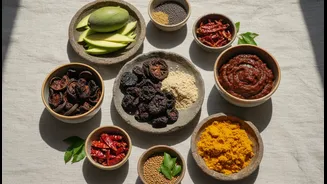
of lime, the sweet-sour depth of tamarind, or the mellow acidity of tomatoes. While these are essential, they represent only a fraction of India’s vast souring pantry. Across the country, from home kitchens in remote villages to the bustling tables of urban restaurants, a shift is underway. Chefs and home cooks are looking past the obvious and rediscovering unique, region-specific ingredients that provide a spectrum of sour notes, from fruity and fragrant to dark and smoky. This revival is about more than just flavour; it's a reclamation of culinary identity.
A Taste of the Western Ghats
Two of the most prominent examples of this trend hail from India’s western coast. First is kokum, or Garcinia indica, a small, purple-red fruit from the mangosteen family. Used extensively along the Konkan coast in Maharashtra, Goa, and Karnataka, the dried rind of kokum imparts a unique sourness that is both refreshing and slightly sweet, without the aggressive pucker of tamarind. It gives the iconic pink-hued Sol Kadhi its signature tang and is essential in many coastal fish curries. Further south, in the hills of Coorg (Kodagu), lies the secret to its iconic pandi curry: kachampuli. This dark, viscous vinegar is made by fermenting and boiling down the juice of the Garcinia gummi-gutta fruit. It's intensely sour and complex, often added at the end of cooking to lend a signature dark colour and profound depth to meat dishes. A little goes a long way, and its flavour is entirely unique to the region.
Secrets from the Northeast
The Northeast of India, a region of incredible biodiversity, boasts its own array of souring agents that are slowly gaining national recognition. In Assam, thekera tenga (Garcinia pedunculata) is a prized ingredient. The fruit is typically sliced and sun-dried, and these dried pieces are then used to impart a sharp, clean sour taste to dals and fish curries, most notably the famous masor tenga. The soaking water from thekera can also be turned into a refreshing summer drink, showcasing its versatility. Another interesting souring agent from the region is tangmo, which is made from the bark of a tree and is used by the Ao tribe not just for flavour but also as a dyeing agent. These ingredients tell a story of a cuisine that is deeply connected to the forest and its seasonal bounties.
Why Now? A Return to Roots
The renewed interest in these hyperlocal ingredients is part of a larger movement in Indian food. Chefs are increasingly looking to celebrate India's diverse culinary heritage, moving away from standardised menus to create dishes that are authentic and rooted in a specific place. This “farm-to-table” philosophy has evolved into a “hyperlocal” one, where the focus is on ingredients that define a micro-region's identity. Sourcing directly from local farmers and producers not only ensures freshness and supports local economies but also helps preserve agricultural biodiversity. For diners, this trend offers a chance to experience new and exciting flavours that go beyond the mainstream. It’s an exploration of terroir—the idea that food can taste of a specific place—and a recognition that a dish’s story is as important as its taste.