




The Humidity Trap: It's Not the Heat, It's the Humidity
The single biggest reason you feel so hot and sticky during the monsoon, even when the thermometer shows a moderate temperature, is humidity. When we get hot, our bodies sweat. The evaporation of this sweat from our skin is what cools us down. However,
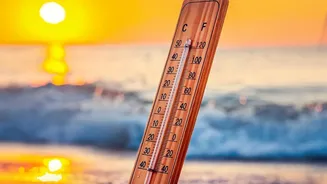
during the monsoon, the air is already saturated with water vapour. This high humidity slows down the evaporation of sweat to a crawl. As a result, the moisture sits on your skin, and your body's natural cooling system can't do its job effectively. This is why meteorologists refer to the “feels like” temperature, or heat index, which combines air temperature with relative humidity to give a more accurate picture of how hot it actually feels to the human body.
Urban Heat Islands: Cities That Cook
For commuters in urban centres, the feeling of heat is amplified by a phenomenon known as the Urban Heat Island (UHI) effect. Cities are filled with concrete buildings, asphalt roads, and other dense materials that absorb and store the sun's heat throughout the day. Rural areas with more greenery and open land stay cooler through a process called evapotranspiration. After sunset, while fields and forests cool down quickly, our urban jungles slowly release all that stored heat back into the atmosphere. When combined with the high humidity of the monsoon, this creates a microclimate that is significantly warmer and more uncomfortable than surrounding rural areas, turning the evening commute into a sweltering experience.
Clouds: A Blanket in the Sky
It seems logical that clouds should bring cooler weather by blocking the sun. And during the day, they do provide shade and reduce the amount of direct solar radiation reaching the ground. However, at night, these same clouds play the opposite role. Thick, low-lying monsoon clouds act like an insulating blanket. They trap the heat that the earth and city infrastructure are radiating, preventing it from escaping into space. On a clear night, this heat would dissipate, leading to cooler temperatures. But on a cloudy monsoon night, the heat is held close to the surface, which is why you often wake up to a morning that is already warm and stuffy before the sun has had a chance to get going.
The Lack of a Strong Breeze
A good breeze can make even a hot day feel more pleasant by helping to evaporate sweat and move hot air away from our bodies. While the pre-monsoon period is often marked by squally winds and dust storms that can accompany a sharp shower, the established monsoon system can be different. The weather pattern can sometimes result in less significant wind at ground level, especially in built-up areas. Without wind to churn the air, the heavy, moisture-laden, and warm air mass tends to stagnate. This lack of circulation contributes to that suffocating, close feeling where it seems like the very air itself is heavy and hot.
Pre-Monsoon Showers vs. The Real Deal
It's also useful to distinguish between pre-monsoon thundershowers and the sustained Southwest Monsoon. Pre-monsoon rains are often intense but brief, caused by localised heating. They can cause a significant, though temporary, drop in temperature. The Southwest Monsoon, however, is a large-scale weather system that brings moisture-laden winds from the ocean over the subcontinent for months. This system establishes a long-term environment of high humidity. So while that first heavy shower in May might have felt wonderfully cool, the persistent dampness of July and August often brings a different, more draining kind of heat.