


The Undisputed Winter Icon: Gajar Halwa
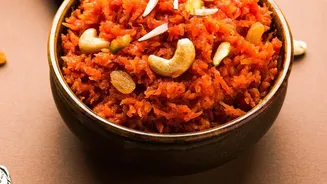
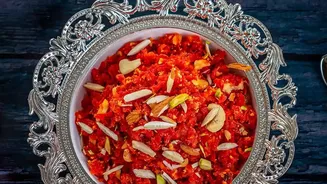
There are few sights more welcoming on a cold day than a steaming bowl of Gajar Halwa. This iconic dessert, a sweet pudding made from grated carrots, milk, ghee, and sugar, is a staple across North India as soon as winter arrives. Its origins are often
traced back to the Mughal era, with the name 'halwa' itself having Arabic roots meaning 'sweet'. The carrots used are traditionally the vibrant red Delhi carrots, which are seasonal to winter and lend the dish its signature colour and a unique sweetness. The process is a labour of love: carrots are slow-cooked in milk until they soften and absorb the creamy liquid. Ghee is added for richness, sugar for sweetness, and a final flourish of cardamom and chopped nuts like almonds and cashews provides aroma and texture. While modern variations using condensed milk or khoya (milk solids) exist to speed up the process, the traditional method of slowly reducing the milk creates an unparalleled depth of flavour that is pure comfort.
A Hearty Punjabi Classic: Sarson ka Saag and Makki ki Roti
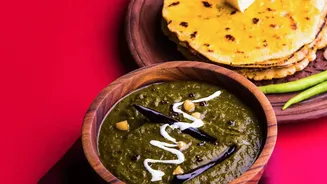
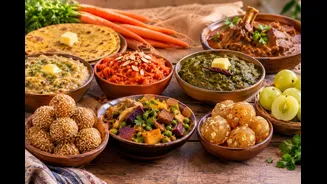
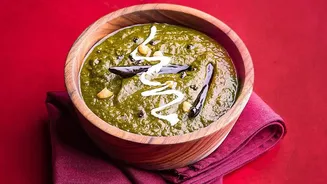
Travel to Punjab in winter, and you'll find this quintessential combination on every table. Sarson ka Saag, a vibrant green curry made from mustard greens, is a dish that belongs wholly to the colder months when the leaves are at their peak. The slight bitterness of the mustard greens is often balanced by adding other leafy greens like spinach (palak) or bathua. The greens are slow-cooked with ginger, garlic, and spices until tender, then blended into a rustic, thick consistency. Its perfect partner is Makki ki Roti, a flatbread made from maize flour (cornmeal). This gluten-free bread has an earthy, slightly sweet flavour and a crumbly texture that beautifully complements the creamy saag. Served with a generous dollop of white butter or ghee, this meal is more than just food; it's a wholesome, warming experience that defines the Punjabi winter.
Gujarat's Winter Bounty: Undhiyu
Undhiyu is Gujarat's answer to the winter harvest, a complex and celebratory one-pot casserole. The name comes from the Gujarati word 'undhu', meaning 'upside-down', which refers to the traditional method of cooking the dish in sealed earthen pots buried underground and fired from above. This dish is a medley of winter vegetables like surti papdi (hyacinth beans), purple yam, sweet potatoes, and small eggplants. These vegetables are often stuffed with a masala of coconut, cilantro, and spices. A key component is 'muthia', which are spiced dumplings made from fenugreek leaves and chickpea flour, either fried or steamed. The entire mixture is slow-cooked, allowing the vegetables to cook in their own juices and emerge tender but distinct. Primarily a seasonal dish, Undhiyu is especially popular during the kite festival of Uttarayan (Makar Sankranti) in January.
Energy Bites for the Cold: Pinni and Gond ke Laddu
Winter is also the season for energy-dense sweets that are meant to provide warmth and nourishment. Pinni, a Punjabi specialty, is a prime example. These are dense, round sweets made from whole wheat flour (atta) roasted in copious amounts of ghee, sweetened with jaggery, and packed with nuts and edible gum (gond). Similarly, Gond ke Laddu are popular across North India. Edible gum crystals are fried in ghee until they puff up like popcorn, then crushed and mixed with roasted wheat flour, nuts, and a sweetener like jaggery. Both of these sweets are traditionally made in large batches to last through the season. They are not just desserts but are considered nutritious snacks, often enjoyed with a warm glass of milk for breakfast to provide sustained energy against the winter chill.