





Decoding the Daily Gold Rate
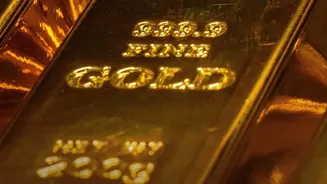
The first component of your bill is the cost of the gold itself. This is based on the daily market rate, which varies across cities due to factors like transport costs and local jeweller associations. You'll notice different rates for 24 Karat (24K) and 22
Karat (22K) gold. 24K is the purest form (99.9% pure), but it's too soft for intricate jewellery. That's why most ornaments are made from 22K gold, which is an alloy containing 91.6% pure gold. When you see a rate advertised, it's typically for 24K gold per 10 grams. To find the approximate rate for 22K gold, jewellers adjust this price based on its purity. Always confirm the per-gram rate for the specific purity (e.g., 22K or 18K) of the jewellery you are buying before you make a selection.
The Truth About Making Charges
Making charges, or labour charges, are what you pay for the craftsmanship involved in turning raw gold into a piece of jewellery. This is often the most variable and negotiable part of the bill. These charges can range widely, typically from 8% to as high as 35% of the gold's value, depending on the intricacy of the design and the jeweller's brand. Some jewellers charge a flat rate per gram of gold, while others calculate it as a percentage of the gold's price. Machine-made or simpler designs usually have lower making charges compared to complex, handcrafted pieces. During festive seasons, many jewellers offer discounts or waivers on making charges, which can lead to significant savings. Don't hesitate to ask for a better rate, especially on simpler pieces or if you are a repeat customer.
Understanding the Tax Component
The final major cost is the Goods and Services Tax (GST). In India, a 3% GST is applied to the entire value of the gold jewellery purchase. It is crucial to understand that this 3% is calculated on the total of the gold's value plus the making charges. Some invoices may also show a separate 5% GST on the making charges when they are billed as a distinct service, but the final retail tax to the customer on the entire jewellery transaction value is 3%. Always ask for a detailed, itemised bill that clearly breaks down the gold value, making charges, and the GST applied to each component. This transparency helps you verify the final cost and ensures there are no hidden fees.
Putting It All Together: A Sample Calculation
Let's see how these components add up. Imagine you are buying a 10-gram, 22K gold chain. 1. Gold Price: Assume the day's rate for 22K gold is ₹6,500 per gram. The gold value would be 10 grams x ₹6,500 = ₹65,000. 2. Making Charges: If the jeweller charges 15% on the gold value, the making charges would be 15% of ₹65,000 = ₹9,750. 3. Taxable Value: The total value before tax is ₹65,000 (gold) + ₹9,750 (making charges) = ₹74,750. 4. GST: A 3% GST is applied to this total: 3% of ₹74,750 = ₹2,242.50. Therefore, the final bill for the 10-gram gold chain would be ₹74,750 + ₹2,242.50 = ₹76,992.50. Some jewellers may add nominal hallmarking charges as well.
Essential Tips for the Smart Buyer
To ensure you get the best value, always look for the Bureau of Indian Standards (BIS) hallmark. This is a mandatory certification that guarantees the purity of the gold. The hallmark consists of the BIS logo, the purity grade (e.g., 22K916), and a unique six-digit alphanumeric code called the Hallmark Unique Identification (HUID). When buying studded jewellery, ensure the weight of the stones is deducted from the total weight, as you should only pay the gold rate for the weight of the gold. Comparing making charges across different jewellers can also lead to substantial savings, as this is where prices vary the most. Finally, always keep the itemised bill safe; it is your proof of purchase and essential for any future exchanges or sales.