


The Scale of India's Salt Problem
India is facing a major public health challenge directly linked to its love for salt. The World Health Organization (WHO) recommends consuming less than 5 grams of salt per day, which is equivalent to about 2 grams of sodium. However, studies show that
the average Indian consumes between 8 and 11 grams of salt daily—roughly double the safe limit. This excessive sodium intake is a primary driver of hypertension, or high blood pressure, a condition that affects an estimated 220 million people in the country. Hypertension is often called a 'silent killer' because it typically has no early symptoms, yet it is a leading risk factor for life-threatening cardiovascular diseases like heart attacks and strokes, as well as kidney disease. With cardiovascular diseases responsible for about a third of all deaths in India, tackling the salt issue has become a national priority.
The Lower-Sodium Salt Proposal
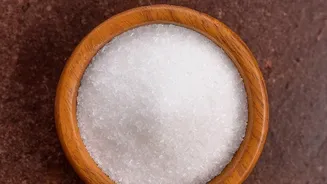
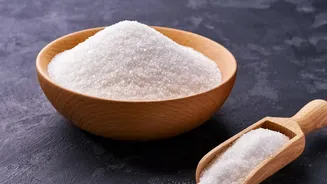
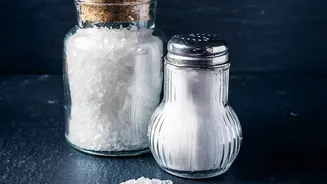
In response to this growing crisis, health experts and regulatory bodies like the Food Safety and Standards Authority of India (FSSAI) and the Indian Council of Medical Research (ICMR) are championing a promising intervention: low-sodium salt substitutes (LSSS). This isn't about removing salt from the diet, which is impractical and culturally difficult. Instead, the proposal focuses on replacing standard table salt with a blend that contains less sodium chloride and more potassium chloride. The beauty of this solution lies in its subtlety. These potassium-enriched salts look and taste very similar to regular salt, meaning they can be adopted in households and food manufacturing without requiring a major change in behaviour or culinary habits. The WHO has also endorsed this approach, recommending that people switch to lower-sodium salt substitutes as a practical way to reduce health risks.
The Science: Less Sodium, More Potassium
The health benefits of this switch are twofold. First, it directly reduces the intake of sodium, the main culprit behind salt-related high blood pressure. When you consume too much sodium, your body retains excess water, which increases blood volume and raises pressure on your artery walls. Second, it increases the intake of potassium, a mineral that many Indian diets lack. Potassium has the opposite effect of sodium; it helps relax blood vessels and encourages the body to excrete excess sodium, which can further help lower blood pressure. This dual action of reducing a harmful nutrient while increasing a beneficial one makes LSSS a particularly effective tool. Studies have shown that making the switch can lead to significant reductions in blood pressure and lower the risk of stroke and other major cardiovascular events by 13-14%.
A Nationwide Health Win
The potential public health impact of a nationwide shift to lower-sodium salt is staggering. A recent global study published in 'Nature Health' estimated that such a switch could prevent nearly 400,000 deaths in India annually. It could also prevent over 1.5 million new cases of cardiovascular and kidney disease each year. Because the majority of salt intake in India comes from salt added during home cooking—unlike in Western countries where processed foods are the main source—a simple change in the salt shaker can have an outsized effect. Experts refer to this as a 'passive intervention' that provides round-the-clock protection without asking people to sacrifice the taste of their traditional food.
Potential Hurdles and Safeguards
While the proposal is overwhelmingly positive, there are considerations to address. One concern is the safety of increased potassium intake for individuals with advanced chronic kidney disease, as their bodies may struggle to process it. However, multiple studies have concluded that even for this small, high-risk group, the overall benefits of salt substitution at a population level far outweigh the risks. Effective implementation would require clear product labelling, public awareness campaigns, and clinical guidance for patients with specific health conditions. Another hurdle is cost. Currently, potassium chloride can be more expensive than sodium chloride, but experts are exploring ways to bring the price down, including recycling potassium chloride from other industries to make it as affordable as regular salt.