



A Pathfinder for a Lunar Outpost
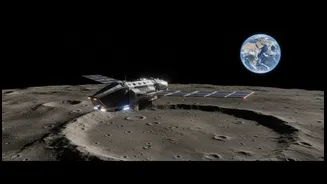
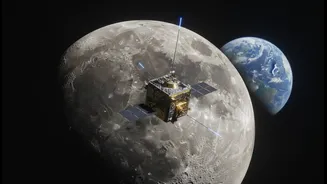
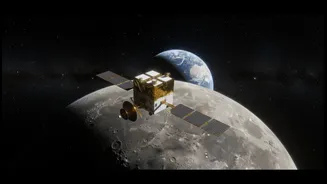
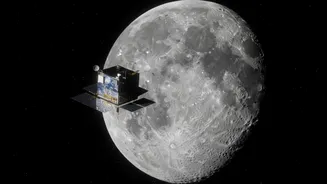
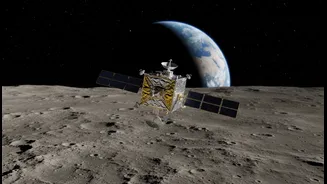
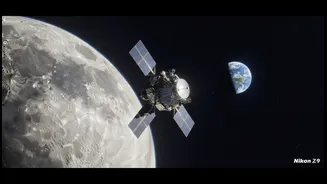
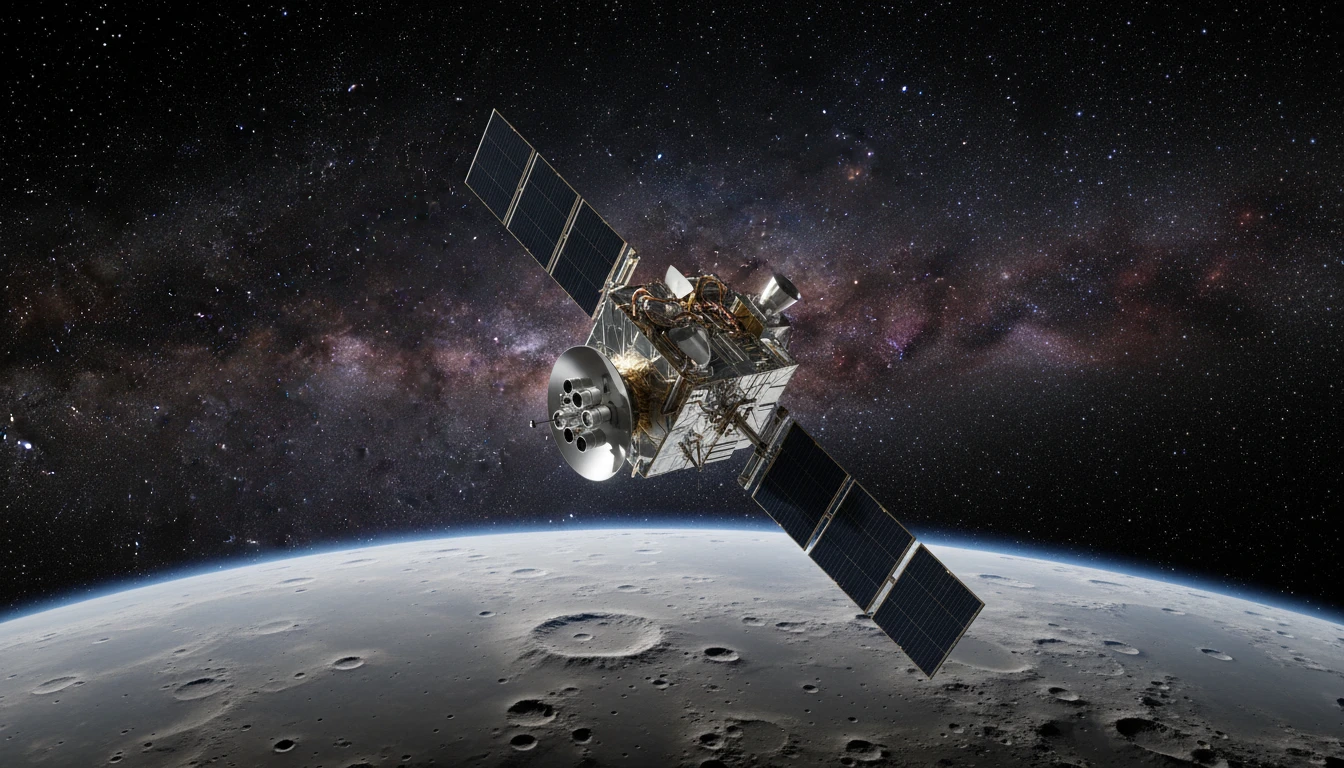
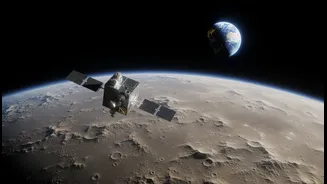
Launched in June 2022, the Cislunar Autonomous Positioning System Technology Operations and Navigation Experiment, or CAPSTONE, had a primary job: test a unique orbit planned for NASA's Gateway. The Gateway is envisioned as a future space station orbiting
the Moon, serving as a staging point for Artemis missions and deep space exploration. CAPSTONE's task was to fly in this complex path, a Near Rectilinear Halo Orbit (NRHO), to verify its stability. This orbit uses a precise balance point between the gravity of the Earth and the Moon, requiring minimal fuel for a spacecraft to stay in place, making it ideal for a long-term outpost like the Gateway. By being the first to fly this route, the commercially owned and operated satellite has provided crucial data for future missions.
Breaking Free from Earth's Control
For decades, navigating in deep space has meant a near-total reliance on Earth. Spacecraft constantly check in with the huge radio antennas of the Deep Space Network (DSN) to figure out where they are and where they are going. This system is effective but also creates a bottleneck. As more missions—from NASA, international partners, and commercial companies—head to the Moon and beyond, the demand on the DSN is becoming unsustainable. Every spacecraft needs to book time, and this reliance on ground control makes navigation slow and cumbersome. CAPSTONE's bigger story begins here, by testing a way to cut the cord.
Creating a 'GPS' for the Moon
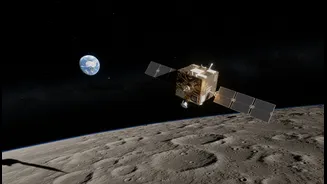
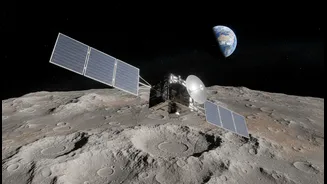
The mission's groundbreaking achievement lies in its secondary objective: demonstrating the Cislunar Autonomous Positioning System (CAPS). This innovative software allows a spacecraft to determine its own position by communicating with other lunar assets. In a key experiment, CAPSTONE successfully communicated with NASA's Lunar Reconnaissance Orbiter (LRO), which has been circling the Moon since 2009. By sending signals back and forth, CAPSTONE measured its distance and speed relative to LRO, calculating its own position in space without input from Earth. This successful test is the first step toward creating a GPS-like network at the Moon, enabling spacecraft to navigate independently.
The Engineering Behind Autonomy
The journey wasn't without its challenges. Early in its trip to the Moon, the operations team temporarily lost contact with the spacecraft, and later a stuck thruster sent it into an uncontrolled spin. The engineering teams at Advanced Space, which operates the mission, had to work through these issues, showcasing remarkable problem-solving millions of kilometres from home. During its extended mission, CAPSTONE became a testbed for even more advanced technologies. This included software updates sent to the spacecraft that allowed it to perform new experiments, demonstrating how operational hardware can be flexibly adapted for new tasks, saving the cost of launching entirely new satellites.
Paving the Way for Artemis and Mars
The success of CAPSTONE's autonomous navigation is a critical enabler for the future of space exploration. For NASA's Artemis program, which aims to establish a sustainable human presence on the Moon, this technology is a game-changer. Autonomous navigation means that landers, rovers, and orbiting spacecraft can operate more efficiently and safely, making real-time decisions without waiting for instructions from a distant mission control. It frees up the Deep Space Network for more critical science and communication tasks. This capability is not just for the Moon; it is foundational for future crewed missions to Mars, where the communication delays are significantly longer. CAPSTONE has shown that a more autonomous, interconnected, and efficient era of space exploration is not just possible, but already underway.