





The Science of Squeezing
At its core, a compression bag is a deceptively simple device designed to do one thing: remove air. Most of the volume in your heavy outerwear, like a down jacket or a thick wool sweater, isn't the material itself but the air trapped between the fibres.
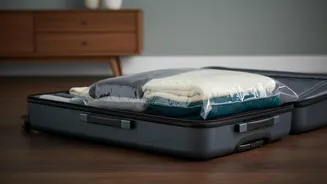
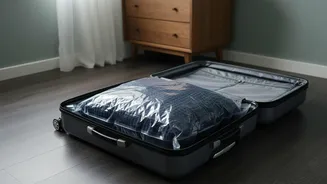
This trapped air is what makes these garments excellent insulators, but it is also what makes them a packing nightmare. Compression bags work by allowing you to force this air out and then sealing the garment in a much smaller, denser state. By removing the air, a puffy jacket that once occupied a third of your carry-on can be flattened into a compact, solid slab, freeing up a remarkable amount of space.
The Two Main Types of Compression Bags
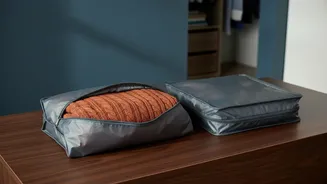
Not all compression systems are created equal, especially for travel. The two most common types are vacuum bags and roll-up bags. Vacuum bags require an external device—like a household vacuum cleaner or a small, portable electric pump—to suck the air out through a one-way valve. This method achieves the greatest possible compression, turning a pile of sweaters into a hard, flat brick. However, it means you need to have the pump with you to re-pack for your journey home. Roll-up bags, on the other hand, are the traveler’s best friend. These bags have one-way air channels at the bottom. You simply seal the top and then manually roll the bag tightly, forcing the air out through the channels. No pump is required, making them ideal for any travel scenario. While they don't achieve the same extreme compression as a vacuum pump, they offer a perfect blend of space-saving and convenience.
How to Use Them for Maximum Effect
Using a roll-up compression bag is straightforward, but a few techniques can improve your results. First, neatly fold your jacket or sweater. For jackets, fold the sleeves in and then fold the body in half or thirds to create a clean rectangle. Place it flat inside the bag, ensuring it doesn't overfill the space; a bag that is 80% full is ideal. Seal the zip-top closure, making sure it is fully locked from end to end. Then, starting from the sealed end, begin to roll the bag tightly and slowly. You will hear the air hissing as it escapes from the one-way valves at the other end. Use your body weight to press down as you roll, expelling as much air as possible. The final result is a dense, flat package ready to be placed in your suitcase.
Words of Caution: What Not to Compress
While compression bags are revolutionary for materials like polyester fleece, wool, and cotton, some caution is needed with high-performance down jackets. The insulating power of down comes from its loft, or fluffiness—the ability of its clusters to trap air. Extreme or prolonged compression can damage these delicate clusters, potentially reducing their ability to fully loft again and thus diminishing the jacket's warmth. For short-term travel of a few days or weeks, using a roll-up bag on a down jacket is generally fine. However, it's strongly advised to avoid using true vacuum-sealed bags on high-quality down, as the intense pressure can cause irreversible damage. Upon arrival at your destination, and especially when you return home, unpack your down items immediately to allow them to breathe and regain their loft. Never store them in a compressed state for long periods.
The Overpacking Trap and Weight Limits
Compression bags solve the problem of space, but they do not solve the problem of weight. This is the single most important limitation to remember. It can be incredibly tempting to see all the new-found space in your suitcase as an invitation to pack more. But a bag full of compressed jackets and sweaters will be surprisingly heavy. A dense, compact suitcase can easily exceed airline weight limits for carry-on or checked luggage, leading to unexpected fees that negate the savings of avoiding an extra bag in the first place. The wisest strategy is to use compression bags to make your existing packing list fit more comfortably or to enable you to use a smaller suitcase, not to double the amount of clothing you bring. Always weigh your bag before heading to the airport.