



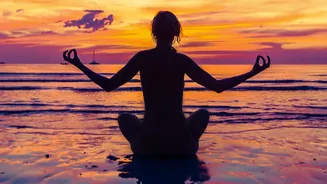
In our always-on world, finding true rest can feel impossible. Enter Yoga Nidra, a simple yet profound guided practice that invites you into a state of deep relaxation, without any prior experience needed. It’s not about sleep, but conscious rest.
What is Yoga Nidra?
Yoga
Nidra, often translated as 'yogic sleep,' is a powerful meditation technique that induces a state of deep, conscious rest. Unlike other forms of yoga that involve physical postures, Yoga Nidra is typically practiced lying down comfortably with your eyes closed. A guide's voice leads you through a systematic process of relaxing your body and mind. The goal is to reach a state of awareness between waking and sleeping, where your body is completely relaxed but your mind remains alert and focused on the instructions. This is different from conventional sleep, where you lose awareness, and from other forms of meditation that might require you to sit upright and focus on a single point or on your breath without verbal guidance.
The Core Benefits
The appeal of Yoga Nidra lies in its accessibility and its wide range of benefits. Because it promotes such a deep state of relaxation, it is a highly effective tool for managing stress and anxiety. Regular practice can help calm the nervous system, lower blood pressure, and reduce cortisol levels. Many people find that it significantly improves their sleep quality, helping them fall asleep faster and enjoy more restful nights. Beyond physical relaxation, Yoga Nidra can enhance mental clarity, boost creativity, and foster a greater sense of self-awareness. It provides a unique opportunity to connect with your inner self, release deep-seated tensions, and process emotions in a safe, controlled environment.
The Stages of Practice
A typical Yoga Nidra session follows a specific sequence, though the exact details can vary. It usually begins with setting an intention, or 'Sankalpa'—a short, positive statement about what you wish to achieve. This is followed by a guided body scan, where you systematically bring your awareness to different parts of the body, from your toes to the crown of your head. This process, known as 'rotation of consciousness', helps to release physical tension. Next, the guide will lead you through breath awareness exercises and may introduce opposing sensations (like heaviness and lightness) or visualizations. The practice concludes by revisiting your Sankalpa, planting it firmly in your relaxed, receptive mind before you are gently guided back to full waking consciousness.
How to Begin Your Practice
Starting with Yoga Nidra is simple. You don't need any special equipment, though a yoga mat, blanket, and a small pillow for your head can enhance comfort. The most important thing is to find a quiet, comfortable space where you won't be disturbed for the duration of the practice, which typically lasts between 20 and 45 minutes. As a beginner, the easiest way to start is by using a guided recording. There are countless free and paid options available online through apps and streaming platforms. Find a voice and pace that you find soothing. Your only job is to lie down, listen, and follow the instructions as best you can. Don't worry if your mind wanders or if you fall asleep—it's a common experience, and you will still absorb some of the benefits.
Common Questions Answered
One of the most common questions is, 'What if I fall asleep?' It's perfectly fine. While the goal is to remain consciously aware, falling asleep simply means your body is getting the deep rest it needs. With practice, you will learn to hover in the state between wakefulness and sleep. Another query is whether it's 'working' if your mind wanders. This is also normal. The mind's nature is to think. Simply notice that your mind has drifted and gently guide your attention back to the voice. There's no need for judgment. The practice is not about achieving perfection but about showing up for yourself and allowing your body and mind a moment of profound, healing rest.