




A Critical Spacewalk for a Vital Link
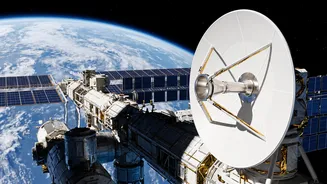
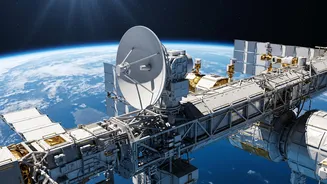
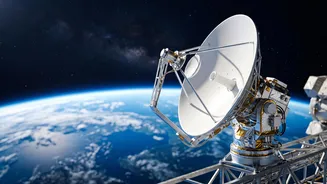
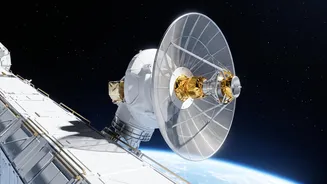
In a carefully choreographed spacewalk on August 25, 2026, NASA astronaut Anil Menon and European Space Agency astronaut Sophie Adenot installed a new Space-to-Ground antenna on the International Space Station (ISS). The operation, which took six and a half
hours, was essential to replace an older, degraded unit and restore full redundancy to the station's high-speed communication systems. The original antenna had lost some of its ability to send signals, and while this had a limited impact on day-to-day operations, mission managers prioritized the replacement to ensure the communications network remains robust and reliable. This spacewalk, the 283rd in support of station maintenance, underscores the importance of the invisible data bridge connecting the orbiting laboratory to Mission Control in Houston.
The Need for Speed and Stability
The ISS isn't just a home for astronauts; it's a world-class research facility. Every day, experiments in fields from human biology to materials science generate enormous volumes of data. This information, along with high-definition video and crew communications, travels to Earth via a network of relay satellites. The station primarily uses S-band frequencies for essential telemetry and voice commands—a highly reliable but slower connection—and the higher-frequency Ku-band for large data transfers. The newly installed antenna is a Ku-band unit, a system that acts like a data superhighway. With the ability to support connection speeds of up to 600 megabits-per-second (Mbps), this technology doubles the previous data rate, allowing scientists to receive their results faster and enabling more complex, data-heavy research.
How the Communications Chain Works
Communicating with the ISS is more complex than a simple phone call. Because the station orbits Earth every 90 minutes, it can't maintain constant direct contact with any single ground station. Instead, it sends its signals up to NASA's Tracking and Data Relay Satellites (TDRS), a constellation of satellites in a much higher geostationary orbit. These relay satellites act as intermediaries, bouncing the data down to ground stations in locations like New Mexico and Guam. This system ensures that the ISS has a communication link for about 80-85% of its orbit. The Ku-band antenna is critical to this process, acting as the station's powerful transmitter for the high-volume data that forms the backbone of its scientific mission.
More Than Just Data
A secure, high-speed connection is about more than just experiment results; it's a lifeline for the crew. It enables reliable communication during critical operations like spacewalks and allows for high-quality video links with family on the ground, a crucial element for astronaut morale and psychological well-being during long-duration missions. Astronauts use an internet protocol (IP) phone that routes calls through the Johnson Space Center in Houston, making the connection remarkably clear. The recent upgrade not only bolsters the scientific output of the ISS but also strengthens this essential human connection, ensuring astronauts remain closely tied to their support teams and loved ones on Earth, no matter where they are in their orbit.
Paving the Way for Future Exploration
The work done to maintain and upgrade the ISS communications network is not just for today's missions. The technologies and procedures honed in low-Earth orbit serve as a vital testbed for future deep-space exploration. As NASA and its partners plan for missions to the Moon and Mars, the need for robust, high-bandwidth communication systems will become even more critical. The lessons learned from managing complex systems like the Ku-band antenna and the TDRS network will directly inform the design of communication architectures for lunar gateways and Martian habitats. This new antenna is another step in ensuring that as humanity ventures further into the cosmos, the line back to Earth remains clear, strong, and faster than ever.