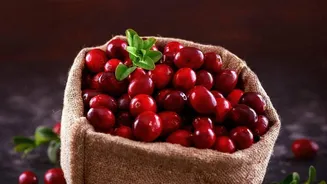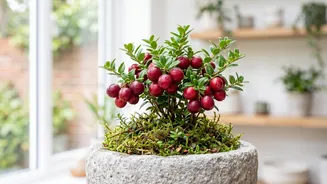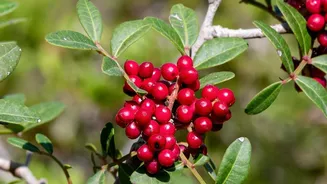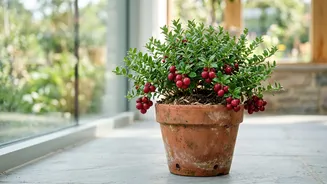



Growing cranberries indoors offers a unique gardening challenge and the reward of harvesting your own tart, festive berries. Success hinges on understanding and managing the plant's specific growth habits, which differ greatly from typical houseplants.
Container and Soil Setup
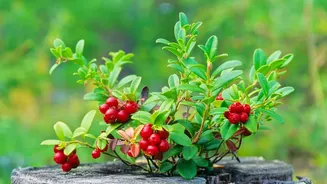
Cranberry plants have a unique growth structure consisting of trailing vines called runners and vertical stems known as uprights, where the fruit forms. Due to their spreading nature and shallow roots, which mostly occupy the top six inches of soil, a wide container is more important than a deep one. A pot or trough-style planter at least 12 inches wide is a good starting point. The most critical factor for success is acidic soil. Cranberries thrive in a pH between 4.0 and 5.5. You can achieve this by using a potting mix specifically designed for acid-loving plants or by creating your own blend of peat moss, sand, and compost. Peat moss is essential for lowering the pH and retaining moisture. Ensure your container has excellent drainage to prevent waterlogging, as the roots need aeration despite requiring constant moisture.
Light and Water Requirements
To mimic their natural bog environment, cranberry plants need full sun, which translates to at least six to eight hours of direct sunlight per day indoors. A south-facing window is ideal. If you cannot provide enough natural light, supplement with a grow light to ensure healthy growth and encourage flowering. The soil should be kept consistently moist but never soggy. Overwatering can lead to root rot, so good drainage is key. Using rainwater is preferable to tap water, which can be alkaline and raise the soil's pH over time. Self-watering pots can be an excellent tool for maintaining steady moisture without saturating the roots. A layer of sand or pine bark mulch on the soil surface can help retain moisture and keep the shallow roots cool.
Managing Runners and Uprights
A key aspect of indoor cranberry care is managing its two types of growth. The plants produce long, wiry runners that spread horizontally. From these runners, shorter vertical stems, called uprights, emerge. These uprights are what produce flowers and, subsequently, fruit. Your primary goal is to encourage the development of these productive uprights. Pruning is essential for this. After the plant is established, typically in its third year, you can begin light pruning. The focus should be on trimming back excessively long or tangled runners. This opens up the plant's canopy, allowing for better air circulation and light penetration, which signals the plant to produce more fruit-bearing uprights instead of just vegetative growth. Only prune the runners, not the uprights. Any dead or damaged vines should be removed to keep the plant healthy.
The Crucial Chilling Period
Cranberries are cold-hardy plants that require a period of dormancy in winter to set fruit properly. This is known as a chilling requirement. The plant needs to experience a certain number of 'chill hours', which are hours where the temperature is below 45°F (7°C). Different sources cite varying requirements, ranging from 200 to over 1500 hours. To achieve this indoors, you will need to move your potted cranberry plant to an unheated garage, a cold basement, or a protected spot outdoors during the winter months. This cold period is essential for the plant to break dormancy correctly in the spring and develop healthy flower buds. Without this chilling phase, you are unlikely to see any fruit.
Pollination for Fruit Production
Cranberry flowers are generally not self-fertile, meaning they require pollinators to move pollen from one flower to another to produce fruit. Outdoors, this job is done by bees. Indoors, you'll have to play the role of the bee. This process is called hand pollination. Once the small, pinkish-white flowers appear on the uprights, you can use a small, soft brush or a cotton swab to gently transfer pollen between the blossoms. Gently swirl the brush inside one flower and then move to the next, repeating the process across all the open flowers. For best results, do this daily while the plant is in bloom. Some gardeners also use a gentle fan to create air movement, which can help distribute pollen.