





Cruise: The Luxury of Time
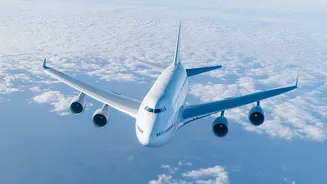
The cruise portion of a flight, spent at high altitude, is statistically the safest. Should an emergency arise here—such as an engine issue, cabin depressurization, or a medical situation—pilots often have their most valuable resource in abundance: time.
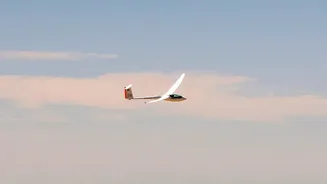
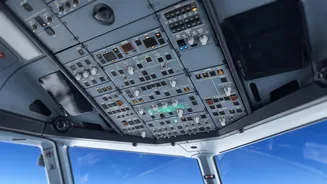
At 35,000 feet, there is ample altitude to troubleshoot. Pilots are trained to follow the mantra "aviate, navigate, communicate." First, fly the plane. With the autopilot engaged, this phase is often stable. An engine failure, for instance, doesn't mean the plane will fall; it becomes a glider, and from a high altitude, it can travel a significant distance. This gives the crew moments to work through checklists, coordinate with air traffic control, and identify the nearest suitable airport. Common cruise-level emergencies include pressurization issues, which require a rapid descent to a safe altitude where oxygen is sufficient, or passenger medical emergencies, which occur on roughly 1 in every 604 flights. While serious, these are generally considered non-time-critical emergencies, where methodical action is more important than raw speed.
Descent and Approach: The Pressure Builds
As the aircraft begins its descent, the workload in the cockpit increases significantly. This phase accounts for a large percentage of accidents, far more than the cruise phase. The environment becomes more crowded with other aircraft, communication with air traffic control is constant, and the pilots are busy reconfiguring the plane for landing by extending flaps and lowering the gear. An emergency during descent leaves much less time for decision-making. The proximity to the ground becomes a pressing factor. A problem that might be manageable at 35,000 feet, like a partial power loss, becomes far more urgent at 5,000 feet. The crew has to balance solving the immediate problem with the constant need to prepare for a safe landing. Checklists are still critical, but they must be executed faster. The priority shifts from long-range planning to immediate tactical decisions. This phase demands intense situational awareness, as a minor issue can quickly escalate when the ground is fast approaching.
Landing: The Most Critical Minutes
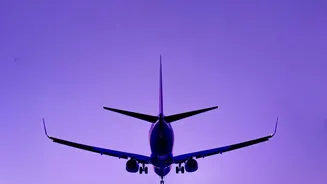
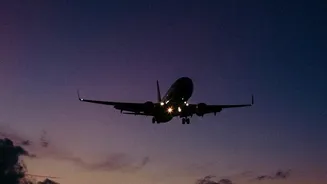
The final approach and landing are, by a wide margin, the most statistically dangerous parts of a flight, accounting for nearly half of all fatal accidents despite representing just a few minutes of total flight time. During these final moments, the aircraft is at its lowest speed and altitude, making it vulnerable. There is virtually no time for troubleshooting. Emergencies here are time-critical and demand immediate, often memorized, actions. An engine failure on final approach, for example, requires an instantaneous decision to either continue the landing or perform a 'go-around' (abort the landing and climb away). Other critical landing-phase emergencies include landing gear failing to extend, sudden weather changes like wind shear, or runway incursions. In these scenarios, there is no time to consult a manual. Pilots rely on thousands of hours of training and simulator practice to react instinctively and correctly.
The Human Factor: Training for Surprise
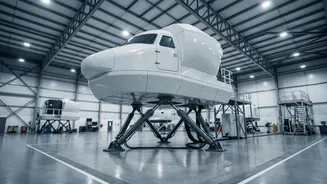
Regardless of the flight phase, a key challenge in any unexpected emergency is the 'startle effect'—an involuntary reflex to a sudden, shocking event that can briefly impair a pilot's cognitive function. This physiological response can cause momentary confusion or a delay in action, which can be dangerous in time-critical situations. Modern pilot training heavily focuses on mitigating this by repeatedly exposing crews to surprising and developing failures in a simulator. This Upset Prevention and Recovery Training (UPRT) helps pilots learn to manage the initial shock, stabilize the aircraft first, and then systematically address the problem. The goal is to replace a panicked, reflexive action with a calm, trained response. This conditioning ensures that whether an alarm sounds at 35,000 feet or 350 feet, the crew's reaction is disciplined, prioritising the continued safe flight of the aircraft above all else.