



A Hunt for Cosmic Dawn
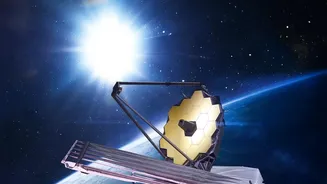
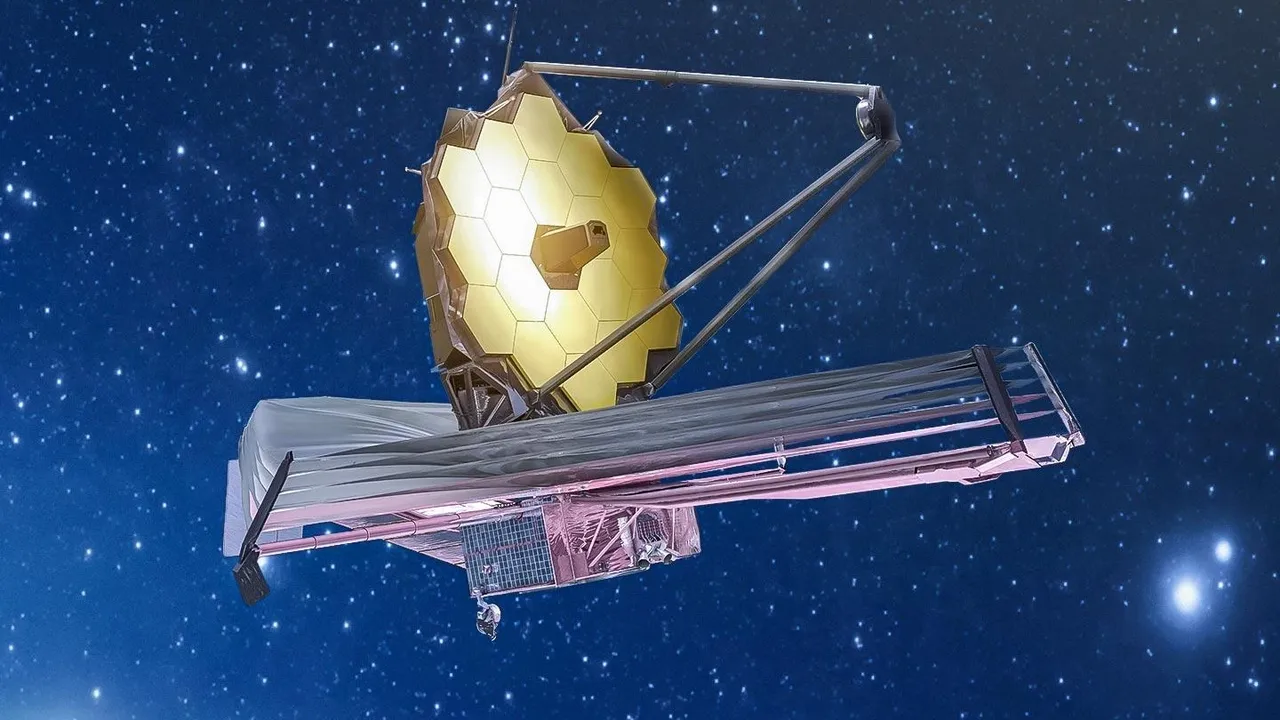
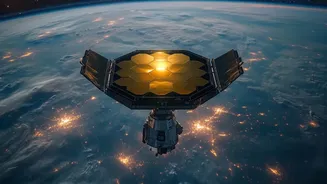
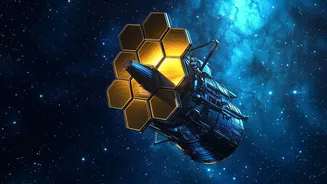
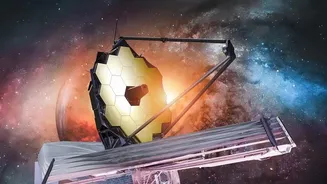
The James Webb Space Telescope (JWST) was built for a grand purpose: to peer back in time to the universe's infancy. Astronomers expected to find the very first galaxies as faint, compact objects whose light had been stretched over billions of years into
the red end of the spectrum. Soon after it began science operations in 2022, Webb started finding exactly that: hundreds of what came to be called “little red dots” (LRDs). These objects appeared to exist in the first billion years after the Big Bang, a period of cosmic history that was previously almost impossible to study in detail. The initial interpretation was thrilling. These LRDs were thought to be massive, young galaxies, so massive in fact that they challenged existing theories of how quickly galaxies could form. Some headlines even claimed the discoveries were “universe-breaking.”
The Plot Thickens
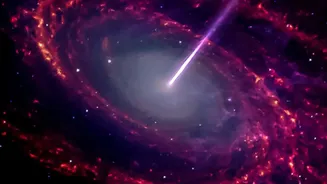
However, the simple story of the little red dots being nascent galaxies quickly became more complicated. As astronomers gathered more detailed data, a new, leading theory emerged: many of these LRDs are not just galaxies, but homes to ravenously growing supermassive black holes. In some extreme cases, these black holes appear to be more massive than the combined stellar mass of their host galaxies, flipping the script on which came first. A June 2026 study of one such object, GLIMPSE-17775, found compelling evidence that it is a “black hole star” — a supermassive black hole cocooned in such a dense shroud of gas and dust that it obscures the black hole itself, making the entire object glow. This wasn't a simple galaxy; it was a cosmic engine of a type scientists had theorized about but lacked clear observational evidence for until now.
More Than Just a Colour
The evolving mystery of the LRDs highlights a fundamental challenge in astronomy: a simple red point on an image is not a simple answer. Its redness, which astronomers call redshift, can be caused by two very different things. It could mean the object is extremely far away, with its light stretched by the expansion of the universe. Or, it could mean the object is closer but heavily obscured by cosmic dust, which also reddens light. The LRDs appear to be a complex mix of both. Many are indeed in the early universe, but their extreme redness and brightness are supercharged by the energetic activity of a central black hole and the thick dust clouds that surround it. Distinguishing between a truly distant, normal galaxy and a slightly closer but hyperactive, dusty one requires more than just images; it needs detailed analysis of the object's light spectrum, a sort of cosmic fingerprint that Webb’s instruments are uniquely designed to capture.
A Feature, Not a Bug
This complexity isn't a failure of the telescope; it's a triumph of the scientific method. The initial headline-grabbing idea that LRDs were “universe-breaking” galaxies is giving way to a more nuanced and, frankly, more interesting picture of the early cosmos. Scientists now believe they are witnessing a crucial, short-lived phase of cosmic evolution where supermassive black holes grow at an incredible rate before their host galaxies have fully formed. This phase seems to be common in the early universe, as LRDs appear in large numbers around 600 million years after the Big Bang but then seem to disappear after about 2 billion years. This suggests they either burn out or evolve into the more familiar types of galaxies and quasars we see in the later universe. By learning to identify these cosmic imposters, astronomers can refine their methods for finding the actual first generation of stars and galaxies, which may be even fainter and harder to spot. This study of what things aren't is just as important as finding what you were looking for.