






Decoding Our Climate's Future
The ocean acts as Earth's great moderator, absorbing over 90% of the excess heat and about a quarter of the carbon dioxide produced by human activities. This buffering capacity slows the pace of climate change, but it comes at a cost: rising sea temperatures,
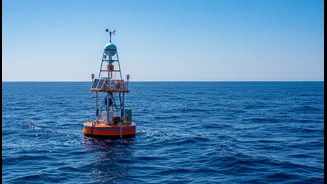
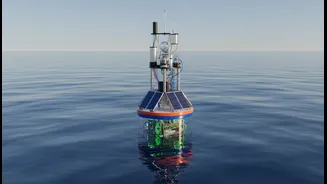
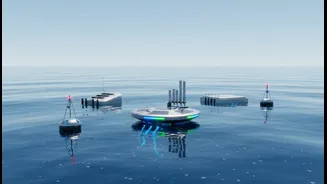
ocean acidification, and shifting currents. Continuous observation, using a vast network of satellites, moored buoys, and autonomous floats, provides the essential data to track these changes. These measurements are not just academic; they are the bedrock of global climate models. By understanding precisely how much heat the ocean is storing and where, scientists can refine predictions about future warming, sea-level rise, and long-term climate patterns, giving policymakers the evidence needed to act.
Better Forecasts, Safer Communities
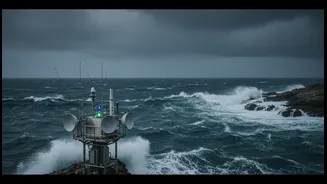
For India, the ocean's behaviour is a matter of immediate and critical importance. The Indian Ocean is the engine of the monsoon, the lifeline for agriculture and water security for a third of the world's population. Networks like the Indian Ocean Observing System (IndOOS) provide real-time data on sea surface temperature and currents, which are crucial for more accurate monsoon predictions. The same data helps forecast the formation and intensification of tropical cyclones. By feeding real-time ocean observations into weather models, forecasters at the India Meteorological Department can issue more timely and accurate warnings, saving countless lives and reducing property damage along India's extensive coastline.
Powering a Trillion-Dollar Blue Economy
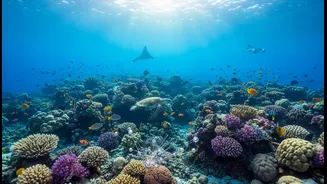
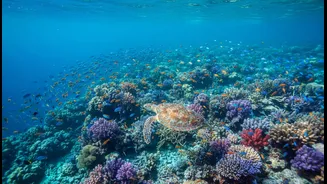
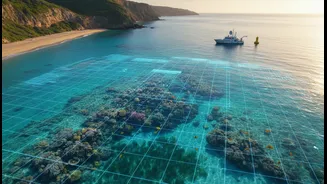
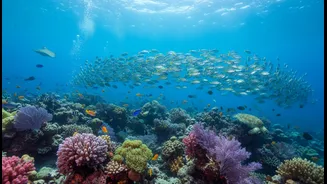
The 'Blue Economy'—all economic activity related to the oceans—is already valued at over $1.5 trillion globally and is projected to double by 2030. This growth is fundamentally dependent on ocean data. Shipping companies use current and wave forecasts to optimise routes, saving fuel and reducing emissions. The siting of offshore wind farms and aquaculture projects relies on detailed knowledge of ocean conditions. Furthermore, healthy marine ecosystems underpin fisheries and tourism, which provide livelihoods for millions. Ocean observation helps manage these resources sustainably by monitoring fish stocks, detecting pollution like oil spills, and tracking harmful algal blooms that can devastate marine life and local economies.
A Global, Collaborative Effort
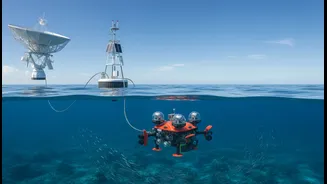
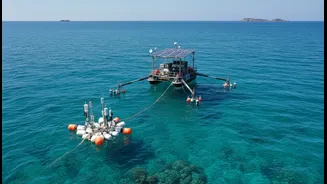
The sheer scale of the ocean means that no single nation can monitor it alone. Its importance is so widely recognised that the United Nations has declared 2021-2030 as the Decade of Ocean Science for Sustainable Development. This initiative aims to foster international cooperation to build the 'science we need for the ocean we want'. Programmes like the Global Ocean Observing System (GOOS) coordinate thousands of instruments, from deep-sea Argo floats that measure temperature and salinity to surface drifters that track currents. This global collaboration ensures that the data is standardised, reliable, and openly available to scientists, forecasters, and businesses around the world, creating a truly global picture of our planet's most critical life-support system.