

What is a Solar Maximum?
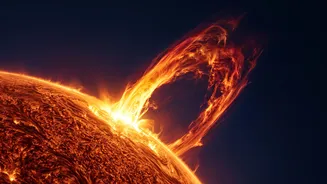
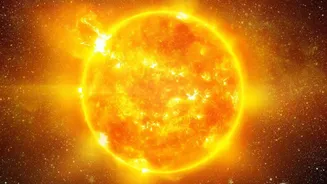
Think of the Sun as having a heartbeat that lasts about 11 years. This is called the solar cycle. For part of that cycle, the Sun is quiet, with few sunspots or solar flares. This is the 'solar minimum.' But then, its activity ramps up to a peak, known
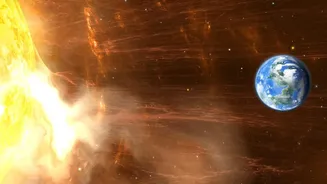
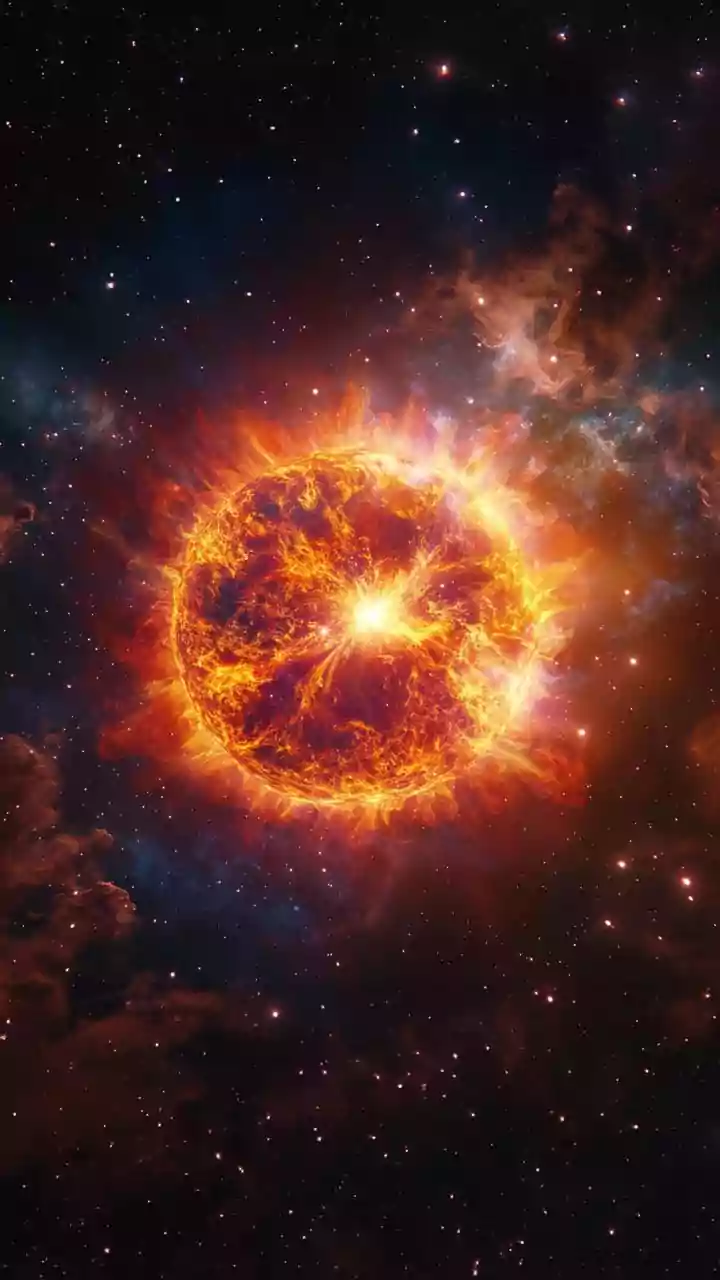
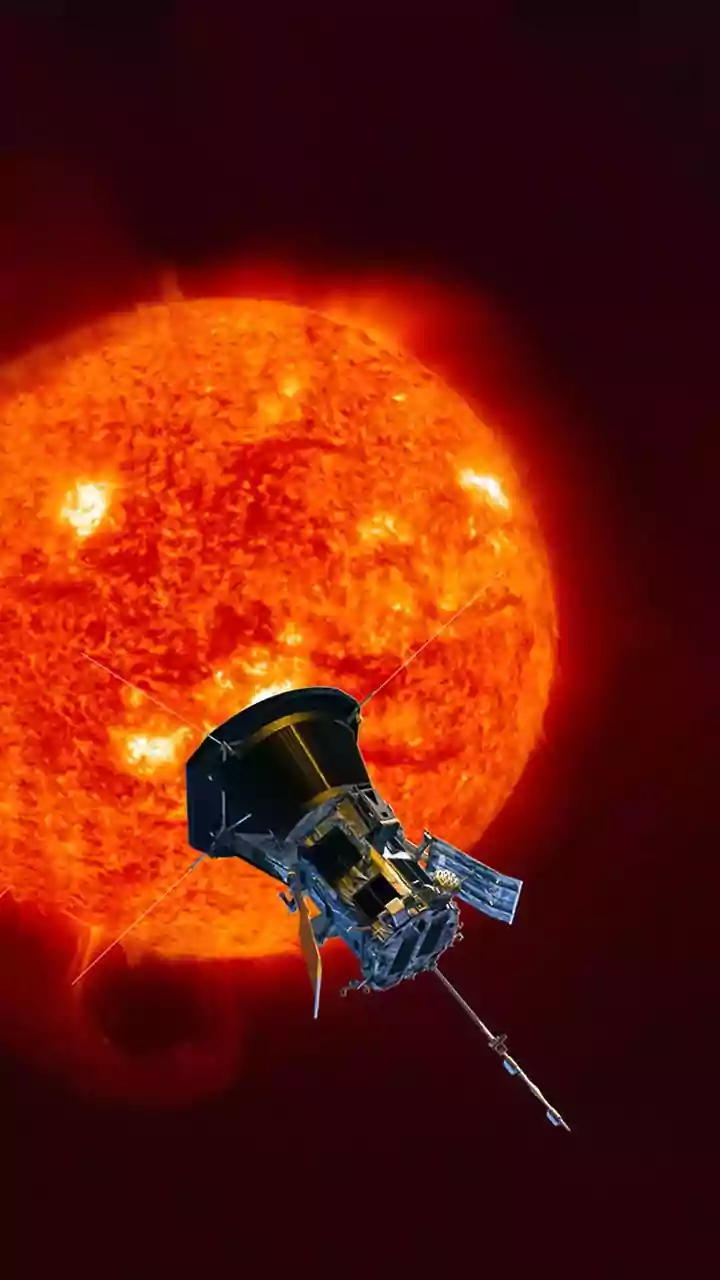
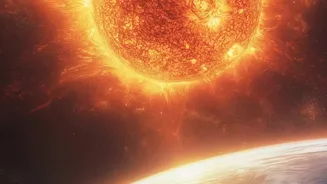
as the 'solar maximum.' During this phase, the Sun's surface is covered in dark sunspots, which are areas of intense magnetic activity. These unstable regions can erupt, launching massive clouds of charged particles and energy, known as coronal mass ejections (CMEs), into space. We are currently in Solar Cycle 25, which began in December 2019 and is now in its highly active maximum phase.
An Unexpectedly Strong Peak
Initially, scientists predicted that Solar Cycle 25 would be relatively weak, similar to the previous cycle. However, the Sun had other plans. Activity ramped up much faster and stronger than forecasted. By late 2024, sunspot counts had already surged past predictions, producing some of the most powerful solar flares seen in years. One notable event was the Gannon Storm in May 2024, the strongest geomagnetic storm in over two decades, which produced auroras visible as far south as Mexico and Hawaii. While the peak of sunspot numbers likely occurred in late 2024, the period of high activity, including major flares, is expected to continue through 2026. This extended and powerful maximum is why we are seeing such remarkable celestial displays.
The Journey from Sun to Sky
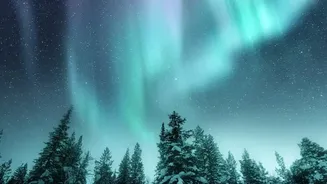
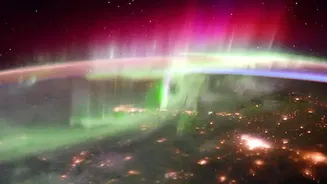
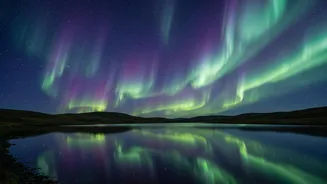
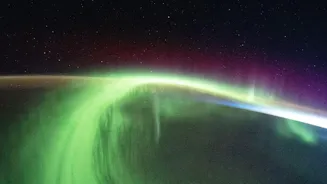
So, how do explosions on the Sun create beautiful lights on Earth? It's all about the solar wind—a constant stream of charged particles flowing from the Sun. When a CME erupts, it sends a supercharged burst of these particles hurtling toward us at millions of miles per hour. Earth is protected by its magnetic field, the magnetosphere. When this blast of solar particles strikes our magnetosphere, it funnels them toward the North and South Poles. There, the particles collide with oxygen and nitrogen atoms in our upper atmosphere. This collision excites the atoms, and as they calm down, they release their excess energy as light. The result is the shimmering, dancing curtains we know as the aurora borealis (Northern Lights) and aurora australis (Southern Lights).
Why Auroras Are Appearing Globally
Normally, auroras are confined to high-latitude regions like the Arctic and Antarctica, in a ring called the auroral oval. But during a strong solar maximum like the one we're in, everything is amplified. More powerful CMEs cause more intense geomagnetic storms on Earth. These storms can dramatically expand the auroral oval, pushing it much farther toward the equator. That’s why people in parts of Europe, the United States, and Asia, who rarely if ever see the lights, have been getting surprise shows. While a sighting in India remains very rare, the unprecedented strength of this cycle means auroras are reaching latitudes they haven't in decades, making the impossible feel slightly more possible. The increased frequency of strong storms means dozens of opportunities per year for low-latitude sightings, compared to just a handful during a solar minimum.
How You Can Witness the Spectacle
While 2026 is part of the declining phase of the maximum, strong events and aurora sightings are still very possible. In fact, some of the most powerful storms can occur as the cycle begins to wane. To increase your chances of seeing an aurora, you'll need three things: a strong geomagnetic storm, clear skies, and darkness. Get away from city lights for the best view. You can track solar activity and aurora forecasts through apps and websites like NOAA's Space Weather Prediction Center. These tools use data like the Kp-index, a scale from 0 to 9 that measures geomagnetic activity. When the Kp-index is high (5 or above), your chances of seeing an aurora at lower latitudes increase significantly.