




A Collision of Comforts
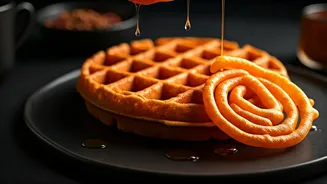
At first glance, the jalebi waffle sounds like a fever dream born from a late-night food craving. On one hand, you have the classic Belgian waffle—a fluffy, grid-patterned canvas beloved for its ability to hold butter and maple syrup. On the other, you have the jalebi—a
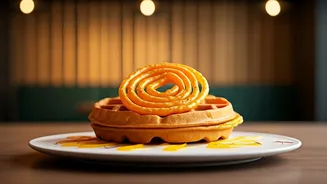
chaotic swirl of fermented batter, deep-fried to a crisp, and soaked in sugar syrup, its unmistakable tang and sweetness a cornerstone of Indian celebrations and street food. Yet, cafes across India’s urban centres are proving they belong together. The concept is simple but brilliant: a classic waffle batter is infused with the elements of jalebi, or in some cases, actual pieces of jalebi are pressed into the waffle iron. The result is a dish that is both structurally familiar and thrillingly new. Served hot, often with a drizzle of rabri instead of whipped cream and a sprinkle of pistachios, it’s a dessert that speaks two culinary languages at once.
The Irresistible Pull of Nostalgia
A huge part of the jalebi waffle’s appeal is its ability to tap into a deep well of collective memory. For generations of Indians, the taste of jalebi is tied to happiness: a festival, a wedding, a Sunday morning treat from the local halwai. It’s a flavour profile we instinctively associate with comfort and joy. However, the traditional settings for enjoying jalebi—crowded sweet shops or street corners—don’t always align with the modern desire for a relaxed, air-conditioned cafe experience. The jalebi waffle masterfully bridges this gap. It takes a beloved, nostalgic flavour and repackages it for a new generation in a setting they frequent. It offers the comfort of the familiar without the mess of sticky fingers, allowing diners to enjoy a taste of their childhood alongside their favourite cappuccino. It’s nostalgia, refined and served on a porcelain plate.
Perfectly Engineered for Instagram
In the age of social media, we eat with our eyes first, and the jalebi waffle is a supermodel of a dish. It’s incredibly photogenic. The golden-brown, geometric precision of the waffle provides a perfect backdrop for the vibrant orange swirls of jalebi. Add a splash of creamy white rabri, a scattering of bright green pistachios, and maybe a few delicate saffron strands, and you have a dish that practically begs to be photographed. The colours pop, the textures contrast, and the composition looks effortlessly gourmet. Cafes know that a dish that gets shared online is its own best marketing tool. The jalebi waffle isn’t just dessert; it’s a status symbol, a declaration that you’re dining at a place that’s in-the-know, creative, and plugged into the latest trends. Every Instagram post and story acts as a digital word-of-mouth, driving more curious foodies through the door.
A Match Made in Culinary Heaven
Beyond the visuals and nostalgia, the jalebi waffle endures because, quite simply, it works. The fusion isn't forced; it’s harmonious. Both waffles and jalebis share a core textural appeal: a crispy exterior giving way to a softer, slightly chewy interior. The neutral, slightly malty flavour of the waffle batter is the perfect canvas to absorb and balance the intense, syrupy sweetness of the jalebi. A plain jalebi can sometimes be overwhelmingly sweet, but the waffle tempers it, giving it structure and a more substantial, satisfying mouthfeel. The traditional pairing of jalebi with rabri is also a stroke of genius in this format. The cool, creamy rabri cuts through the richness and sweetness, creating a perfectly balanced bite every time. It’s a thoughtful reinterpretation, not a gimmick, demonstrating a mature understanding of flavour and texture.