




The Seated Power of Kayaking
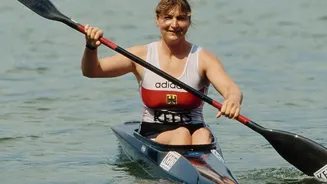
Kayaking is often seen as the more intense upper-body-focused activity of the two. From a seated position, a kayaker uses a double-bladed paddle, creating a constant, powerful cycle of pulling and rotation. A proper kayaking stroke is a full-body movement
that starts in the core, but the primary drivers that build serious endurance are in the upper body. The large muscles of the back, specifically the latissimus dorsi ('lats'), do the heavy lifting with every pull of the paddle through the water. This is complemented by significant work from the shoulders (deltoids), biceps, and chest. The repetitive nature of paddling against the water's resistance is like a high-repetition weight training session, building muscular stamina and strength over time. Because you are sitting, the core is engaged for rotation and stability, but the arms and back are in a near-constant state of work, making kayaking an upper-body endurance powerhouse.
The Full-Body Challenge of Paddleboarding
Stand-up paddleboarding (SUP) offers a different kind of challenge that is often described as a more holistic, full-body workout. While paddling is still the means of propulsion, the act of standing on a board on water introduces a crucial element: balance. Your entire body, from your feet to your head, is constantly making micro-adjustments to stay stable. This means your core, legs, and stabilizer muscles are always engaged. The upper-body work in SUP comes from using a single-bladed paddle. The stroke involves a reach, a catch, and a pull, which engages the shoulders, back, and arms. However, compared to kayaking, the intensity on the upper body can be less direct. A significant portion of the power comes from the core rotation and the larger muscle groups, but the constant need for stability spreads the effort across the entire body rather than isolating it to the upper half.
A Head-to-Head Muscle Comparison
When you put them side-by-side, the differences in muscle emphasis become clear. Kayaking provides a more concentrated upper-body workout, excellent for building strength and endurance in the back and biceps through a powerful pulling motion. The core is essential for rotation, but the legs are less involved, primarily used for bracing. Paddleboarding, on the other hand, distributes the workload. It is exceptional for developing core strength and stability, as your abs, obliques, and lower back are constantly firing to keep you upright. While the upper body is certainly worked, particularly the shoulders and triceps during the paddling motion, it is part of a total-body system where the legs and core are equal partners. Think of it this way: kayaking is like doing seated rows at the gym, while paddleboarding is more akin to a full-body functional exercise.
The Endurance Question: Repetition vs. Stability
Endurance isn't just about how long you can last; it's also about the type of muscular work being done. Kayaking builds endurance through high-volume, repetitive motion. You settle into a rhythm and hold it, strengthening the specific muscles of your back and arms to perform that same motion over and over for an extended period. This is classic muscular endurance. Paddleboarding builds endurance in a more dynamic way. In addition to the cardiovascular benefits of continuous paddling, your muscles are tasked with maintaining stability. This recruits smaller, stabilizing muscles in your shoulders, hips, and core that might not be targeted in a more linear movement like kayaking. The endurance challenge in SUP comes from both propelling the board forward and constantly counteracting the water's movement.
So, Which Is Better for Upper-Body Endurance?
Ultimately, neither sport is definitively 'better'; they simply offer different paths to fitness. If your primary goal is to build a powerful back and arms and maximize upper-body muscular endurance through repetitive, focused work, kayaking is arguably the more direct route. The seated position allows you to isolate and intensely work your lats, shoulders, and arms. If you are looking for a comprehensive, full-body workout that improves balance and core stability while also providing a solid upper-body challenge, then stand-up paddleboarding is an excellent choice. It may engage more total muscles, leading to a higher potential calorie burn, but the upper-body focus is less concentrated than in kayaking.