


Why Potting Mix Matters More in Pots
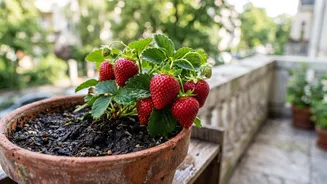
When growing strawberries in balcony pots, you can't simply scoop soil from a garden bed. Garden soil is too dense for containers. It compacts easily with watering, choking the shallow roots of strawberry plants and preventing proper drainage. This can lead
to root rot, a common issue for potted plants. A specially formulated potting mix, often called a soilless mix, provides the light, airy structure that strawberry roots need to thrive. It's designed to hold moisture without becoming waterlogged, ensuring the roots get the oxygen and water they need. This controlled environment is your biggest advantage in container gardening, as it allows you to provide the exact conditions your plants need to flourish and produce delicious fruit.
The Three Pillars of a Perfect Mix
A high-quality potting mix for strawberries balances three essential functions: moisture retention, drainage, and nutrition. To achieve this, you need a blend of key ingredients. For moisture retention, a base of sphagnum peat moss or coconut coir is ideal. Both hold water effectively, releasing it as the plant needs it. For drainage and aeration, perlite or vermiculite are crucial additions. These lightweight materials create air pockets in the mix, preventing compaction and allowing excess water to escape. Finally, for nutrition, compost or well-rotted manure provides a slow release of essential organic matter and nutrients. Strawberries are heavy feeders, especially in pots where nutrients are limited, so starting with a nutrient-rich base is vital for healthy growth.
Getting the Acidity Just Right
Strawberries have a specific preference when it comes to soil acidity. They thrive in a slightly acidic environment with a soil pH between 5.5 and 6.8. If the soil is too alkaline or too acidic, the plants struggle to absorb the nutrients they need to grow strong and produce fruit, no matter how much fertilizer you add. Most soilless potting mixes and ingredients like peat moss are naturally acidic, which works in your favour. If you buy a pre-made mix, it is often pH-balanced for a wide range of plants. If you are creating your own mix, the inclusion of peat moss and compost will generally bring the pH into the correct range for strawberries.
A Simple DIY Potting Mix Recipe
Creating your own strawberry potting mix is both easy and cost-effective. A classic and reliable recipe follows a simple ratio. Start with a large bucket or wheelbarrow and combine two parts coco coir or peat moss (for the base), two parts good quality compost (for nutrients), and one part perlite (for drainage). You can think of a 'part' as any measurement you like—a scoop, a small pot, or a bucket—as long as you keep the ratio consistent. Mix these components thoroughly until they are evenly distributed. Before adding your plants, it's a good idea to moisten the mix with water until it's damp but not waterlogged. This ensures there are no dry pockets and gives your strawberry plants a welcoming start.
Tips for Choosing a Store-Bought Mix
If you prefer the convenience of a pre-made mix, there are many excellent options available. Look for bags specifically labelled as 'potting mix' or 'container mix', not 'garden soil' or 'topsoil'. Check the ingredient list for key components like sphagnum peat moss, coco coir, compost or forest products, and perlite. Many premium mixes also contain a slow-release fertilizer, which can get your plants off to a great start. Mixes designed for vegetables, herbs, or even acid-loving plants are often suitable for strawberries. While some brands are specifically marketed for strawberries, any high-quality organic potting mix that ensures good drainage will work well, especially if you blend in an extra scoop of compost for added nutrition.
Common Potting Mistakes to Avoid
A few common errors can undermine your efforts. The most critical mistake is planting the crown—the part where the leaves emerge from the roots—too deeply. If the crown is buried, it will rot. It should sit right at the soil level, with the top slightly exposed. Another mistake is over-compacting the soil in the pot; press it in gently, but don't pack it down hard, as this removes the air pockets necessary for root health. Finally, always use a pot with adequate drainage holes. Without a way for excess water to escape, even the best potting mix will become a soggy mess, leading to root rot and an unhappy plant.