


The Two Keys: Transparency and Seeing
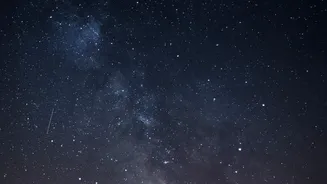
To get the best views of the cosmos, you need two things: good transparency and good 'seeing'. Transparency refers to how clear the air is. Think of it as the sky’s clarity. Haze, dust, smoke, and humidity all reduce transparency, dimming faint stars
and washing out the glorious band of the Milky Way. Good transparency means you can see fainter objects. Seeing, on the other hand, is about how stable the atmosphere is. Turbulent air, with mixing layers of warm and cold currents, makes stars twinkle intensely. While beautiful to the naked eye, this twinkling signifies 'bad seeing' because it blurs fine details on planets and the Moon when viewed through a telescope.
Clouds and Humidity: The Obvious Foes
Cloud cover is the most straightforward enemy of stargazing, acting as a physical blanket that blocks the sky. But even a cloudless night can be ruined by high humidity. Moisture in the air scatters light, especially artificial light from cities, creating a phenomenon called skyglow that dramatically reduces contrast. This is why dry, arid regions often offer superior views. When planning a trip, look for destinations with low annual rainfall and humidity levels, as this directly contributes to better transparency.
The Invisible Barrier: Light Pollution
While not a weather phenomenon, light pollution is the single biggest obstacle to a clear night sky in and around urban areas. Artificial light from streetlamps, buildings, and vehicles scatters off particles in the atmosphere, creating a bright haze that washes out all but the brightest stars and planets. Studies have shown that skyglow is increasing rapidly across India due to urbanisation. This is why the best stargazing spots are always far from major cities, in remote areas where the darkness is protected.
Hanle, Ladakh: India’s Dark Sky Sanctuary
Topping the list is Hanle in Ladakh, home to India's first official Dark Sky Reserve. At a staggering altitude of 4,500 metres, it hosts the Indian Astronomical Observatory, placed there for its exceptionally clear and stable skies. The combination of high altitude, bone-dry air, and near-zero light pollution provides what many consider the best stargazing conditions in the country. On a clear, moonless night here, the Milky Way can be so bright it casts a faint shadow. Best Time to Visit: The roads are most accessible from May to September. For the clearest views, aim for June or September to avoid the peak monsoon clouds that can affect surrounding regions.
Spiti Valley, Himachal Pradesh: A High-Altitude Desert
Like Ladakh, Spiti Valley is a cold desert in a rain shadow region, meaning it's protected from monsoons and enjoys over 250 clear nights a year. Villages like Kaza, Kibber, and Langza sit at altitudes above 3,800 metres, offering pristine skies with minimal light pollution. The dry, thin air contributes to excellent transparency and seeing. The best months for seeing the bright core of the Milky Way are between April and August. Best Time to Visit:' For a good balance of clear skies and manageable temperatures,' visit between May and October.' September and October are often considered the best for the crispest,' post-'monsoon air.
Rann of Kutch, Gujarat: A Starry Salt Desert
For a surreal experience,' the white salt desert of the Rann of Kutch offers a unique stargazing opportunity.' The vast,' flat expanse provides an unobstructed '360-'degree view of the horizon.' During the Rann Utsav festival,' the dry winter air and distance from major cities create incredibly dark skies.' The white ground can even reflect the starlight,' creating a feeling of being enveloped by the cosmos.' Best Time to Visit:' The clearest and most comfortable weather is from November to February,' which conveniently aligns with the Rann Utsav.
Coorg, Karnataka: The Western Ghats Window
You don't always need extreme altitude for a great view.' Coorg,' nestled in the Western Ghats,' offers an accessible Southern India option.' At an elevation of around '1,'500 metres,' it sits above the haze of the lowlands.' The surrounding forests act as a natural barrier to light pollution.' For those in the south,' it's an excellent choice for dark,' clear nights without the demanding journey to the Himalayas.' Best Time to Visit:' The period after the monsoon,' from October to March,' provides the most reliable clear skies.