







The Psychology of Safe Danger
After a long week of managing real-world responsibilities and low-grade stressors, the brain craves a specific kind of release. High-adrenaline action movies provide what psychologists call “safe danger”. Your heart rate may climb and your palms might
sweat during a tense shootout, triggering a fight-or-flight response, but your brain knows you are perfectly safe on your couch. This process can be cathartic, allowing for a release of pent-up tension in a controlled environment. It’s a simulated intensity that makes our own lives feel calm by comparison, offering a psychological reset button that more gentle genres can’t always press with the same force.
Franchise Familiarity Is Comfort Food
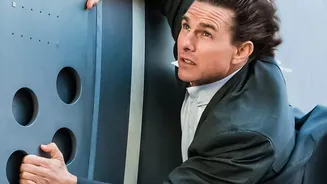
Why rewatch a Mission: Impossible or John Wick film for the fifth time instead of starting a new, acclaimed drama? The answer lies in cognitive load. When you’re mentally fatigued, your brain is reluctant to take on new information, like complex plotlines or a new cast of characters. Familiar franchises are the cinematic equivalent of comfort food. You already know the world, the characters, and the rules. There are no unwelcome surprises, which creates a sense of safety and predictability. This rewatching ritual isn't about laziness; it’s an act of self-care, reducing the mental effort required for entertainment and guaranteeing an emotional payoff you can count on.
Engineered for Maximum Spectacle
Hollywood's blockbuster action franchises are engineered for pure spectacle. They are built around set pieces that defy physics and deliver a consistent stream of dopamine-fueled moments. Unlike intricate dramas or slow-burn thrillers that demand your full attention, high-octane action films are often designed to be visually and sonically overwhelming in the best way possible. The plots, while often globe-spanning, tend to be straightforward: a hero must defeat a villain to save the day, a city, or the world. This clarity is perfect for late-night viewing when your analytical brain has already clocked out. You don’t have to track subtle nuances; you just have to buckle up and enjoy the ride.
The Algorithm Knows Your Mood
Streaming platforms are acutely aware of these viewing habits. Their recommendation algorithms are finely tuned to understand context. They know that a user browsing at 10 PM on a Saturday is likely in a different mood than one searching on a Tuesday morning. As a result, services like Netflix and Prime Video often prominently feature their big-budget action originals and licensed classics during these peak weekend hours. Titles like the Fast & Furious saga or Christopher Nolan's Dark Knight trilogy are algorithmically surfaced because the data shows that's what we collectively crave when we want to shut our brains off and watch something epic.