



Your New Brainstorming Partner
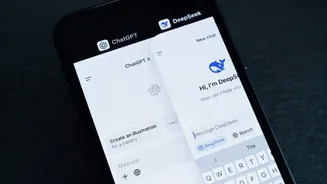
Think of AI writing tools not as authors, but as exceptionally well-read assistants. Powered by large language models, platforms like ChatGPT, Claude, and Gemini can kickstart the creative process in powerful ways. They excel at the messy, chaotic beginning
phase of writing, often called the 'ugly first draft'. Writers can use them to generate outlines, explore different angles on a topic, or create mind maps to structure complex ideas. This is not about letting the machine write for you, but about using it as a launchpad. For many professionals and creatives, AI can help overcome the initial inertia, providing a framework that the writer can then build upon with their own expertise and insight.
Improving the First Draft
Once you have your own raw ideas on the page, AI can be an invaluable editor. The key is to write first, and improve with AI later. These tools are excellent at tasks that require pattern recognition. They can clean up grammar, suggest clearer phrasing for clunky sentences, and ensure your tone is consistent. You can ask an AI to act as a mirror, reflecting your ideas back to you and even asking questions to help sharpen your argument. Some writers even create a personal 'style guide' by feeding the AI examples of their best work, training it to provide suggestions that align with their unique voice. This transforms the AI from a generic tool into a personalized writing coach.
The Authenticity Gap
Here’s the crucial boundary: AI has no life experience. It cannot feel joy, nervousness, or regret. It has never been in a specific room, felt a particular emotion, or held a unique belief that wasn't derived from its training data. This is why purely AI-generated text often feels hollow, generic, or repetitive. These models are trained to produce probable, safe text, which can lead to content filled with clichés and lacking in emotional depth. Furthermore, AI tools are known to 'hallucinate' or invent information, making it essential for the writer to fastidiously fact-check every claim. Over-reliance on these tools can stunt a writer's growth, preventing them from developing the critical thinking and creative skills that make their work compelling.
Protecting Your Personal Voice
The magic of writing happens in the revision process, where you infuse a draft with your specific knowledge and weird observations. To keep your story personal, you must treat the AI's output as raw material, not the final product. The best practice is to start with your own original thought before ever approaching an AI. After using an AI for assistance, read every word it generates and make adjustments. This is your opportunity to inject personal anecdotes, add your unique perspective, and challenge the AI's suggestions. Be on the lookout for common AI 'tells'—overused phrases, a certain pithy rhythm, or excessive adjectives—and remove them to ensure the writing sounds like you, not a machine.
The Story Only You Can Tell
Ultimately, AI should be a collaborator, not a replacement. It can handle some of the technical heavy lifting, freeing you up to focus on the core of your message. Think of it as a tool that can help with structure and clarity, but not with the creation of original arguments or ideas. The most memorable and impactful writing connects with readers on a human level. It comes from a place of genuine experience, belief, and emotion. An algorithm can simulate this, but it can’t replicate it. Your voice is your most valuable asset as a writer. The struggle to find the right words and articulate your own unique clarity is a deeply human process. Use AI to enhance your workflow, but never outsource the parts of the story that only you can tell.