

The Illusion of Speed
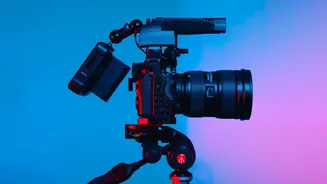
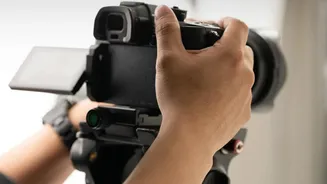
At its heart, time-lapse photography is a technique where a camera captures a series of still images at a set interval—say, one photo every ten seconds, or even every ten minutes. These individual photos are then stitched together and played back at a standard
video speed, usually around 25 or 30 frames per second. The result is a magical compression of time, making slow processes appear to happen rapidly. Events that take hours, days, or even years can unfold in just a few seconds, revealing patterns of movement that are too gradual for the human eye to perceive in real time.
Video vs. Time-Lapse: A Tale of Two Methods
This method is fundamentally different from simply recording a standard video and speeding it up in editing. A normal video camera captures frames continuously and rapidly—typically 25 to 60 frames every single second. To show a long process, like a 10-hour construction day, you would need to record for 10 straight hours, generating an enormous video file. Speeding this up means instructing software to skip most of the captured frames to create the fast-motion effect. A time-lapse, by contrast, never captures those in-between frames in the first place. It selectively records moments, resulting in a much more efficient and deliberate process from the start.
Why Not Just Speed It Up?
The distinction matters for several key reasons. First, data and battery life. Recording hours of continuous high-resolution video consumes massive amounts of storage space and drains batteries quickly. Time-lapse photography, by capturing only specific frames, is far more economical, making it possible to document projects that last for months or even years, like the construction of a skyscraper or the changing of seasons in a forest. Second is the aesthetic quality. When you speed up standard video, any motion blur within the original frames becomes compressed and can look jittery or unnatural. Time-lapse, built from a series of crisp still photographs, often produces a cleaner, more dreamlike flow. Each frame is a deliberately composed photograph, giving the final sequence a higher visual quality that feels intentional rather than artificially manipulated.
The Art of Revealing the Unseen
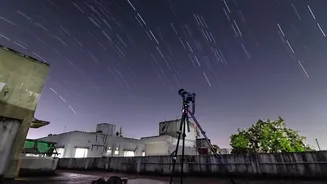
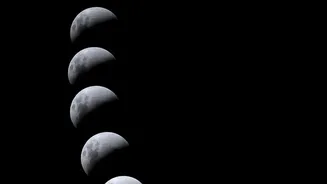
Beyond the technical advantages, time-lapse is a powerful storytelling tool. It doesn't just show things happening faster; it reveals the hidden choreography of the world. We can witness a flower blooming, fungi springing from the earth, or stars wheeling across the night sky. These are processes, not just moments. In an urban environment, time-lapse can transform the chaotic hustle of traffic and pedestrians into a graceful, pulsating flow of light and energy. For documentary filmmakers and scientists, it is an invaluable method for visualizing gradual change, from glacial melt to urban expansion. This technique allows us to see and understand the world in a way that our own perception cannot, making the invisible rhythm of life visible.
Capturing the Grand and the Gradual
So, when is time-lapse the superior choice? It excels at capturing subjects that evolve slowly over long durations. Think of construction projects, where an entire building rises from its foundation over months. Or natural phenomena like tides, cloud movements, and celestial events. It's also a powerful narrative device in visual storytelling, used to show the passage of time, create a sense of drama, or establish a setting. While a sped-up video might work for shortening a clip of a few minutes, time-lapse is the undisputed champion for compressing hours, days, or months into a compelling, condensed narrative. It's more than just a trick; it's a different way of seeing.