




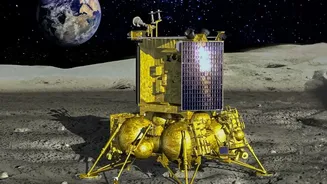
The Next Giant Leap for Private Enterprise
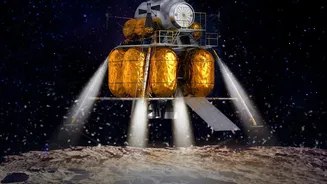
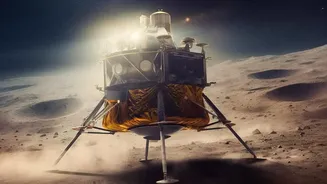
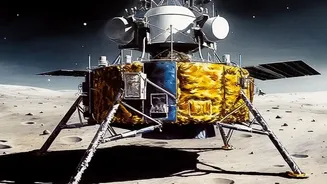
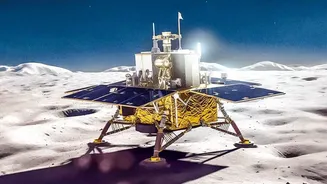
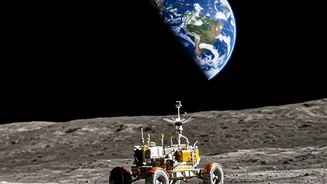
The dream of reaching the Moon is no longer confined to the sprawling campuses of national space agencies. A quiet revolution is taking place in the hangars and labs of Indian startups, where engineers are designing and building a new class of lunar rovers.
These are not billion-dollar, decade-long government projects. Instead, they are nimble, cost-effective machines designed to do one thing exceptionally well: carry commercial payloads to the lunar surface. This shift marks a pivotal moment for India's space sector, transitioning from a government-led model to a dynamic ecosystem where private players are aiming for the stars—and the Moon. The global market for lunar services is heating up, with NASA's Commercial Lunar Payload Services (CLPS) program creating a steady demand for landers and rovers. Indian companies are positioning themselves to capture a significant piece of this emerging market.
Meet the New Lunar Pioneers
While early pioneers like TeamIndus, which competed for the Google Lunar XPrize, paved the way, a new cohort of companies is now taking up the mantle. For instance, ORBITBeyond is establishing a major space systems centre in Odisha to design and manufacture lunar landers and rovers, drawing on engineering talent with experience from ISRO's Chandrayaan missions. Other startups, while not exclusively focused on rovers, are building critical expertise. Kepler Aerospace, founded by veterans of ISRO and European space projects, recently raised significant funding to build satellite constellations, with its founders having prior experience in lunar nano-rover projects. This growing pool of talent and capital is creating a fertile ground for complex missions. With nearly 450 space startups now active in India, the industrial base is expanding rapidly.
Cracking the Affordability Code
The key differentiator for these Indian ventures is 'frugal engineering'—a concept ISRO famously mastered with its cost-effective Mars and Moon missions. Startups are adopting this philosophy to build rovers at a fraction of the traditional cost. They achieve this by simplifying designs, miniaturizing components, and leveraging commercially available off-the-shelf (COTS) parts wherever possible, reducing the need for expensive, custom-built hardware. Furthermore, by focusing on smaller, lighter rovers, they can save significantly on launch costs, which are a major part of any mission's budget. This approach doesn't mean cutting corners on quality; rather, it's about innovating to maximize output while minimizing waste and complexity, a strategy that has defined India's success in space.
The Business of a Moon Mission
So, who is hiring these lunar taxis? The customers are surprisingly diverse. They include universities and research institutions needing to run experiments in the lunar environment, international space agencies looking for cost-effective ways to deploy scientific instruments, and even private companies wanting to test new technologies. A payload could be anything from a spectrometer analyzing lunar soil to a technology demonstrator for a future lunar 5G communications system. By offering payload delivery as a service, these startups are turning the Moon into a viable platform for science and commerce. They handle the complexity of the launch, landing, and surface operations, allowing clients to focus solely on their scientific or business objectives.
A Symbiotic Orbit with ISRO
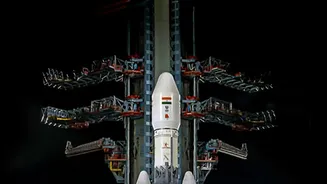
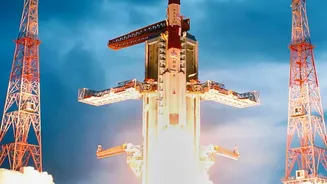
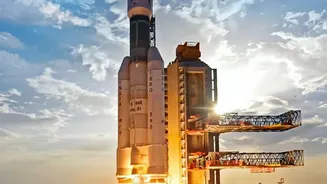
This private-sector boom isn't happening in a vacuum. It is enabled by a strategic shift within the Indian Space Research Organisation (ISRO). The national agency is increasingly focusing on deep space exploration and R&D, while actively encouraging private companies to take over manufacturing and commercial launch services. ISRO acts as a mentor, a partner, and sometimes a customer, providing technical expertise, testing facilities, and crucial launch contracts. This symbiotic relationship is crucial; startups benefit from ISRO’s decades of experience, while ISRO gains a robust domestic industry capable of supporting its ambitious long-term goals, which include a space station by 2035 and an Indian on the Moon by 2040.