



Reading the Starlight
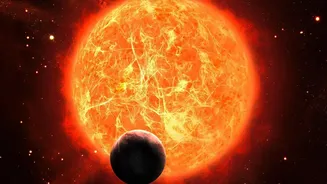
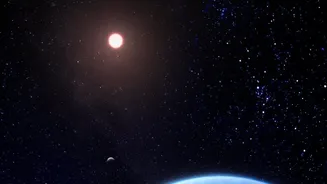
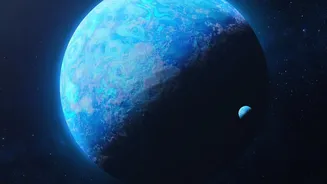
The primary method scientists use is a bit like cosmic detective work, and it's called transit spectroscopy. It works when an exoplanet—a planet outside our solar system—passes in front of its host star from our point of view. As the starlight shines
through the planet's atmosphere, gases in that atmosphere absorb light at very specific wavelengths. Think of it as a barcode; each chemical element or molecule leaves a unique pattern of missing light. By capturing the star's light before, during, and after the planet transits, astronomers can subtract the normal starlight to isolate the 'barcode' left by the atmosphere. This reveals which gases are present, giving us our first clues about that distant world.
Earth as the Ultimate Blueprint
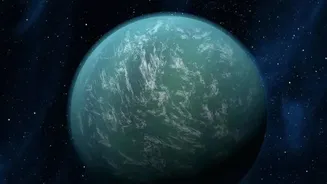
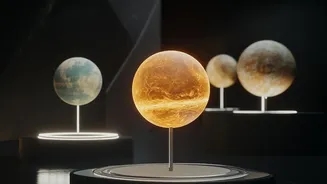
To make sense of these alien barcodes, scientists need a reference point, and Earth is the best one we have. Our planet is the only place we know for certain that hosts life, so its atmosphere serves as a critical template. Earth's air is a rich mixture of nitrogen, life-giving oxygen, and trace amounts of gases like methane and carbon dioxide. This specific balance is a product of billions of years of geological and biological activity. When astronomers find water vapor, carbon, or methane on a rocky exoplanet, it's an exciting find because those are essential building blocks for life as we know it. However, scientists are aware that life could exist in very different conditions, so while Earth is a guide, it's not the only model they consider.
The Hunt for Biosignatures
The ultimate goal is to find a 'biosignature'—a feature that provides strong evidence of life. This isn't just about finding one specific gas. For instance, finding oxygen alone isn't enough, as it can be produced by non-biological processes. But finding oxygen and methane together is a much more compelling sign. These two gases normally react with and destroy each other, so finding both in the same atmosphere suggests that something is constantly replenishing them. On Earth, that 'something' is life: photosynthesis produces oxygen, and microbes produce methane. Detecting such a chemical imbalance on a distant planet would be a powerful indicator that we might have found a world with a thriving biosphere.
Our Powerful Cosmic Eyes
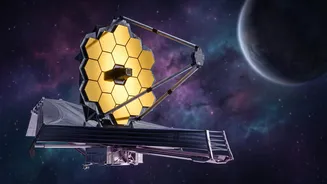
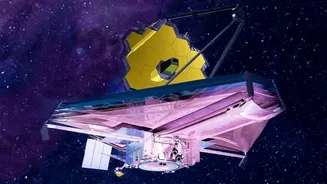
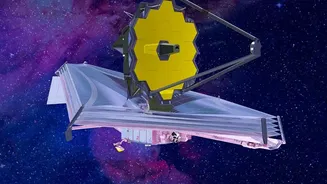
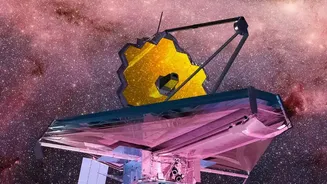
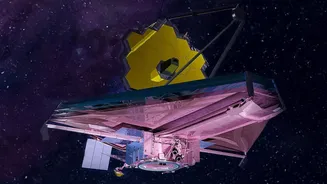
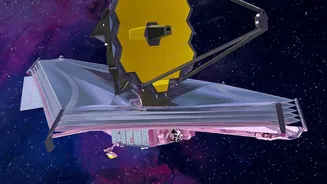
This incredible science is made possible by a new generation of powerful telescopes. While the Hubble and Spitzer space telescopes laid the groundwork, the James Webb Space Telescope (JWST) has been a game-changer. Operating in the infrared part of the spectrum, JWST is exquisitely sensitive to the heat signatures and molecular fingerprints of exoplanet atmospheres. Its precision allows it to analyze the air of smaller, rocky planets that were previously out of reach. Ground-based observatories like the Very Large Telescope (VLT) and the upcoming Extremely Large Telescope (ELT) also play a crucial role, using high-resolution spectrographs to add more detail to the picture. Together, these tools are giving us an unprecedented view of planetary systems across the galaxy.