




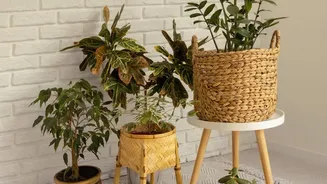
The desire for fresh, clean air inside our homes has led many to two popular solutions: leafy houseplants and sleek air purifiers. But when it comes to genuinely improving air quality, is nature's remedy as effective as a machine?
The Promise of Potted Plants
The idea that houseplants
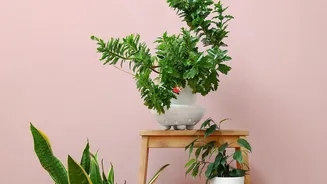
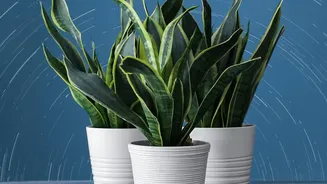
can purify indoor air became popular after a 1989 NASA study. This research showed that, in a sealed laboratory chamber, certain plants could remove volatile organic compounds (VOCs) like benzene and formaldehyde from the air. These are chemicals commonly released by furniture, paints, and cleaning products. The findings were exciting and launched a decades-long belief that adding a few green friends to your living room is a simple, natural way to scrub the air clean. Many articles and wellness blogs have since recommended specific 'air-purifying' plants, turning species like the Snake Plant and Peace Lily into household names for health-conscious decorators.
A Reality Check from Science
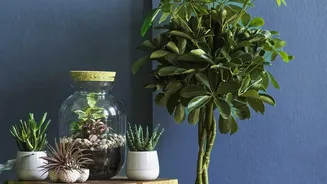
Unfortunately, more recent and comprehensive scientific reviews have largely debunked this popular myth. The major issue is context: the NASA experiments were conducted in small, airtight chambers, an environment that doesn't resemble a typical home or office with natural ventilation. A 2019 meta-analysis by researchers at Drexel University examined decades of these studies and concluded that plants work far too slowly to compete with a room's natural air exchange. To match the air-cleaning performance of a typical building's ventilation system or a couple of open windows, you would need an impractical number of plants—somewhere between 10 and 1,000 plants per square meter of floor space. This would turn a standard room into an impassable jungle.
The Power of a Purifier
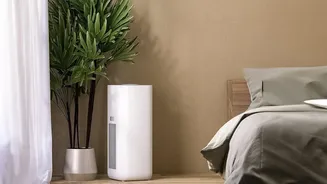
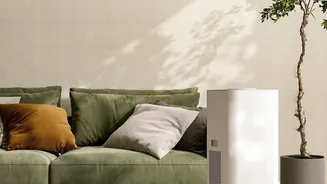
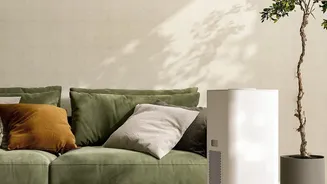
This is where air purifiers enter the picture. Unlike plants, which are passive, these machines are engineered specifically to clean air quickly and efficiently. The gold standard for air purifiers is the HEPA filter, which stands for High-Efficiency Particulate Air. To earn this certification, a filter must be proven to capture at least 99.97% of airborne particles that are 0.3 microns in size—a size considered the most difficult to trap. This includes common irritants like dust, pollen, pet dander, and mold spores. By using a fan to actively draw in a room's air and force it through this dense filter, a single purifier can cycle the air in a room multiple times per hour, providing an immediate and measurable reduction in airborne particles.
Comparing Effectiveness
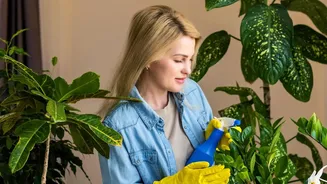
When compared directly, the difference is stark. A single air purifier can clean air hundreds or even thousands of times more effectively than a houseplant. The Clean Air Delivery Rate (CADR), a standard metric for purifier effectiveness, for an average unit is around 100 cubic meters per hour or more. In contrast, the CADR for a typical houseplant is less than 1. While some purifiers also include activated carbon filters to help absorb VOCs and odors, their primary strength is removing particulate matter that triggers allergies and asthma. Plants, on the other hand, are simply not equipped to handle the volume of air or the concentration of pollutants in a real-world home. Some research even suggests that poorly maintained, overwatered plants can introduce mold into the air, potentially worsening air quality.
The Verdict: Tool, Not Decoration
For anyone serious about removing allergens and pollutants from their indoor environment, the evidence points clearly to air purifiers as the effective solution. They are a purpose-built tool designed for a specific job, and scientific studies consistently demonstrate their ability to reduce particulate matter and improve symptoms for people with allergies and asthma. This doesn't mean you should throw out your houseplants. They offer proven psychological benefits, such as reducing stress and improving mood, and they can add beauty and a touch of nature to any space. Think of them as a boost for your well-being, not your respiratory system. For the heavy lifting of air cleaning, a machine is required.