


The Foundational Ingredient: Checking Milk Purity
Since most traditional sweets, or 'mithai', are milk-based, ensuring the milk itself is pure is the first step. Adulterants can range from harmless water to harmful chemicals like detergent, added to increase quantity or create a frothy appearance. The
Food Safety and Standards Authority of India (FSSAI) provides simple tests. To check for water, place a drop of milk on a polished, slanting surface. Pure milk will flow slowly, leaving a white trail, while milk with added water will flow quickly without leaving a mark. To test for detergent, mix 5-10 ml of milk with an equal amount of water and shake it vigorously. If a dense lather forms, it indicates the presence of detergent; pure milk will only form a thin layer of foam.
Testing Khoya and Paneer for Starch
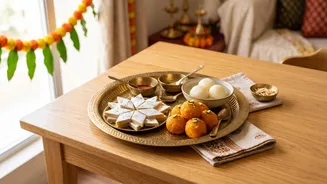
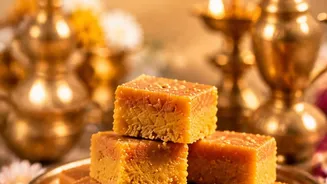
Khoya, or mawa, is the heart of many Diwali favourites like barfi and peda. Unscrupulous vendors may add starch, mashed potatoes, or refined flour to increase its weight. This compromises not only the taste but also the quality. There's an easy way to check this. Take a small sample of your khoya or paneer and boil it in a little water. Let the mixture cool down completely. Then, add two to three drops of tincture of iodine, which is commonly available at pharmacies. If the sample turns blue or black, it confirms the presence of starch. Pure khoya will not change colour.
Spotting Dangerous Synthetic Colours
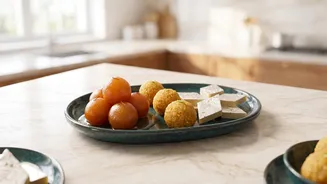
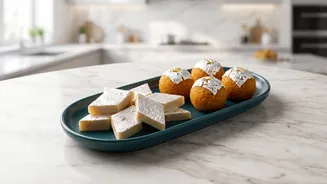
Vibrant sweets are visually appealing, but some may get their colour from non-permitted and toxic dyes like Metanil Yellow. This industrial dye is often illegally used in ladoos and other bright yellow or orange sweets. To test for it, take a small sample of the sweet and mash it in a little bit of water. Pour the liquid into a clean test tube or a small glass. Add a few drops of concentrated hydrochloric acid to the sample. A magenta or pinkish colour indicates the presence of Metanil Yellow. This is a serious adulterant, and sweets containing it should be discarded immediately. Another simple test is to dissolve a piece of the sweet in warm water; pure ingredients will dissolve without leaving much colour, while synthetic colours will release a bright, artificial hue.
The Silver Vark Authenticity Check
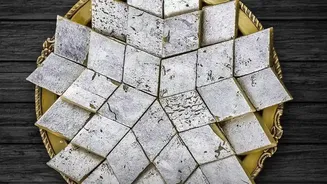
The delicate, shimmering silver foil known as 'vark' adds a touch of luxury to sweets like Kaju Katli. However, it is often replaced with cheaper and toxic aluminium foil. Ingesting aluminium can have serious long-term health effects. You can easily differentiate between the two. Try rubbing a small piece of the foil between your fingers. Pure silver vark is extremely delicate and will disintegrate into fine particles or dust. Fake aluminium foil will not break apart easily and may roll into a small ball. Another definitive test is to burn the foil. Take a small piece with tongs and hold it over a flame. Pure silver will burn away and turn into a glistening, bright ball or droplet, while aluminium will burn down to a greyish-black ash.
Other Common Adulterants to Watch For
Beyond the most common issues, other adulterants can find their way into festive treats. For instance, some sweets may use blotting paper or paper pulp to add bulk, especially in milk-based sweets like rabri. To check, take a small portion of the sweet and stir it in a glass of water. If the sweet contains paper, you will see the fibres floating in the water after some time. When buying ghee or butter, you can also perform the starch test mentioned for khoya. Simply melt half a teaspoon of ghee or butter, let it cool, and add a few drops of iodine. A blue colour indicates it has been adulterated with starches like mashed potatoes.