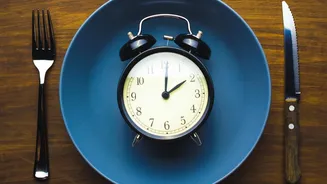







Your Body's Master Clock
Deep inside your brain is a master clock, known as the suprachiasmatic nucleus (SCN), that orchestrates your body's 24-hour cycle, or circadian rhythm. This internal clock is primarily influenced by light and dark, telling you when to wake up and when to feel
sleepy. But it doesn't just control sleep; it directs a symphony of bodily functions, from hormone release to body temperature. Crucially, nearly every organ, including your liver, pancreas, and gut, has its own peripheral clock. These clocks are designed to work in harmony, creating a daily rhythm where your body is primed for activity and eating during the day, and for rest and repair at night.
The Problem with Late-Night Meals
When you eat a late dinner, you're essentially sending mixed signals to your body. Your brain's master clock, sensing darkness, is preparing for sleep by releasing hormones like melatonin. However, the arrival of food forces your digestive system's clocks to switch into 'active' mode. This conflict is known as circadian misalignment. Instead of winding down for repair and regeneration, your body has to work overtime to digest food. Metabolism naturally slows in the evening as the body prepares for rest. Eating late forces it to process food when its systems are less efficient, which can lead to a cascade of metabolic issues.
The Fat Metabolism Connection
One of the most significant impacts of late-night eating is on how your body handles sugar and fat. Your body's sensitivity to insulin—the hormone that helps your cells absorb glucose from the blood—is highest in the morning and declines throughout the day. Eating a large meal late in the evening, when insulin sensitivity is low, can lead to higher and more prolonged blood sugar spikes. Studies have shown that people who eat late have an 18% higher spike in blood sugar compared to those who eat earlier. Furthermore, this can impact fat metabolism. Research from Johns Hopkins found that a late dinner led to a 10% slower breakdown of dietary fat overnight, promoting more fat storage rather than its use for energy.
Unlocking Deeper, More Restful Sleep
Eating close to bedtime can directly interfere with your sleep quality. The digestive process is an active one, and lying down soon after a large meal can increase the risk of issues like acid reflux and heartburn, causing discomfort that makes it difficult to fall asleep and stay asleep. Beyond digestion, the metabolic disruptions caused by a late meal can also fragment your sleep. When your body is busy managing high blood sugar and digesting food, it's not fully in 'rest and repair' mode. By finishing your dinner at least three hours before bed, you give your digestive system ample time to do its job, allowing your body to transition smoothly into a deeper, more restorative sleep cycle.
How to Make the Shift
The idea of eating dinner at 6 PM might seem daunting, especially in India where later meals are common. The key is to make a gradual shift. Start by moving your dinner time 15-30 minutes earlier each week. If you can't eat a full meal early, try having a larger lunch and a lighter, simpler dinner. Focus on meals rich in protein and fibre, and lower in heavy fats and refined carbohydrates in the evening. Even a small adjustment can make a big difference. The goal is to create a fasting window of about 12-14 hours overnight, which gives your digestive system a much-needed break and helps reset your metabolic health.