




The Challenge with Traditional Labs
For centuries, the cadaver lab has been the undisputed arena for learning human anatomy. It offers an irreplaceable, tactile understanding of the body's intricate structures. However, this traditional method faces significant hurdles, particularly in a country
like India with a massive and growing number of medical colleges. The supply of cadavers is limited and ethically complex, creating a severe shortage. The National Medical Commission (NMC) has noted the mismatch between the number of students and the availability of bodies for dissection. Furthermore, a cadaver offers a one-time learning opportunity; a structure, once dissected, cannot be put back together for repeated study. This makes practice, repetition, and the exploration of variations extremely difficult for aspiring doctors.
Enter the Virtual Dissection Table
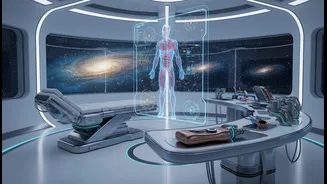
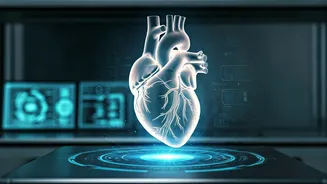
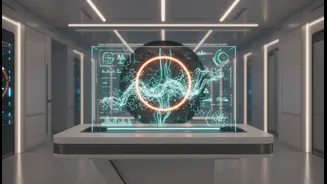
Imagine an anatomy lab that fits on a tabletop, or even in a headset. This is the promise of virtual classrooms. Using a combination of high-resolution 3D models, virtual reality (VR), and augmented reality (AR), institutions are creating digital replicas of the human body that can be explored in stunning detail. Students can use a touchscreen or a VR controller to rotate organs, peel back layers of tissue, and isolate entire systems—from the vast network of nerves to the intricate pathways of blood vessels. Platforms like the Anatomage Table, already in use at institutions like AIIMS, allow for a life-size virtual dissection experience. Students can make incisions, peel back layers of tissue, and isolate entire systems—from the vast network of nerves to the intricate pathways of blood vessels. Platforms like the Anatomage Table, already in use at institutions like AIIMS, allow for a life-size virtual dissection experience. Students can make incisions, explore cross-sections, and reset the entire body with a single click, allowing for infinite practice without any of the limitations of a physical specimen.
AI as the Personal Anatomy Tutor
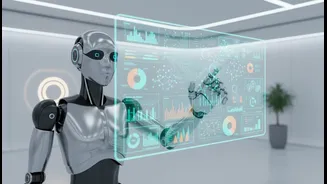
This is where the real revolution lies. The virtual environment isn't just a passive 3D model; it's an intelligent learning space guided by Artificial Intelligence. The AI acts as a personal tutor for every student. It can guide them through a pre-set dissection, highlighting key structures and providing on-the-spot information. If a student is studying the heart, the AI can overlay animations of blood flow or demonstrate the electrical conduction that causes it to beat. More importantly, it can create interactive quizzes, asking students to identify a specific artery or trace a nerve path. The AI can track a student's performance, identify areas where they are struggling, and suggest specific modules for revision. This personalised guidance ensures that no student is left behind, turning a large group lab session into a one-on-one tutorial.
Simulating the Rare and Complex
The benefits extend far beyond basic anatomy. Traditional cadavers typically represent a single, static state of health. Virtual labs, powered by AI, can simulate a vast range of medical conditions and pathologies. Students can load case studies from a library of thousands, viewing a digital body with specific injuries from an accident or the organ damage caused by a chronic disease. They can practice complex surgical procedures in a zero-risk environment, seeing how different approaches affect the virtual patient. This allows them to encounter and prepare for rare conditions they might not otherwise see until they are years into their practice, building a deeper and more practical knowledge base long before they interact with their first real patient.
A Hybrid Future
Despite the immense advantages, no one is suggesting that virtual labs will completely replace cadavers. The tactile feedback—the actual feel, weight, and texture of human tissue—is an experience that technology cannot yet perfectly replicate. The solemnity and sense of responsibility that comes from working with a human body donor is also a crucial part of a doctor’s ethical training. Instead, the future of medical education is a hybrid model. Students will use AI-guided virtual labs for foundational learning, repeated practice, and exploring pathologies. They will then enter the traditional cadaver lab with a much higher level of knowledge and confidence, allowing them to use that precious resource more effectively for advanced, tactile learning. This blend of old and new promises to make medical training more efficient, accessible, and ultimately, more effective.