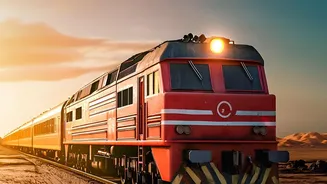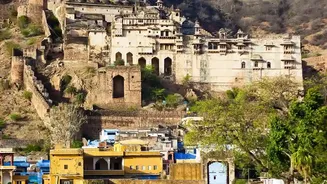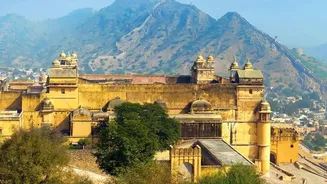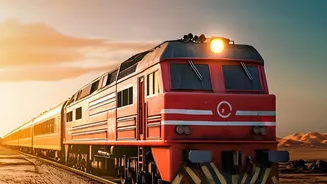






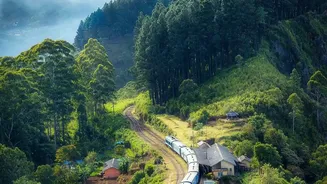

Rajasthan's iconic landscapes are now more accessible than ever. The introduction and expansion of the Vande Bharat Express network in the state marks a new chapter for travellers, promising faster, more comfortable, and modern railway journeys.
A Modern Upgrade for Key Routes
Indian
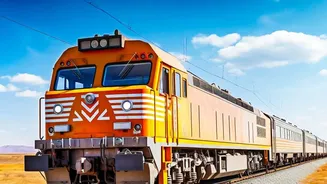
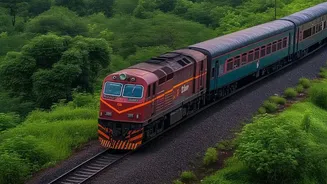
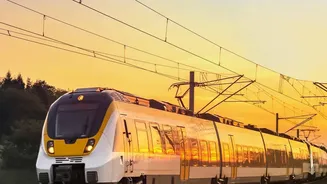
Railways is significantly enhancing its network in Rajasthan, a state renowned for its rich history and vibrant tourism. Multiple Vande Bharat Express trains now operate on crucial routes, connecting major cities like Jaipur, Jodhpur, Udaipur, Ajmer, and Bikaner with the national capital, Delhi, and other key destinations. These semi-high-speed trains are setting a new standard for inter-city travel in the region, offering a premium alternative to conventional trains. The expansion reflects a broader push to modernize railway infrastructure across the country, with a focus on improving connectivity and passenger experience. The services are operated by the North Western Railway (NWR) zone, which has been instrumental in rolling out these modern trains.
Connecting Rajasthan's Jewels
The Vande Bharat network in Rajasthan has been strategically planned to link its most significant cultural, business, and tourism hubs. Routes like Jaipur-Udaipur, Jodhpur-Sabarmati, and Ajmer-Chandigarh are already operational, facilitating smoother travel for both tourists and residents. More recently, services connecting Bikaner and Jodhpur directly to Delhi Cantt were introduced, addressing high passenger demand on these busy corridors. For instance, the Jodhpur-Delhi Cantt service passes through key Rajasthani towns such as Degana, Makrana, and Jaipur, before continuing to the capital. Similarly, the Bikaner-Delhi Cantt train connects passengers from hubs like Churu and Ratangarh. There is also potential for future routes, such as a connection between Agra and Jaipur, further integrating the state into the national tourism circuit.
The Vande Bharat Experience
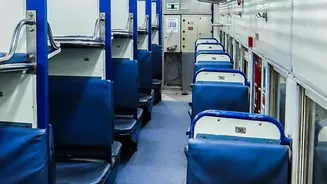
Travelling on a Vande Bharat Express is a significant upgrade from a typical train journey. Designed for speeds up to 160 km/h, these trains substantially reduce travel time. For example, the Ajmer-Delhi Cantt route is about an hour faster than the Shatabdi Express. The trains are equipped with modern amenities designed for comfort and convenience, including AC chair cars, executive class coaches with rotating seats, automatic doors, and large panoramic windows to enjoy the passing scenery. Onboard features also include a GPS-based passenger information system and Wi_Fi for entertainment, ensuring a comfortable and engaging journey. The improved travel conditions are a welcome change, particularly for long-distance travellers.
A Boost for Tourism and Economy
The introduction of these faster and more comfortable trains is a major boon for Rajasthan's tourismndriven economy. The improved connectivity makes it easier for tourists to visit iconic destinations such as the Ajmer Sharif Dargah, Pushkar, and the historic forts and palaces of Jaipur, Jodhpur, and Udaipur. By reducing transit times, travellers can spend more time exploring destinations, which is particularly beneficial for popular itineraries like the Golden Triangle. This enhanced accessibility is expected to give a new impetus to tourism, trade, and industrial development in the region. Furthermore, Indian Railways is also exploring the introduction of Vande Bharat sleeper trains on long distance routes, with a Delhi Ahmedabad service via Jaipur and Ajmer under consideration, which could further transform overnight travel in the state.