



What to See in the October 2026 Sky
October is a busy month for celestial events. Early in the month, look for the Draconid meteor shower, which is expected to peak on the evening of October 8-9. This shower is best viewed right after nightfall and benefits from a nearly new moon, making
for excellent dark-sky conditions. On October 4, Saturn will be at opposition, meaning it will be at its closest and brightest to Earth for the year, visible all night long. Later, the Orionid meteor shower, born from the debris of Halley's Comet, peaks on the nights of October 21-22. While a bright waxing gibbous moon will interfere in the evening, the best viewing will be in the dark hours before dawn after the moon has set. You can expect to see about 15 to 20 fast, bright meteors per hour under ideal conditions.
The Quest for True Darkness
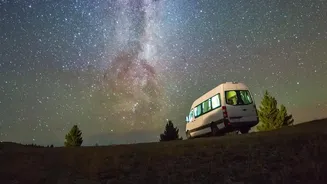
The single biggest obstacle to good stargazing is light pollution. The glow from cities, towns, and highways washes out the night sky, hiding all but the brightest stars and planets from view. In a major city, you might see only a few dozen stars; from a truly dark site, you can see thousands, along with the magnificent sprawl of the Milky Way galaxy. The darkness of a location is often rated on the Bortle Scale, which runs from Class 1 (an excellent dark-sky site) to Class 9 (inner-city sky). Finding a spot in the lower numbers on this scale is the secret to an unforgettable stargazing experience. It's in these places that the sky reveals its true depth and complexity.
How to Find Your Own Dark Spot
Finding your own private patch of starry sky is easier than you might think. The first step is to consult a light pollution map online, such as LightPollutionMap.info. These maps use satellite data to show you where the darkest skies are relative to your location. As a general rule, you need to get at least 30 to 50 miles away from a major city's limits. National parks, wildlife sanctuaries, and high-altitude areas are often your best bet, as they are naturally protected from development and light. When you arrive, give your eyes at least 20-30 minutes to fully adapt to the darkness—avoid looking at your phone screen, as white light will ruin your night vision. A torch with a red light filter is an essential tool for any stargazer, as red light has the least impact on your dark-adapted eyes.
Top Haven 1: Hanle, Ladakh
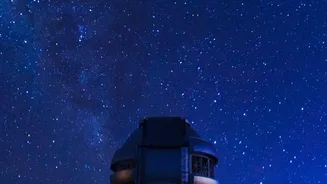
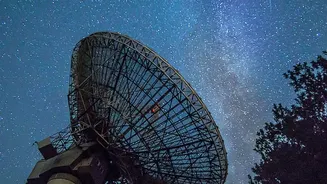
Considered the pinnacle of stargazing in India, Hanle is home to the country's first official Dark Sky Reserve. Located at a breathtaking altitude of 4,500 meters, this remote village in Ladakh offers some of the clearest and darkest skies on the planet, with a Bortle Class 1 rating. The dry, thin air and over 300 clear nights a year make it the site of the Indian Astronomical Observatory. Here, the Milky Way is not just visible; it's a brilliant, textured band stretching across the sky, a sight you can see with your naked eyes. The best time to visit is from May to October when roads are open. Remember, an Inner Line Permit is required to visit this sensitive border area.
Top Haven 2: Spiti Valley, Himachal Pradesh
Another high-altitude cold desert, Spiti Valley offers Ladakh-like sky quality with slightly easier access. Its remote villages, like Kibber, Langza, and Kaza, sit well above 12,000 feet and are far from major sources of light pollution. The crisp, dry mountain air ensures spectacular clarity. The best season for stargazing here aligns perfectly with October, which brings some of the clearest weather just before winter closes in. It is an ideal destination for astrophotography, with ancient monasteries providing stunning foregrounds for your shots of the cosmos.
Top Haven 3: Rann of Kutch, Gujarat
For a completely different landscape, the Great Rann of Kutch provides an otherworldly stargazing experience. This vast salt desert offers a perfectly flat, unobstructed horizon-to-horizon view. During the Rann Utsav (typically November to February), the area comes alive, but stepping away from the festival lights reveals an incredibly dark sky. The region is sparsely populated and has minimal artificial light, making it a prime spot. Plan your trip around a new moon for the darkest skies and best view of the Milky Way, or go during a full moon to see the white salt flats glow with an ethereal silver light.
What to Pack for Your Celestial Adventure
You don't need much to get started. Beyond a sense of wonder, pack warm clothing in layers, as even desert nights can get cold. A blanket or a comfortable chair will make craning your neck much more pleasant. While a telescope is a fantastic tool, a good pair of binoculars is a more practical and powerful starting point, capable of revealing craters on the moon, the moons of Jupiter, and brighter deep-sky objects. Finally, download a stargazing app on your phone (like SkyView or Star Walk) beforehand. It will help you identify constellations, planets, and satellites in real-time.