







The End of the Dead Battery?
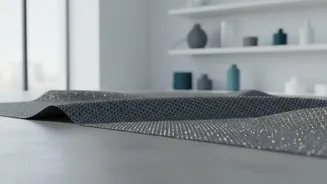
The dream of self-powered wearable technology is a step closer to reality thanks to thermoelectric textiles. Imagine a T-shirt or a wristband that continuously trickle-charges the small electronic devices we use daily. This isn't science fiction, but
the focus of intense research in labs across the world. Scientists are developing fabrics woven with materials that can capture the heat our bodies naturally produce and convert it into a steady stream of electrical energy. While it won't be enough to charge your smartphone just yet, the power generated is perfect for low-energy devices like fitness trackers, heart rate monitors, and other wearable biosensors. The goal is to eliminate the need for bulky batteries and inconvenient charging cables, creating a truly seamless and integrated wearable experience. A resting person generates about 100 watts of heat, and capturing even a tiny fraction of that wasted energy could revolutionise personal electronics.
Science Woven Into Fabric
So, how does a shirt generate power? The technology relies on a fascinating piece of physics called the Seebeck effect. This principle states that when two different semiconductor materials are joined together and there is a temperature difference between the two ends, a small voltage is created. In this case, one side of the fabric is against your warm skin, while the other is exposed to the cooler ambient air. This temperature gradient is all the system needs to get electrons moving and generate a current. The primary challenge for scientists has been to create materials that are both efficient at this energy conversion and also possess the qualities we expect from fabric: flexibility, breathability, and durability. Traditional thermoelectric materials are often rigid, brittle, and not at all comfortable to wear. Recent breakthroughs, however, involve coating common threads like silk with conductive polymers or embedding tiny, flexible semiconductor elements within a stretchable, fabric-like structure.
More Than Just Fitness Trackers
While powering your step counter is a great start, the potential applications for this technology extend far beyond the gym. In the medical field, thermoelectric textiles could enable continuous, unobtrusive health monitoring for patients with chronic conditions. Imagine a comfortable shirt that powers its own integrated sensors to track vital signs like heart rate, respiration, and body temperature, sending alerts to a doctor or caregiver without ever needing a battery change. This could be particularly transformative for remote healthcare in areas where access to reliable power is a challenge. For athletes, it could mean performance-monitoring gear that never fails during a crucial moment. In industrial or military settings, it could power sensors embedded in uniforms to monitor a worker's or soldier's health and environmental exposure in real-time.
From Lab Bench to Wardrobe
Despite the exciting progress, you probably won't find thermoelectric T-shirts at your local clothing store next week. Several hurdles remain before these smart garments become a mainstream product. The biggest challenge is power output. Currently, most prototypes generate power in the range of microwatts to milliwatts—enough for tiny sensors, but not for more complex devices. Researchers are constantly working to improve material efficiency. Another significant barrier is manufacturing. Many of the current fabrication methods are complex, hand-sewn processes confined to a laboratory. Scaling this up to the level of industrial textile production, while keeping costs down and ensuring the fabrics can withstand repeated washing and stretching, is the next major frontier for engineers. However, with researchers making consistent progress on creating more durable and efficient materials, the path to commercialisation is becoming clearer.