





An Unexpected Rise to Fame
In the world of travel, destinations like Paris, London, and Bali are household names. But a recent report from travel platform Skyscanner has added a surprising new name to the conversation: Rupsi, Assam. According to the 'Travel Trends 2027' report,
Rupsi ranked second among trending destinations for Indian travellers, based on a massive 502% year-on-year increase in flight searches. It was surpassed only by Bishkek, the capital of Kyrgyzstan, and featured alongside other international locations like Okinawa in Japan. While this surge in searches doesn't directly translate to tourist footfall, it signals a powerful and growing curiosity about this lesser-known corner of India, suggesting travellers are actively looking beyond the usual circuits for fresh experiences.
From Wartime Runway to Modern Gateway
Rupsi's story is one of dramatic revival. Its airfield was originally constructed by the British during World War II as a strategic base for supplying Allied forces in the China-Burma-India theatre. For a time, it was one of the largest airstrips in Asia, playing a crucial role in the war effort. After the war, it briefly served commercial flights, but operations ceased in 1984, leaving the airstrip abandoned for nearly four decades. Thanks to the central government's UDAN (Ude Desh ka Aam Nagrik) regional connectivity scheme, the airport was redeveloped at a cost of approximately Rs 69 crore and reopened for commercial flights in May 2021. This historic runway, once used for warplanes, was reborn as a modern terminal for ATR-72 type aircraft, reconnecting western Assam to the rest of the country.
Connecting the Unconnected
The reopening of Rupsi Airport has been a game-changer for regional connectivity. Located in Kokrajhar district, it serves the Lower Assam region, including Dhubri, Bongaigaon, and Goalpara, as well as neighbouring parts of West Bengal and Meghalaya. It even offers a new access point for travellers heading to southern Bhutan. Before the airport became functional, residents faced arduous road journeys of six to seven hours to reach the nearest major airports in Guwahati or Bagdogra. Now, direct flights connect Rupsi to Guwahati and Kolkata, slashing travel time and making healthcare, education, and commerce more accessible. The Assam government has also announced plans for a phased expansion to accommodate larger aircraft like the Airbus A320 and develop Rupsi into a logistics hub, further boosting its economic importance.
A Hub for Natural and Cultural Treasures
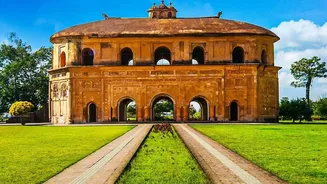
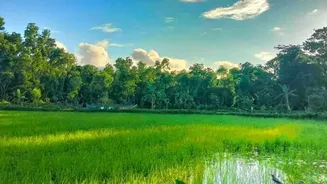
The interest in Rupsi isn't just about the airport; it's about what the airport unlocks. It serves as a gateway to a region rich in biodiversity and cultural heritage. Travellers can now easily access Manas National Park, a UNESCO World Heritage Site famous for its tiger and elephant reserves. Other nearby natural attractions include the Chakrashila Wildlife Sanctuary, home to the endangered golden langur, and Raimona National Park. The region is also home to significant cultural and historical sites. Dhubri town boasts the Gurudwara Sri Guru Teg Bahadur Sahib Ji, a major Sikh pilgrimage site on the banks of the Brahmaputra. The area around Gauripur invites exploration of its royal past, while the village of Asharikandi is renowned for its traditional terracotta crafts. This mix of nature, spirituality, and heritage makes western Assam a compelling new frontier for tourism.