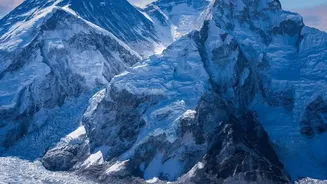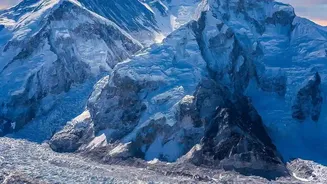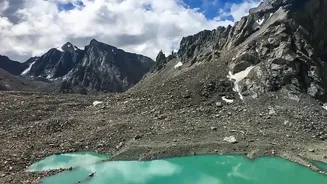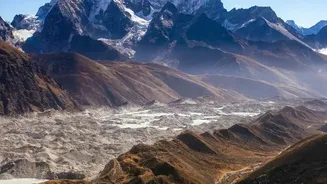







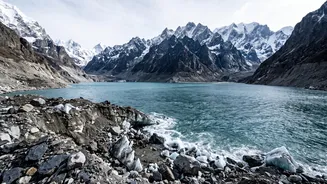
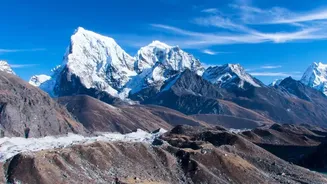
The Himalayas, home to the world's 'Third Pole', are sending a stark warning. Recent United Nations reports highlight a growing and urgent threat: the heightened risk of glacial lake outburst floods that endanger millions of lives downstream.
Understanding the Threat: What is a GLOF?
A Glacial
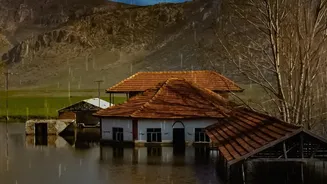
Lake Outburst Flood, or GLOF, is a sudden and powerful release of water from a glacial lake. These lakes form as glaciers melt and retreat due to rising temperatures, with the meltwater collecting behind natural dams made of loose rock and debris called moraines. Unlike concrete dams, these moraine barriers are often unstable. They can fail suddenly due to pressure from the growing volume of water, or be breached by triggers like avalanches, rockfalls, or earthquakes. When this dam breaks, it unleashes a torrent of water, ice, and debris that can surge down narrow mountain valleys at incredible speeds, wiping out entire villages, roads, and bridges in minutes.
The UN's Sobering Assessment
A series of recent UN-backed reports released ahead of the COP31 climate summit paints a grim picture. Scientists warn that the world's frozen regions, including the Himalayas, are warming much faster than the global average. This accelerated melting is causing glacial lakes to form and expand at an unprecedented rate, increasing both the frequency and intensity of GLOFs. According to Kanni Wignaraja, a UN Assistant Secretary-General, the population at risk from these events 'goes into the millions'. The reports stress that even temporarily overshooting the 1.5°C global warming target could lead to irreversible damage to Earth's ice systems. A 2020 study identified 47 potentially dangerous glacial lakes across India, Nepal, and China, a number that is now estimated to be significantly higher.
India's High-Stakes Vulnerability
For India, this is not a distant threat. A pre-publication UN-led study reveals a harrowing statistic: India has recorded the highest number of deaths from GLOFs among eight countries in the Hindu Kush Himalaya region between 1835 and 2025. Despite having fewer GLOF events than China or Pakistan, India's death toll stands at over 6,000, highlighting extreme vulnerability. States like Sikkim, Arunachal Pradesh, Himachal Pradesh, and Uttarakhand are on the front lines. The fragile geology of the young Himalayan mountains, combined with the increasing concentration of hydropower projects, roads, and settlements in vulnerable river valleys, amplifies the potential for catastrophic damage. Past disasters, like the 2023 Sikkim flood that impacted nearly 80,000 people and the 2013 Kedarnath tragedy, serve as devastating reminders of the destructive power of these events.
A Race Against Time: Monitoring and Mitigation
The urgent question is whether enough is being done to protect these vulnerable communities. Following recent disasters, India has expanded its surveillance of glacial lakes, using satellite imagery and on-ground sensors to monitor water levels and dam stability. However, experts warn of critical gaps. A UN official noted that technology 'cannot move fast enough' to prevent losses across the massive river systems. Challenges remain in establishing effective early warning systems that reach the last mile, ensuring community preparedness, and building climate resilient infrastructure that can withstand these powerful floods. The Ghepang Ghat glacial lake in Himachal Pradesh, for instance, expanded by 178% between 1989 and 2022, significantly increasing the downstream risk. Events like the October 2026 GLOF in Bhutan, which triggered evacuation alerts in parts of West Bengal and Assam, underscore the transboundary nature of the threat and the critical need for regional cooperation.