


The Legendary Thalassery Biryani
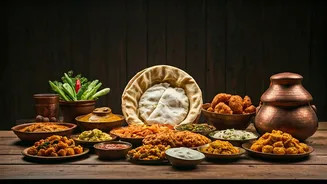
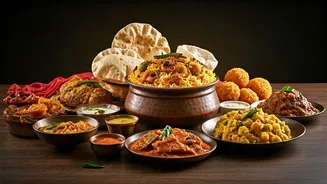
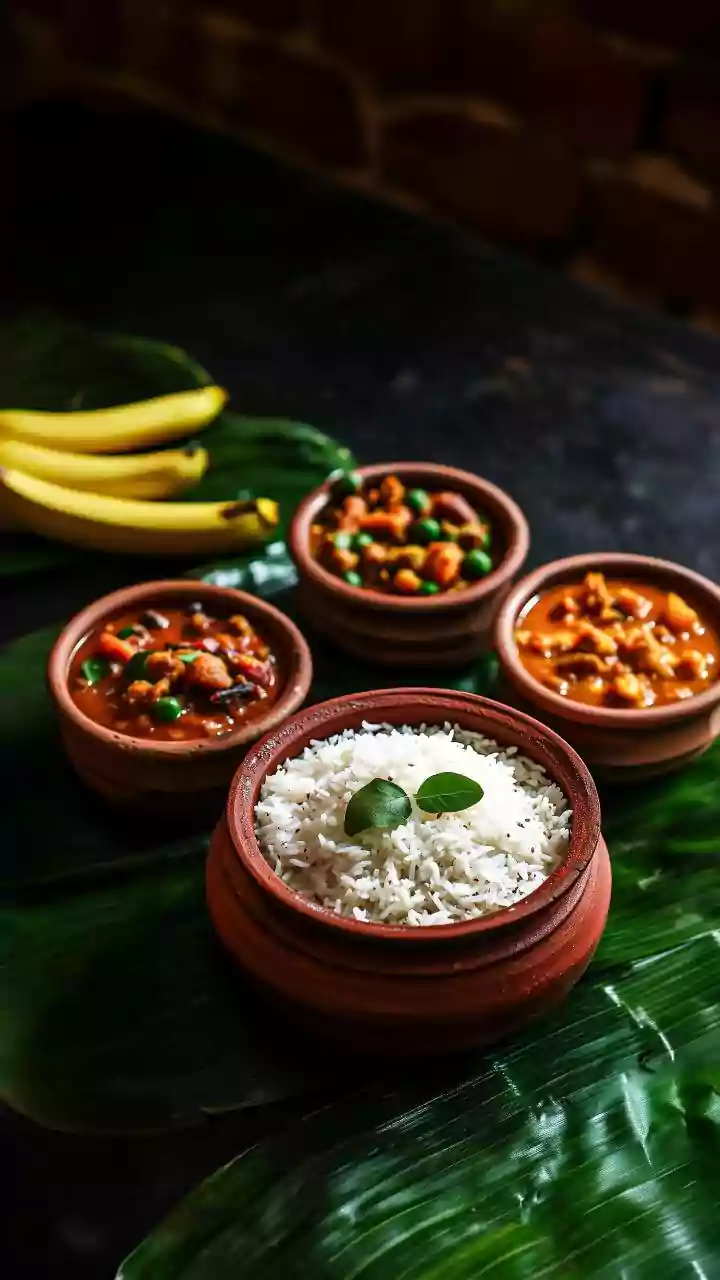
Forget what you know about biryani. In the northern Malabar region, particularly in the coastal town of Thalassery, this iconic dish takes on a unique identity. [4, 7] The first major difference is the rice; instead of the long-grain basmati, Thalassery Biryani
uses a small-grained, aromatic local rice called Kaima or Jeerakasala. [18] This rice has a unique ability to absorb flavour without becoming sticky. The cooking method, influenced by Arab traders, often involves the 'dum' technique, where the pot is sealed and cooked over slow heat, allowing the spices, meat (usually chicken or mutton), and rice to meld into a fragrant, harmonious whole. [16] It's a testament to the region's history as a spice trading hub, blending Mughal and local Malabari traditions. [7, 16]
A Feast on a Leaf: The Sadhya
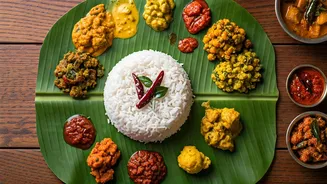
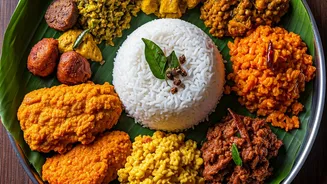
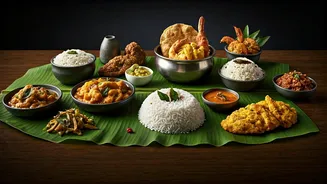
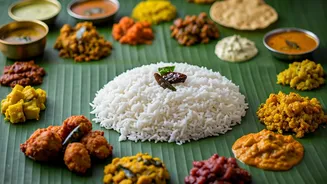
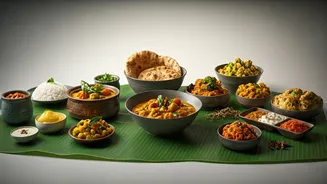
The Sadhya is less a meal and more a cultural experience. This traditional vegetarian feast is served on a banana leaf and can feature anywhere from 24 to over 60 dishes. [9] It's a symphony of flavours, textures, and colours. While staples like Sambar and Avial (a mixed vegetable dish with coconut) are well-known, the spread includes many other gems. There's Olan, a delicate curry of pumpkin and red grams in a light coconut milk gravy, and Kaalan, a thicker, yogurt-based dish with a sour tang. [3] You'll also find an array of pickles, crispy Pappadams, and banana chips (Upperi). [3, 9] The meal concludes with a variety of Payasams, a sweet pudding-like dessert. [8] A true Sadhya is a journey through the entire spectrum of Keralan vegetarian cooking. [3]
Coastal Treasure: Karimeen Pollichathu
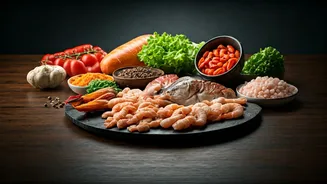
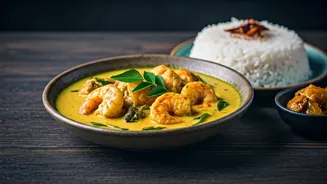
Along the serene backwaters of Kerala, a special delicacy reigns supreme: Karimeen Pollichathu. This dish features 'Karimeen', or pearl spot fish, a local favourite. The fish is marinated in a blend of spices, lightly fried, and then smothered in a thick, rich masala made with onions, tomatoes, and a host of aromatic spices. [6] The real magic, however, comes from the final step. The masala-coated fish is wrapped tightly in a banana leaf and then grilled or slow-cooked on a tawa. [2, 5] This process steams the fish in its own juices and the spicy marinade, while the banana leaf imparts a subtle, smoky aroma that is simply irresistible. [10] Opening the fragrant parcel is an experience in itself.
Syrian Christian Culinary Signatures
The Syrian Christian community of Kerala has a distinct and robust culinary tradition, shaped by local ingredients and foreign influences, including Portuguese and Dutch. [27] Their cuisine is famed for its rich, meat-heavy dishes that go far beyond the standard stew. Duck Mappas, a rich curry where duck is slow-cooked in a creamy, spiced coconut milk gravy, is a festive favourite, especially around the backwater regions of Kuttanad. [25, 27] Another popular preparation is Erachi Ularthiyathu, a dry-style dish where chunks of beef are slow-roasted with spices, coconut slivers, and curry leaves until they are dark, fragrant, and incredibly flavourful. [27] These dishes showcase a different facet of Kerala's non-vegetarian cooking.
The Humble Art of 'Chaya Kadi'
No culinary tour of Kerala is complete without exploring 'Chaya Kadi'—the culture of evening tea and snacks. Every evening, local tea stalls (chaya kadas) come alive, serving hot tea alongside a mouth-watering array of freshly made snacks. Pazham Pori, or banana fritters, are a quintessential choice—ripe plantains dipped in a flour batter and deep-fried to golden perfection. [29] Then there's the savoury Pappada Vada, a crisp fritter made from papadums. [29] You'll also find Ela Ada, a sweet snack where rice dough is filled with a mixture of grated coconut and jaggery, wrapped in a banana leaf and steamed. [13] It's a daily ritual that celebrates simple, delicious food in the company of friends.