



From Ski Training to Mainstream Fitness
What began as a summer training method for Finnish cross-country skiers is now a global fitness movement. Nordic walking uses specially designed poles to engage the upper body, turning a simple walk into a low-impact, full-body workout. Unlike regular
walking, which mainly uses your lower body muscles, proper Nordic walking technique activates up to 90% of your body's muscles. This increased muscle engagement means you burn significantly more calories—up to 46% more, according to some estimates—without necessarily feeling like you're working much harder. The shift to everyday fitness means more people are enjoying these benefits, but only if they get the technique right.
Choosing the Right Gear
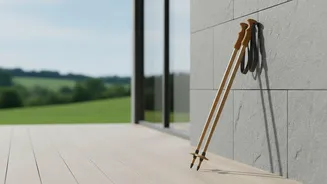
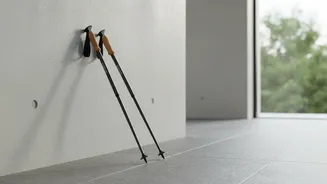
Success starts with the right equipment. Crucially, Nordic walking poles are not the same as trekking or hiking poles. Nordic poles are designed for propulsion, helping to push you forward, while trekking poles are built for stability on uneven terrain. The length is vital: a common formula is to multiply your height in centimetres by 0.68. If poles are too short, you may hunch over; if they're too long, it can strain your shoulders and make propulsion inefficient. Many experts recommend poles with at least some carbon content to absorb vibrations that can travel up your arms and cause strain.
Mastering the Core Movement
The fundamental rhythm of Nordic walking is the same as natural walking: your opposite arm and leg move forward at the same time. When your left leg steps forward, your right arm swings forward to plant its pole, and vice versa. The key is the pole plant and push. The pole should be planted at an angle, roughly between your front and back foot. You then push off the pole, extending your arm behind you. As your arm swings back, you open your hand slightly, pushing through the strap rather than maintaining a tight grip. This fluid push-and-release motion is what engages your core, chest, back, and arm muscles.
Perfecting Your Posture
Good posture is the foundation of an effective Nordic walking technique. Walk tall with your chest lifted, shoulders relaxed and down, and eyes looking forward, not at the ground. Many beginners make the mistake of bending at the waist, which can strain the back. Instead, lean slightly forward from your ankles, especially when walking faster or uphill. This posture not only prevents injury but also allows for a fuller arm swing and deeper core engagement, maximising the workout. Proper posture gives your lungs more room to breathe, making the entire exercise feel easier and more efficient.
Common Mistakes to Avoid
Many newcomers make a few common errors that limit the benefits. One is planting the pole too far in front of the body, which acts as a brake instead of a propeller. Another is using the arms in isolation, with bent elbows, instead of swinging from the shoulder in a long, pendulum-like motion. This not only reduces power but can tire your arms quickly. Gripping the poles too tightly throughout the movement can also lead to forearm strain. Remember to relax and open your hand as the pole swings behind you. Finally, avoid falling into 'pacing'—moving the arm and leg on the same side together. If this happens, simply drop the poles and let them drag by the straps for a moment to reset your natural rhythm.