


Why Add Twists to Your Routine?
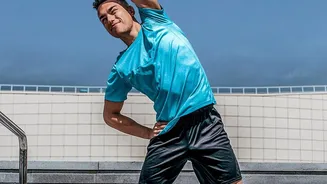
The standing torso twist is a dynamic exercise that involves rotating your upper body from side to side while keeping your lower body stable. This movement specifically targets the muscles responsible for twisting motions, which are crucial for both athletic
performance and everyday activities. Most gym exercises like squats and presses move us forward and backward, but we often neglect rotational, or 'transverse', movements. Incorporating twists helps create a more balanced, resilient, and functional core, capable of handling the reaching, turning, and bending we do in daily life.
The Core Benefits of Twisting
The primary benefit of this exercise is strengthening your oblique muscles, which run along the sides of your abdomen. Strong obliques contribute to a more defined waistline and provide crucial support for your spine. Beyond aesthetics, regular twisting improves your body's overall range of motion and flexibility, particularly in the spine and torso. This can enhance your performance in sports that require quick changes in direction, like tennis or football, and also helps improve balance and coordination for everyone. By strengthening the entire core, including the lower back, this exercise also plays a role in promoting better posture and potentially reducing back pain.
How to Perform It Correctly
Proper form is essential to maximize benefits and prevent injury. Follow these steps for a perfect standing torso twist: 1. Stance: Stand with your feet shoulder-width apart and your knees slightly bent. This creates a stable base. 2. Arm Position: Raise your arms to your sides, bending them at a 90-degree angle at shoulder or chest height. You can also cross them over your chest or extend them straight out in front of you. 3. Engage Your Core: Before you move, brace your abdominal muscles as if you're about to be punched in the stomach. This protects your spine and ensures the work comes from your core, not your back. 4. The Twist: Exhale and slowly rotate your torso to one side. The movement should be generated from your core, not by swinging your arms. Your head and shoulders should move together. As you twist to the right, allow your left heel to lift and pivot naturally. 5. Return and Repeat: Inhale as you return to the center with control, and then exhale as you twist to the other side. Keep the movement smooth and deliberate.
Common Mistakes to Avoid
To get the most out of this exercise, be mindful of these common errors: Using Momentum: The most frequent mistake is swinging your body wildly instead of using muscle control. This reduces the exercise's effectiveness and can strain your lower back. Slow down and focus on a deliberate, controlled rotation. Moving Only Your Arms: Ensure the twist originates from your torso. Your arms are just along for the ride. If only your arms are moving, your core isn't being engaged properly. Keeping Your Feet Glued Down: While you want to keep your hips relatively stable, allowing your feet to pivot slightly prevents unnecessary torque on your knees. Arching Your Back: Keep your spine long and your core tight throughout the movement. Avoid leaning back or arching, which puts pressure on your lumbar spine.
Simple Variations to Try
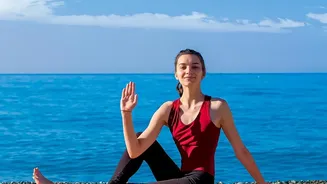
Once you've mastered the basic form, you can introduce variations to increase the challenge or target muscles differently: Squat and Twist: Perform a standard bodyweight squat. As you rise back to a standing position, lift one knee and twist your torso to bring your opposite elbow toward that knee. This adds a lower-body component and challenges your balance. Lunge and Twist: Step forward or backward into a lunge. Once stable in the lunge position, twist your torso toward your front leg. This variation deeply engages your core stabilizers and leg muscles simultaneously. * Seated Twist: For a variation that completely isolates the upper body, sit on the floor with your legs extended. Bend your right knee and place your right foot on the outside of your left thigh. Twist your torso to the right, using your left arm for leverage against your right leg. Hold the stretch before switching sides.