


Start With a Clear Financial Plan
The most effective way to control Onam spending is to create a budget weeks before the festival begins on Atham. Many people receive an Onam bonus, and it's tempting to earmark the entire amount for festivities. A smarter approach is to decide on a total
festival budget that you can comfortably afford from your savings or bonus, and then divide it. Allocate specific amounts for key categories: the Sadya (feast), Onakkodi (new clothes), Pookkalam (floral carpets), gifts, and travel. It’s also wise to keep a 10-15% buffer for unexpected expenses, like extra guests or a last-minute purchase. By setting these limits beforehand, you can enjoy the celebrations without worrying about mounting credit card bills later.
Master the Onasadya on a Budget
The Onasadya, an elaborate vegetarian feast, is the heart of the celebration, but it can also be the biggest expense. Instead of aiming to cook all 26 traditional dishes, focus on a core menu. An authentic Sadya experience can be created with essentials like rice, sambar, avial, a thoran, pappadam, a pickle, and a payasam. You can save significantly by planning your grocery shopping. Buy non-perishable items like jaggery, coconut, and rice in bulk earlier, and purchase fresh vegetables closer to Thiruvonam. To reduce waste and cost, choose ingredients that can be used across multiple dishes; for example, pumpkin can be used in both Erissery and Sambar. If you're hosting, consider a potluck-style Sadya where friends and family each contribute a dish. This not only splits the cost but also embodies the community spirit of the festival.
Smart Shopping for Onakkodi
Gifting and wearing new clothes, or Onakkodi, is a cherished Onam tradition. To keep costs down, avoid last-minute shopping when prices are at their peak. Start looking for outfits during the pre-Onam sales that begin weeks in advance. Instead of buying multiple trendy but lower-quality outfits, invest in one classic, high-quality piece per person, like a traditional Kasavu saree or mundu, that can be worn for years. For children, whose sizes change quickly, look for affordable yet festive options in breathable fabrics like cotton, which are ideal for Kerala's humid climate. Remember that you can also give older sarees a fresh look by pairing them with a new, contrasting blouse in a festive colour like maroon or green.
Decorate Beautifully and Affordably
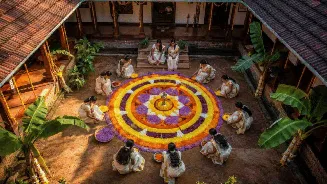
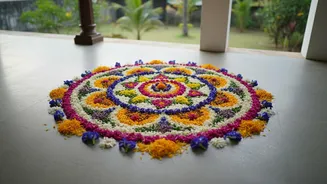
The Pookkalam, a floral carpet made daily for ten days, is a beautiful but potentially sneaky expense. To manage costs, buy flowers from local morning markets rather than pre-packaged kits. You can create stunning designs by mixing expensive petals with more affordable local flowers like marigolds and chrysanthemums, or by adding leaves and coloured rice flour for outlines. Traditionally, the Pookkalam grows larger each day; start with a small, simple design on Atham and add a new ring of flowers daily. In apartment buildings or close-knit neighbourhoods, consider creating a shared Pookkalam. This not only splits the daily flower bill but also fosters a wonderful sense of community.
Rethink Gifting and Entertainment
Onam gifts are typically warm gestures rather than extravagant purchases. Set a per-person cap for gifts before you shop. For larger presents, such as a saree for a parent, siblings can pool their money to give a joint gift, which spreads the cost without diminishing the gesture. When it comes to entertainment, you don't need to spend a lot to have fun. Instead of expensive outings, focus on traditional, community-oriented activities. Organize a friendly Vadamvali (tug-of-war) competition in your neighbourhood or a small Pookkalam competition for the children. The spirit of Onam is about togetherness, and often the most memorable moments come from shared experiences, not expensive events.