





A Galaxy's Sudden Transformation
For years, the galaxy known as SDSS1335+0728 was just another quiet spot in the constellation Virgo. But in late 2019, automated sky surveys noticed something strange: its core was suddenly shining brighter than ever before. Astronomers are used to seeing
cosmic flashes from events like supernova explosions, but those flare-ups last for a few hundred days at most. This galaxy, however, has continued to brighten for more than four years and is still going, a behavior that astronomers describe as completely unprecedented. A team led by researchers at the European Southern Observatory (ESO) has been using a combination of ground and space-based telescopes to track the changes, trying to understand what could cause such a dramatic and long-lasting transformation.
The Awakening of a Monster
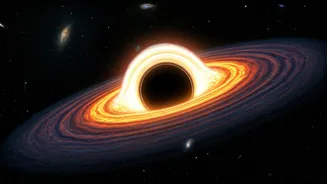
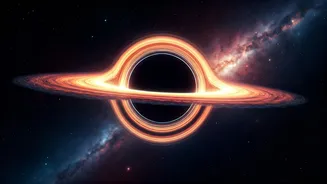
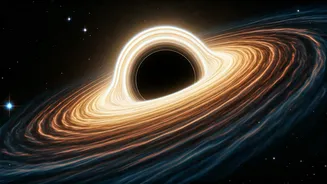
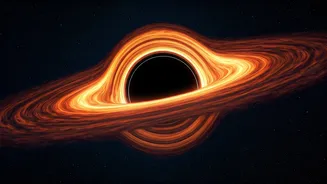
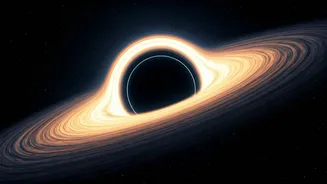
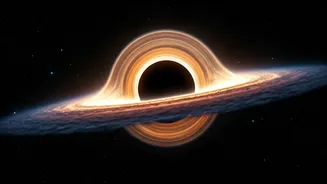
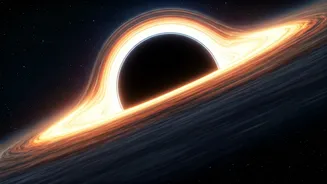
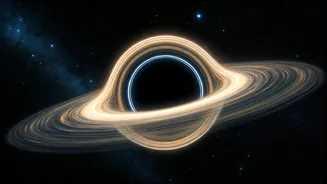
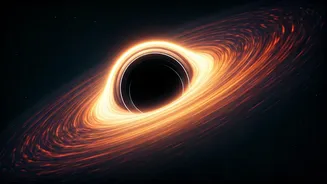
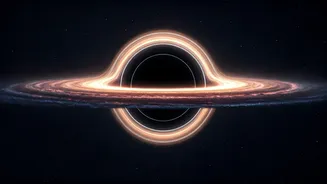
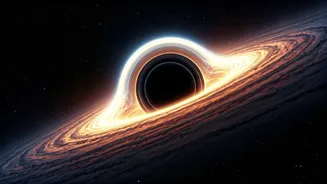
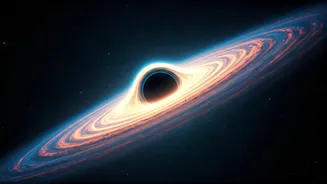
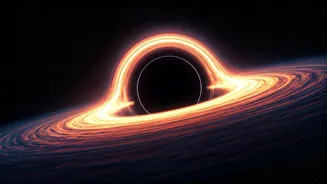
The leading explanation is as dramatic as it sounds: we are witnessing the awakening of a supermassive black hole in real time. Most large galaxies, including our own Milky Way, have one of these cosmic monsters at their center. Usually, they are dormant and invisible. But if a large amount of gas or dust falls into their gravitational grip, the material gets superheated as it swirls into the black hole, creating an intensely bright core known as an Active Galactic Nucleus (AGN). According to scientists, the black hole at the heart of SDSS1335+0728 has suddenly started to 'feast' on the gas available in its surroundings, causing it to light up. This process of an AGN 'turning on' has been theorized for decades, but it's something that has never been directly observed as it happens until now.
More Than Just a Bright Light
The evidence goes beyond just the initial brightening. By comparing new observations with archival data from before 2019, astronomers found the galaxy is now radiating significantly more light across multiple wavelengths, including ultraviolet, optical, and infrared. Then, in February 2024, another crucial piece of the puzzle fell into place: the galaxy began emitting X-rays. This multi-spectrum glow, developing over several years, strongly suggests a fundamental change is occurring at the galaxy's core. Typical events like a star being torn apart by a black hole, known as a tidal disruption event (TDE), are much shorter and don't typically exhibit this slow, sustained build-up across so many different types of light. The sheer duration and evolving nature of this event set it apart from anything seen before.
Two Competing Theories
While the AGN 'turn-on' is the most compelling theory, scientists are still considering other possibilities. One alternative is that this is a very exotic and unusual type of tidal disruption event. Perhaps an unlucky star was torn apart in a way that is far slower and more prolonged than ever documented. If this is the case, SDSS1335+0728 would represent an entirely new class of cosmic phenomenon. The ongoing observations are critical to distinguishing between these two scenarios. By tracking how the brightness and energy output evolve, astronomers can build a clearer picture of the physics driving the changes. For now, the scientific community is captivated by the mystery, watching a cosmic drama unfold one data point at a time.
Why This Is 2026's Big Story
The initial discovery happened a few years ago, but the story is only just beginning to peak. The coming months and years will be crucial. Why is this the space story of 2026? Because this is a live, evolving event. It's not a snapshot of the past, but a continuous process that astronomers get to watch with increasingly powerful tools. As data from telescopes like the VLT continues to pour in, we move closer to a definitive answer. Each new observation helps confirm whether we are truly seeing a sleeping giant awaken or witnessing a completely unknown type of cosmic meal. This real-time cosmic laboratory offers a rare opportunity to test our theories about how galaxies and their central black holes grow and evolve over billions of years. The answers that emerge will likely fill textbooks for years to come, making the ongoing saga of SDSS1335+0728 a defining narrative in modern astronomy.