

Forget expensive gym memberships. A strong, stable core is the foundation of all movement, and you can build one right in your living room. These equipment-free exercises are all you need to improve posture, prevent injury, and feel stronger.
More Than Just a Six-Pack
When people
talk about the 'core', they often picture sculpted abs. But your core is much more than that. It's a complex system of muscles, including your abs, obliques, lower back, and even your hip muscles, that work together like a muscular corset to stabilize your entire body. A strong core is your centre of gravity, essential for everything from walking and sitting to lifting groceries. Strengthening it can lead to significant benefits like better posture, improved balance, and reduced back pain. It provides a stable base that allows for more powerful and efficient movements in daily life and athletic activities.
The Foundational Plank
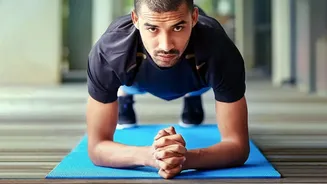
The plank is a powerhouse of an exercise because it engages multiple core muscles at once. It's an isometric hold, meaning you build strength by resisting movement. To perform a classic plank, get into a position as if you're about to do a push-up, but rest your weight on your forearms instead of your hands. Your body should form a straight, rigid line from your head to your heels. Engage your core by pulling your belly button towards your spine, and be careful not to let your hips sag or rise too high. Beginners can start by holding for 20-30 seconds, or perform the exercise on their knees to build initial strength.
The Stabilizing Bird-Dog
This exercise is excellent for improving stability and coordination, as it challenges your body to resist rotation. Start on all fours, with your hands directly under your shoulders and your knees under your hips. Keeping your back flat and your core engaged, slowly extend your right arm straight forward and your left leg straight back simultaneously. The goal is to create a straight line from your fingertips to your heel while keeping your hips and shoulders square to the floor. Hold for a moment before returning to the start and alternating sides. The key is slow, controlled movement.
The Controlled Dead Bug
Don't let the name fool you; the Dead Bug is a fantastic exercise for targeting the deep stabilizing muscles of your core, like the transverse abdominis. Lie on your back with your arms extended toward the ceiling and your legs in a tabletop position, with knees bent at 90 degrees over your hips. Press your lower back gently into the floor. Slowly lower your right arm and left leg toward the floor at the same time, exhaling as you go. Lower them only as far as you can without your lower back arching. Return to the starting position with control and repeat on the other side.
The Powerful Glute Bridge
Your glutes are a crucial part of your core, and the glute bridge is one of the best ways to activate them. Lie on your back with your knees bent, feet flat on the floor about hip-width apart, and your arms by your sides. Squeeze your glutes and abs, then lift your hips off the floor until your body forms a straight line from your shoulders to your knees. Pause at the top, squeezing your glutes, before slowly lowering back down. This move not only strengthens your glutes and hamstrings but also enhances spinal stability.
The Dynamic Bicycle Crunch
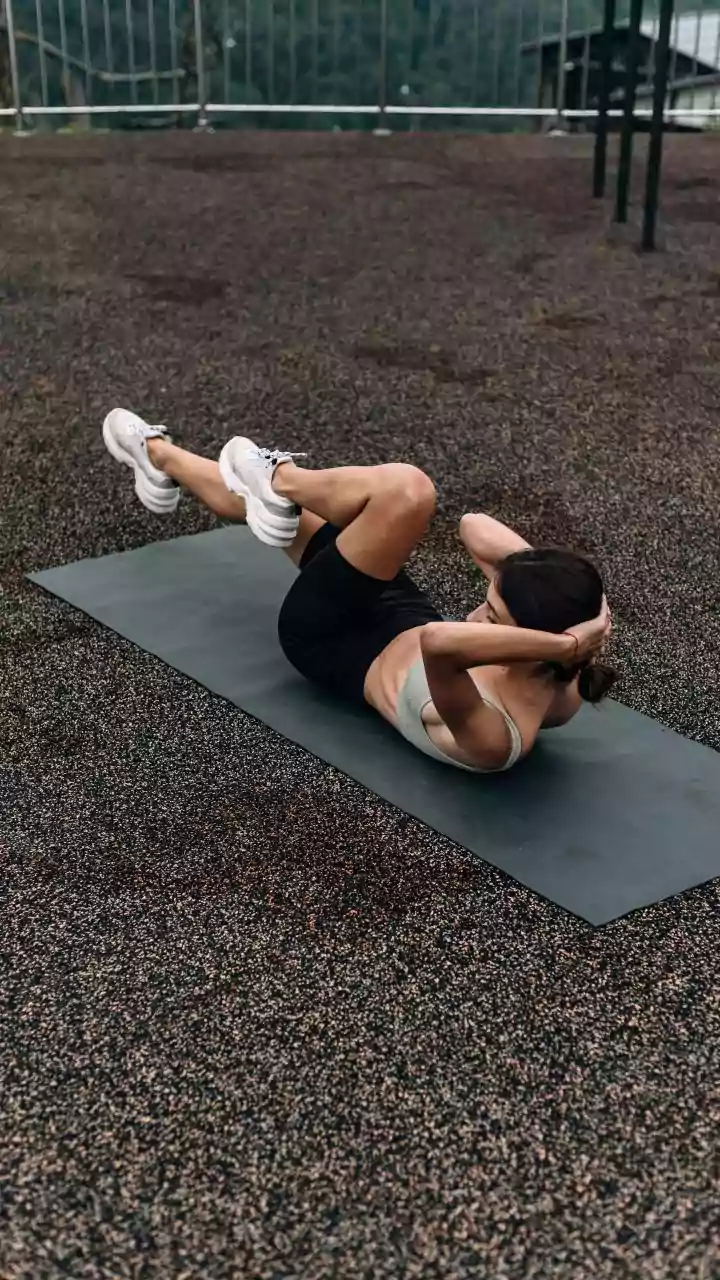
The bicycle crunch is a classic for a reason: it targets both the main abdominal muscles (rectus abdominis) and the side abs (obliques) through rotation. Lie on your back and bring your legs to a tabletop position with your hands lightly behind your head. Lift your head and shoulders off the floor. As you extend your right leg, twist your torso to bring your right elbow toward your left knee. Switch sides in a continuous 'pedaling' motion, focusing on twisting from your torso rather than pulling on your neck. To protect your back, keep your lower back pressed toward the floor throughout the movement.