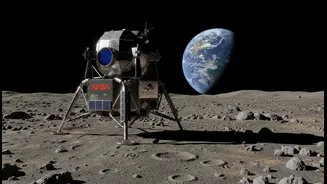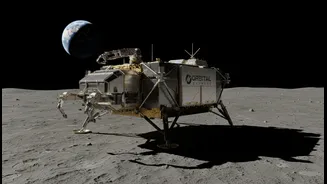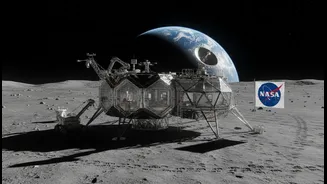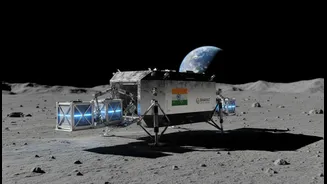









A New Era: The Commercial Moon
For decades, going to the Moon was a job reserved for the world's most powerful governments. That model is changing. NASA, through its Commercial Lunar Payload Services (CLPS) initiative, is now a customer, not the sole operator. The agency is paying
a diverse group of American companies to build and fly their own robotic landers, delivering scientific instruments and technology demonstrations to the lunar surface. This approach is designed to accelerate the pace of exploration, drive down costs, and kickstart a self-sustaining lunar economy. Instead of multi-billion-dollar, decade-long missions, CLPS operates more like a high-stakes delivery service. It embraces a higher-risk, higher-reward philosophy where some missions may fail, as Astrobotic's Peregrine lander did in 2024, while others achieve historic firsts, like Intuitive Machines' successful landing that same year. This new ecosystem of competing vendors is what you need to understand to follow the action.
The Key Players to Watch in 2026
The field of commercial lunar companies is growing, but a few key providers have major missions slated for the near future. Keep an eye on these three companies in 2026. Firefly Aerospace: This Texas-based company is planning its ambitious Blue Ghost Mission 2 for late 2026. Following a successful first landing in 2025, this second mission is even more complex, targeting the far side of the Moon. It's an international affair, carrying a European Space Agency (ESA) communications satellite and payloads from Australia, the UAE, and Canada. Intuitive Machines: Another Texas company, Intuitive Machines, became the first private entity to successfully soft-land on the Moon in 2024. Its next flight, IM-3, is scheduled for the second half of 2026 and will deliver a suite of rovers and scientific instruments to a mysterious magnetic anomaly known as Reiner Gamma. Astrobotic Technology: This Pittsburgh company is targeting a summer 2026 launch for its Griffin Mission One. The Griffin is a much larger lander than its predecessor, Peregrine, and will be launched aboard a powerful SpaceX Falcon Heavy rocket. It is slated to deliver a large rover and other payloads to the lunar south pole, a region of high interest for future human missions.
Your Mission Tracking Toolkit
So, how do you keep up with all this activity? The information can be scattered, but here’s where to look for the most reliable updates. Start with the Source: NASA's official CLPS website is the central hub for the initiative. It lists the contracted companies and official mission objectives. For specific mission updates, the companies themselves are your best bet. Firefly Aerospace, Intuitive Machines, and Astrobotic all maintain sections on their websites dedicated to their lunar missions. Follow the Experts: Reputable space journalists and dedicated outlets provide essential context that goes beyond press releases. Websites like The Planetary Society and SpaceNews offer detailed reporting and analysis on the commercial space sector. For a truly deep dive, some space enthusiasts run blogs and newsletters, like 'Moon Monday', which aggregate and explain the firehose of CLPS news. Watch Live: When a launch or landing is imminent, NASA and the respective companies will provide live streams on their YouTube channels and websites. These broadcasts offer real-time commentary from mission control and are the best way to experience the action as it happens. Tools like NASA's AROW (Artemis Real-time Orbit Website) for crewed missions also point to a future where real-time spacecraft tracking becomes more common.
What's in the Box? Payloads and Purpose
These missions aren't just about landing; they're about what they carry. Each lander is packed with payloads that serve critical scientific and technological goals. You'll see NASA instruments designed to study the lunar environment, such as seismometers to listen for moonquakes and spectrometers to analyze the composition of lunar soil. But you'll also see technology demonstrations paving the way for a long-term human presence. These include rovers testing mobility in tricky terrain, experiments in wireless power transmission, and communications relays designed to create a lunar internet. Many missions also carry commercial payloads for other countries and private organizations, from university experiments to technology that will search for resources like water ice and helium-3. Every payload deployed is another building block for the infrastructure needed to support future Artemis astronauts and a thriving off-world economy.