






An Ancient Thirst Quencher
Lassi's story begins thousands of years ago in the Punjab region of the Indian subcontinent. [4, 13] Considered by some historians to be the world's original smoothie, it was born of necessity in a hot climate before the age of refrigeration. [4, 5] Farmers
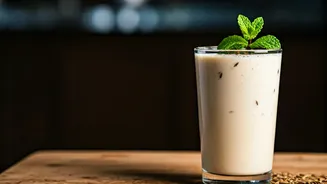
and villagers needed a way to stay cool and hydrated, and the simple act of blending dahi (yogurt) with water and a pinch of salt proved to be the perfect solution. [3, 4] This original, savory version, known as 'namkeen' lassi, was often spiced with roasted cumin and served as a welcome drink to guests, a sign of respect and hospitality. [2, 9] Rooted in the ancient principles of Ayurveda, lassi was also valued for its therapeutic properties, believed to aid digestion and promote gut health. [4, 14]
The Sweet and Fruity Turn
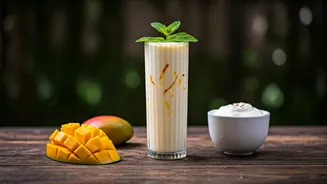
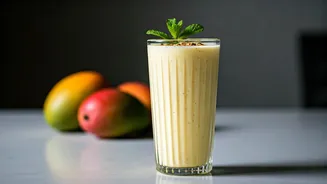
While salty lassi was the everyday staple, a sweet revolution was brewing. [4] In wealthier and aristocratic homes, creative preparations began to emerge, transforming the humble drink into a more indulgent treat. [2] Sugar was added, along with fragrant spices like cardamom, and eventually, fruit. [4, 9] Given that mangos are native to India, it was only natural that they would be one of the first fruits to be blended into the creamy yogurt base. [4] This combination of tangy yogurt and sweet, luscious mango pulp created the now world-famous mango lassi, a fixture in Indian restaurants globally and often the first introduction to lassi for many. [3, 18]
A Canvas for Modern Flavors
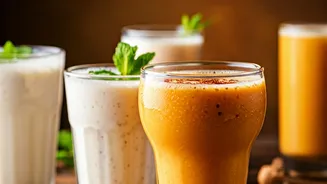
The genius of lassi lies in its adaptability. While sweet, salted, and mango form the holy trinity of lassi flavors, they are merely the starting point. Today, the creativity is boundless. [25] Cafes and street vendors across India offer an astonishing array of options. Floral and fragrant versions like rose, saffron (kesar), and gulkand (rose petal preserve) are popular for their delicate aromas. [22, 24] Fruit lassis have expanded far beyond mango to include strawberry, banana, pineapple, and mixed berries. [25, 27] The innovation doesn't stop there. More adventurous palates can find everything from chocolate and caramel espresso lassis to savory spiced beet or mint versions. [19, 24] Some variations, like the 'bhang' lassi infused with a cannabis paste, are traditionally associated with festivals like Holi. [13, 18]
More Than Just a Drink
In India, lassi is deeply embedded in the cultural fabric. It's the quintessential coolant during scorching summers, often described as the 'air conditioner of Punjab'. [18] Its probiotic qualities make it a popular digestive aid, frequently consumed after a heavy or spicy meal. [8, 10, 11] Traditionally, it's served in a 'kulhar,' an unglazed clay cup that imparts a unique earthy aroma and helps keep the drink cool. [2, 4] Often topped with a generous dollop of 'malai' (clotted cream) and garnished with chopped nuts, a glass of lassi is both a beverage and a snack. [4, 9] Serving lassi is a gesture of warmth and welcome, a staple at family gatherings and celebrations that embodies hospitality. [3, 17]