



A Symphony of Satellites
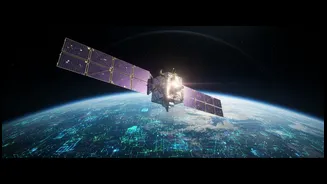
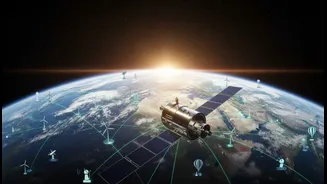
Imagine an orchestra where every musician is playing a slightly different version of the same song. The result would be noise, not music. This is the challenge climate scientists face. A fleet of Earth-observing satellites, operated by different agencies
and launched at different times, constantly monitors our planet. They measure everything from cloud cover and sea surface temperature to the extent of polar ice. While incredibly valuable, each satellite's instruments can have tiny, unique biases or drifts in sensitivity over time. These minute differences can make it difficult to stitch their data together into a single, reliable, long-term record needed to track climate change, where trends can be very subtle. Without a common reference point, it's hard to know if a measured change is a real climate signal or just a quirk of a specific instrument.
NASA’s Cosmic Tuning Fork
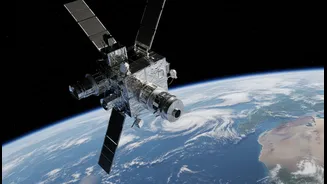
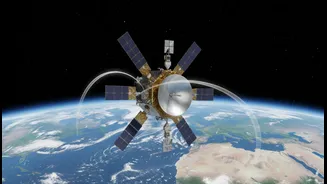
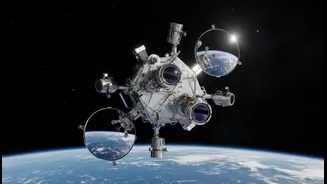
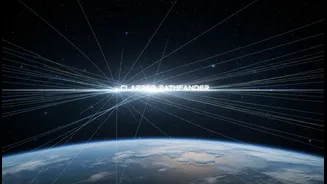
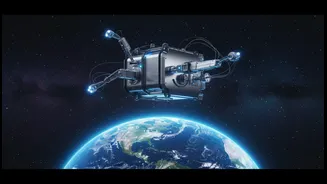
This is where NASA's CLARREO Pathfinder (CPF) comes in. Mounted on the International Space Station (ISS), it's not designed to provide global coverage like other satellites. Instead, its job is to act as a highly accurate, on-orbit calibration standard—a cosmic 'tuning fork'. Its purpose is to measure sunlight reflected from the Earth with an accuracy five to ten times greater than existing sensors. By being so precise and stable, and by having its measurements directly traceable to international standards (SI), it provides a benchmark. Other satellites can then compare their measurements to CPF's data, allowing scientists to identify and correct for any biases. This process is called intercalibration. Essentially, CPF helps get all the different satellite 'musicians' playing in perfect harmony.
The View from the Space Station
The CPF instrument is a hyperspectral imager, meaning it sees light in hundreds of narrow wavelength bands, far beyond what the human eye can perceive. From its perch on the ISS, which orbits at a different angle from many Earth-observing satellites, CPF has a unique advantage. As it circles the globe, its path crosses those of other key satellites, such as the CERES and VIIRS instruments that monitor Earth's radiation budget and surface features. Using a sophisticated pointing system, CPF can precisely match the viewing angle of these other satellites as they observe the same spot on Earth at nearly the same time. This allows for a direct, apples-to-apples comparison of their measurements, creating opportunities to unify and improve the entire constellation of Earth observation data.
From Space Data to Climate Action
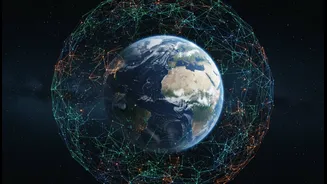
The ultimate goal of CLARREO Pathfinder is to increase our confidence in climate data. More accurate and consistent satellite records mean that climate models become more reliable. When scientists can trust the data showing how much solar energy Earth reflects back to space—a key variable known as albedo—they can better predict the pace of global warming, sea-level rise, and changes in weather patterns. The unparalleled accuracy of CPF allows scientists to detect subtle but critical climate trends decades sooner than would otherwise be possible. This is crucial for policymakers around the world, including in climate-vulnerable nations like India, who rely on sound scientific projections to make informed decisions about adaptation and mitigation strategies. Trustworthy data is the bedrock of effective climate action.
Building a Legacy of Trust
While the Pathfinder is a one-year demonstration mission, its impact is designed to be long-lasting. It's a risk-reduction mission that proves the technology and techniques for a potential future, more comprehensive CLARREO mission. More broadly, it establishes a new gold standard for observing Earth from space. By demonstrating the power of a dedicated, on-orbit reference, it paves the way for a future where all satellite data can be seamlessly integrated into a single, cohesive climate record. CPF is also helping to refine the Moon as a stable calibration source, which can be used by past, present, and future satellite missions. It’s not just about one instrument; it's about building a framework of trust for the science that will guide humanity through the challenges of a changing climate.