


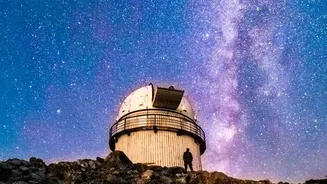
The Constant Challenge: Earth's Rotation
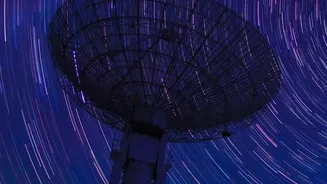
When you try to photograph the night sky, you're not just dealing with darkness; you're battling planetary motion. The Earth spins on its axis continuously, which means from our perspective, the stars are always moving. For most photography, this isn't
an issue. But capturing faint, distant objects like nebulae and galaxies requires long exposures—letting your camera's sensor gather light for many seconds or even minutes. On a standard tripod, any exposure longer than about 20-30 seconds will cause stars to appear as distracting streaks instead of sharp, pinpoint dots. This fundamental problem limits your ability to capture the faint details of the deep sky.
What is a Star Tracker?
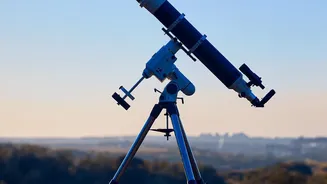
A star tracker, also known as an equatorial mount, is a motorized device that sits between your tripod and your camera. Its sole purpose is to counteract the Earth's rotation. Once properly aligned with the Earth's axis (a process called polar alignment), the tracker moves your camera at the exact same speed as the stars appear to drift across the sky, but in the opposite direction. This effectively 'freezes' the stars in your frame, allowing you to take incredibly long exposures without any motion blur or trailing. Think of it as a smart tripod head that follows the cosmos for you.
Unlocking Long Exposures and Lower ISO
The ability to track the stars changes everything. Instead of being limited to a 25-second shutter speed, a tracker allows you to expose for two, three, or even five minutes at a time. This extended time gathers vastly more light from faint celestial objects, making them visible in your photos. Just as importantly, it allows you to use a much lower ISO setting. Without a tracker, photographers are forced to use very high ISOs to capture enough light in a short time, which introduces a lot of digital noise and grain, reducing image quality. With a tracker, you can lower the ISO, resulting in cleaner, sharper images with better color and more detail.
From the Milky Way to Deep Space Targets
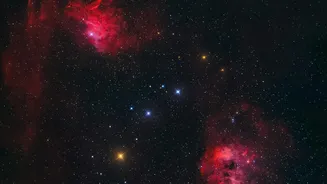
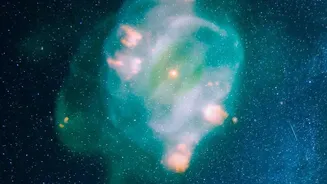
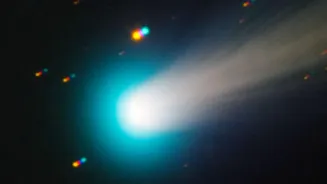
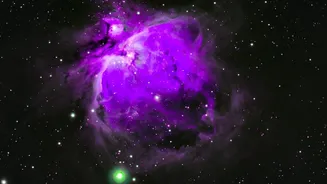
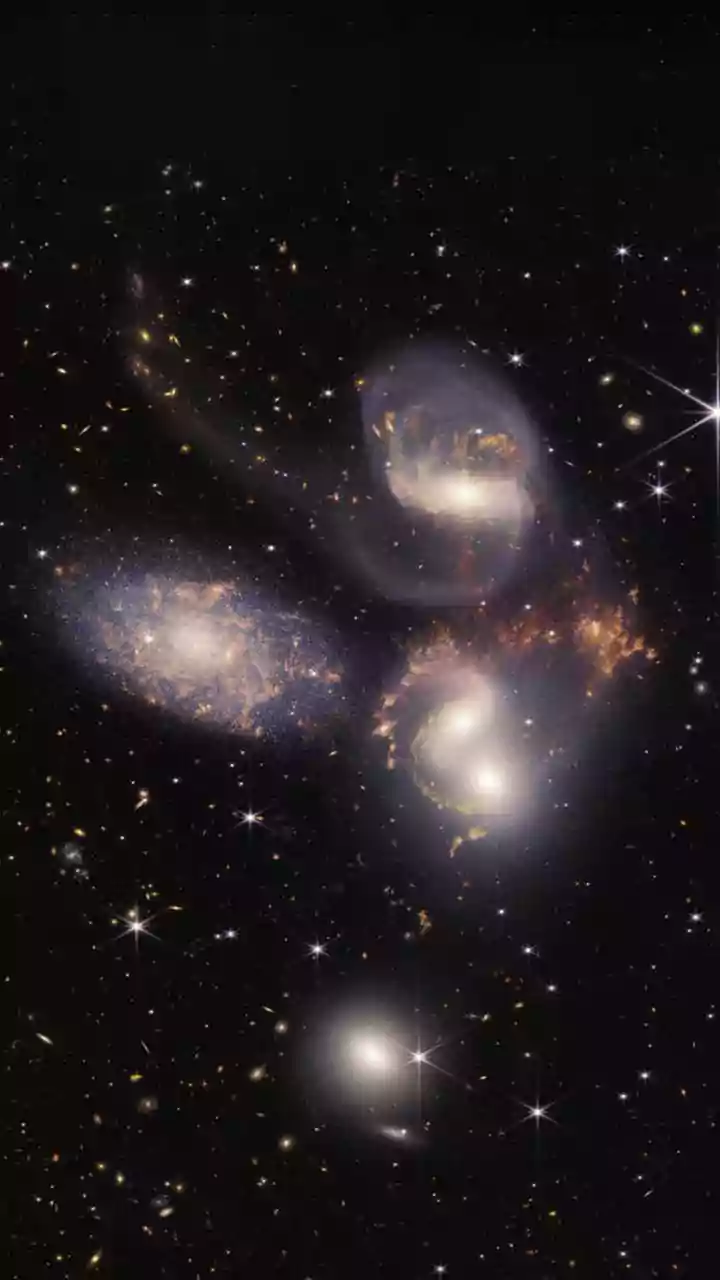
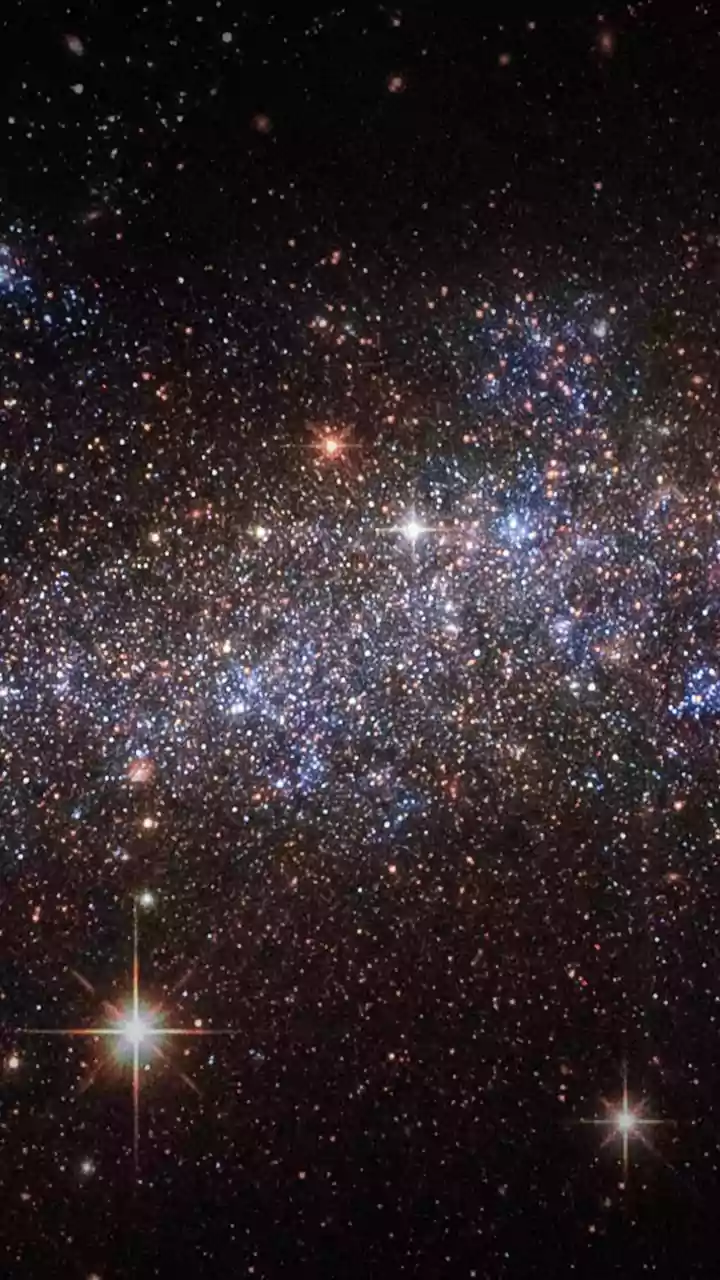
While a standard camera and lens can capture beautiful wide-field shots of the Milky Way, a star tracker is the key that unlocks the rest of the universe for your camera. It makes it possible to use telephoto lenses to zoom in on specific deep-sky objects. Suddenly, capturing the majestic Andromeda Galaxy, the glowing Orion Nebula, or the sparkling Pleiades star cluster becomes achievable with standard camera gear. These objects are too small and faint to be photographed in detail without the long exposures that a tracker enables. The device transforms your camera from a wide-angle sky-gazer into a targeted deep-space instrument.
Is a Star Tracker for You?
While essential for deep-sky work, a tracker does introduce a bit of a learning curve. You need to learn how to perform a polar alignment, which involves pointing the tracker's axis toward the celestial pole—near Polaris, the North Star, for those in the Northern Hemisphere. Modern apps and built-in scopes have made this process much easier than it used to be. Another consideration is that because the tracker moves the camera to follow the sky, any foreground landscape will become blurred. To solve this, photographers typically take two separate photos: one tracked shot for the sky and one untracked shot for the foreground, which are then blended together in post-processing. If you're serious about moving beyond basic nightscapes and capturing the hidden gems of the cosmos, the benefits far outweigh these extra steps.