


The Significance of Ghatasthapana
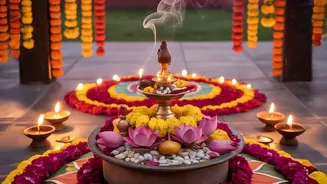
The festival begins with Ghatasthapana, a crucial ritual that marks the formal invocation of Goddess Durga into the home. This ceremony involves placing a 'kalash' (a sacred pot) filled with holy water on a bed of soil where barley seeds are sown. This arrangement
becomes the heart of the home's festive decor, a sacred centrepiece for the nine days of worship. The sprouting barley over the course of the festival symbolises fertility, growth, and prosperity, making the pooja corner the most important space to decorate.
Embracing the Nine Colours
A cherished tradition of Navratri is aligning with a specific colour for each day, reflecting the different forms of Goddess Durga. For 2026, the sequence begins with Orange on October 11, followed by White, Red, Royal Blue, Yellow, Green, Grey, Purple, and finally Peacock Green on October 19. You can embrace this theme by changing cushion covers, draping colourful dupattas or sarees as backdrops, or creating flower arrangements that match the colour of the day. This simple practice adds a layer of mindful celebration and visual harmony to your home.
Illuminate with Festive Lighting
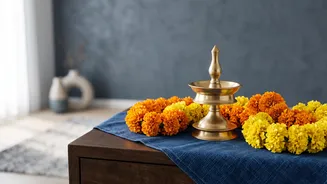
Lighting plays a pivotal role in creating a festive atmosphere that signifies the triumph of light over darkness. Go beyond simple lighting and create an ambient glow throughout your home. Traditional earthen diyas can be placed at the entrance, in the pooja room, and on windowsills. For a stunning centrepiece, fill a brass 'urli' bowl with water, float marigold petals, and place some floating candles in it. You can also weave fairy lights around pillars, across windows, or behind the mandir's backdrop for a modern, magical touch.
Welcome with Torans and Rangoli
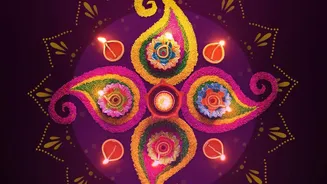
The entrance to your home sets the tone for the festivities. A 'toran', or a decorative door hanging, is believed to welcome the goddess and positive energy. While traditional torans are made of marigold flowers and mango leaves, you can also find beautiful options made from fabric, beads, and bells. Complement this with a vibrant rangoli at your doorstep. You can create intricate patterns with coloured powders, or for an easier and equally beautiful option, design one using fresh flower petals like marigolds, roses, and jasmine.
A Symphony of Flowers and Fragrance
Engage all the senses by incorporating fresh flowers and fragrances into your decor. Marigolds, with their auspicious orange and yellow hues, are a Navratri staple and can be used for garlands, torans, and rangoli. Don't hesitate to use other flowers like roses, jasmine, and tuberoses to create beautiful arrangements for your pooja room and living spaces. The natural perfume from the flowers, combined with the gentle aroma of incense, dhoop, or a camphor diffuser, will create an immersive and spiritually uplifting environment for your family and guests.
Modern Twists on Traditional Decor
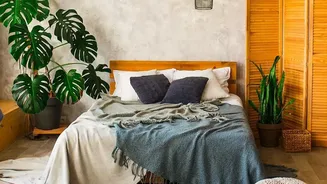
While tradition is at the heart of Navratri, you can blend it seamlessly with contemporary style. Instead of just focusing on the pooja room, extend the festive theme to your living area. Use ethnic-print table runners, change to colourful bed linens, and bring out your brassware—lamps, urlis, and idols—to use as decorative accents. Re-purposing old silk or bandhani sarees as decorative drapes or mandir backdrops is a sustainable and stylish way to add a personal touch to your festive home.