



India's Gaganyaan mission is not just about sending astronauts to orbit; it's about bringing them home safely. This commitment places a microscope on one critical component: the crew escape system, a lifeline designed for the worst-case scenario.
The Ultimate Insurance Policy
Human
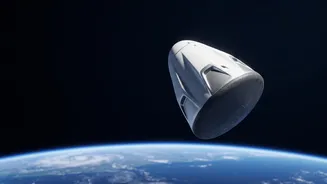
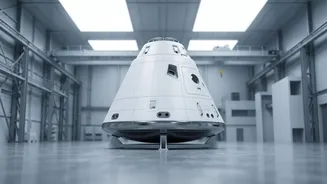
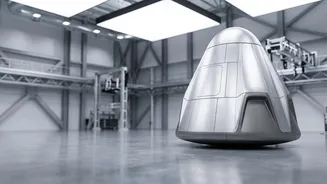
spaceflight is an inherently risky endeavour. For the Indian Space Research Organisation (ISRO), the Gaganyaan mission represents a monumental leap in capability, but with it comes the profound responsibility for the lives of its 'vyomanauts'. This is why the development of the Crew Escape System (CES) is at the heart of the mission's safety philosophy. Think of it as the most advanced ejector seat ever built. If a catastrophic failure occurs on the launchpad or during the rocket's ascent, the CES is designed to fire powerful, quick-acting motors to pull the Crew Module—the capsule housing the astronauts—away from the malfunctioning launch vehicle at incredible speed. Its sole purpose is to ensure the crew is taken to a safe distance, allowing them to parachute back to Earth. ISRO officials have repeatedly stated that safety is non-negotiable, even if it means adjusting timelines for the first crewed flight, which is a testament to the organisation's cautious and methodical approach.
Testing for Every Possibility
To ensure the escape system is flawless, ISRO is conducting a battery of demanding tests that intentionally simulate disaster. These 'abort missions' are designed to validate the system's performance under the most stressful conditions imaginable. One key scenario is the 'Pad Abort Test' (PAT), which ISRO successfully conducted in 2018. This test demonstrated the system's ability to rescue the crew if an emergency arises while the rocket is still on the launch pad. Another, more complex scenario is an in-flight abort. The Test Vehicle Abort Mission-1 (TV-D1) in late 2023 was a landmark success, proving the escape system's capability during the challenging transonic phase of flight (around Mach 1.2), when the rocket experiences maximum aerodynamic pressure. During this test, the CES successfully separated the module from the booster, which then descended safely under parachutes for a splashdown and recovery. These tests are part of a series, with each one building on the last to prove the system's reliability before any human flies.
How the Escape System Works
The Crew Escape System is a marvel of engineering, built for speed and power. It consists of a set of solid-fuel rocket motors attached to the top of the Crew Module. These are not ordinary motors; they are high-burn-rate systems designed to ignite in a split second and generate immense thrust. In an emergency, the onboard computers would detect the anomaly and trigger the abort sequence. The CES motors fire, pulling the capsule clear of the launch vehicle. Once at a safe altitude and distance, the escape system jettisons itself, and the Crew Module begins its descent. A sequence of parachutes—first drogue chutes to stabilise and slow the module from high speed, followed by the main parachutes—deploy to ensure a gentle splashdown in the ocean. ISRO has also rigorously tested the systems needed after splashdown, such as the Crew Module Up-righting System (CMUS), which uses flotation bags to ensure the capsule stays upright in the water, providing a stable environment for the astronauts while they await recovery.
A Culture of Caution
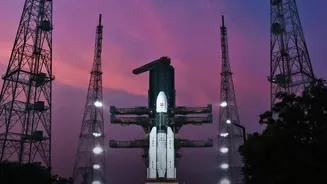
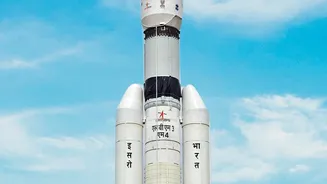
The cautious approach is a deliberate strategy. ISRO Chairman S. Somanath has publicly stated the agency's philosophy: “We should be very, very careful, we should be very pessimistic, we should be working in such a manner that it can go wrong.” This mindset is about anticipating failures to build a more robust and resilient system. The goal is to avoid a disaster, which could set back the entire human spaceflight program. This meticulousness extends beyond the escape system to every part of the Gaganyaan mission, from the human-rated LVM3 launch vehicle to the indigenously developed Environmental Control and Life Support System (ECLSS). ISRO has conducted thousands of ground tests and dozens of major demonstrations to validate every component, from propulsion systems to avionics. The repeated delays to the first crewed launch are not signs of failure, but rather evidence of a deep-seated commitment to getting it right. For ISRO, a space mission is either a 100% success or it isn't, and there is no room for error when human lives are on the line.