



The Anatomy of Desk-Induced Stiffness
Our bodies are designed for movement. When you sit for prolonged periods, several things happen that contribute to stiffness and pain. Your muscles, particularly the hip flexors, remain in a shortened position, while your glutes can weaken from disuse.
This creates imbalances. Circulation slows down, reducing the flow of oxygen and nutrients to your muscles and joints, making tissues less flexible. Over time, this constant state of inactivity can lead to your muscles and connective tissues tightening up, resulting in that 'locked up' feeling in your lower back, shoulders, and neck. Poor posture, like slouching or craning your neck forward to see a screen, adds extra strain and fatigue to the muscles, worsening the problem.
The Power of the 'Movement Snack'
The antidote to prolonged sitting is surprisingly simple: short, frequent active breaks, often called 'movement snacks'. These aren't full-blown workouts. Instead, they are brief periods of activity, lasting anywhere from 30 seconds to a few minutes, designed to break the cycle of sedentary behaviour. Taking a short break to move helps to reactivate dormant muscles, restore blood flow, and lubricate your joints. Think of it as hitting a reset button. This simple act tells your body that it’s time to move, counteracting the negative signals sent by long periods of stillness. Research shows these 'microbreaks' can significantly reduce muscle fatigue, decrease pain, and even boost your energy and focus without harming productivity.
Finding Your Ideal Break Schedule
So, how often should you be taking these breaks? While any movement is better than none, studies suggest an optimal rhythm. Many experts recommend getting up to move for a few minutes every 30 to 60 minutes. One study highlighted that walking for five minutes every half-hour was particularly effective at lowering both blood sugar and blood pressure. Another found that a five-minute walking break every hour was a 'sweet spot' for reducing fatigue and improving mood. The key is consistency. A popular method is the Pomodoro Technique: work for 25 minutes, then take a five-minute break. Experiment and see what works best for your workflow, but the guiding principle is to interrupt sitting as often as you can.
Simple Stretches You Can Do At Your Desk
You don't even need to leave your chair to get the benefits of a movement snack. These discreet exercises can be done right at your desk to release tension. Seated Spinal Twist: Sit tall and gently twist your torso to one side, using the chair's backrest for a deeper stretch. Hold for 10-20 seconds and repeat on the other side. This helps counteract hours of forward-facing posture. Shoulder Rolls and Squeezes: Shrug your shoulders up towards your ears, then roll them back and down. Repeat 10 times. You can also squeeze your shoulder blades together as if holding a pencil between them, holding for 3-5 seconds to improve posture and reduce back strain. Neck Stretches: Slowly turn your head to look over one shoulder, hold for a few seconds, then repeat on the other side. You can also gently tilt your ear towards your shoulder to feel a stretch along the side of your neck.
Level Up: Active Breaks Beyond the Chair
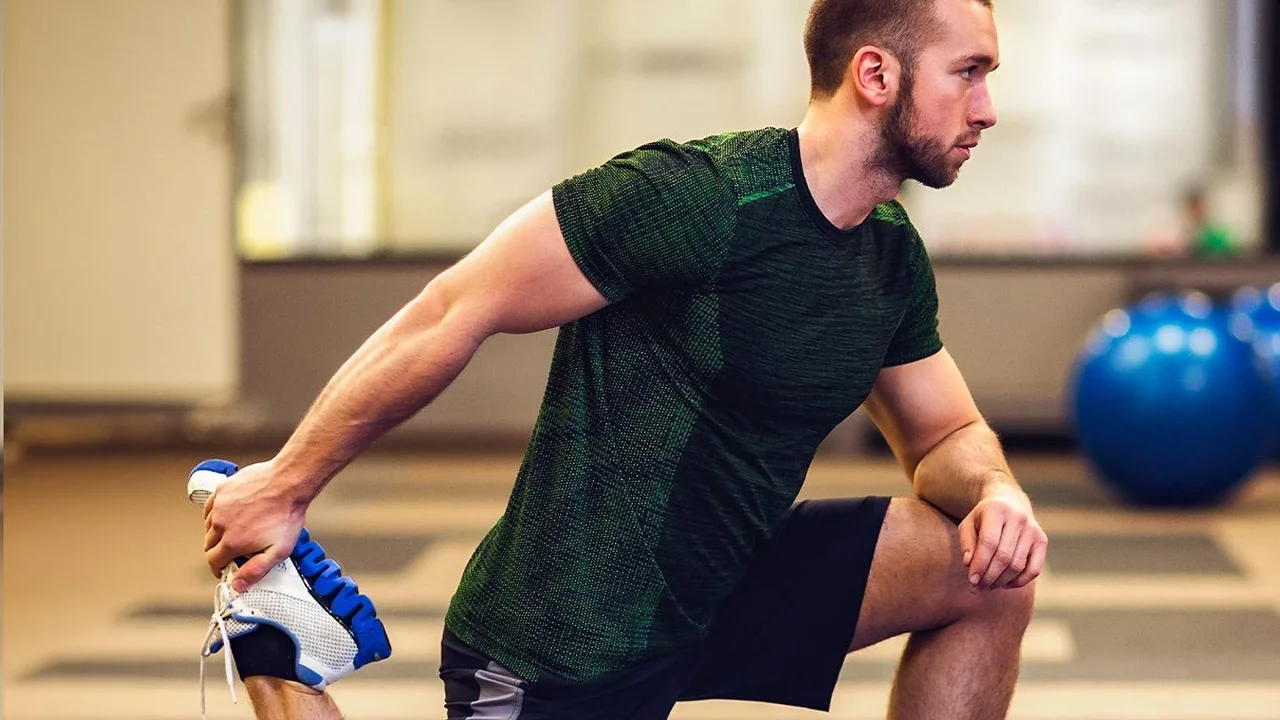
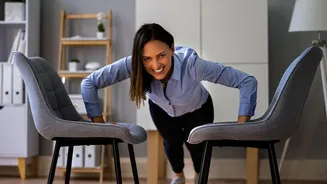
When you have a few minutes, stepping away from your desk can provide even greater benefits. These simple activities get your heart rate up slightly and engage larger muscle groups. Take a Brisk Walk: Whether it’s a lap around the office, a trip to the water cooler, or just walking in place, moving your legs is crucial. Climb the Stairs: If you have access to stairs, a few flights up and down is a fantastic way to boost circulation and activate your leg muscles. Chair Squats: Stand up from your chair, then lower yourself back down as if you are about to sit, but stand back up just before you do. Repeat 10-15 times to wake up your glutes and leg muscles. Standing Hip Flexor Stretch: After hours of sitting, your hips need a good stretch. Step one foot back into a small lunge, tuck your pelvis, and gently lean forward to feel a stretch in the front of your hip.